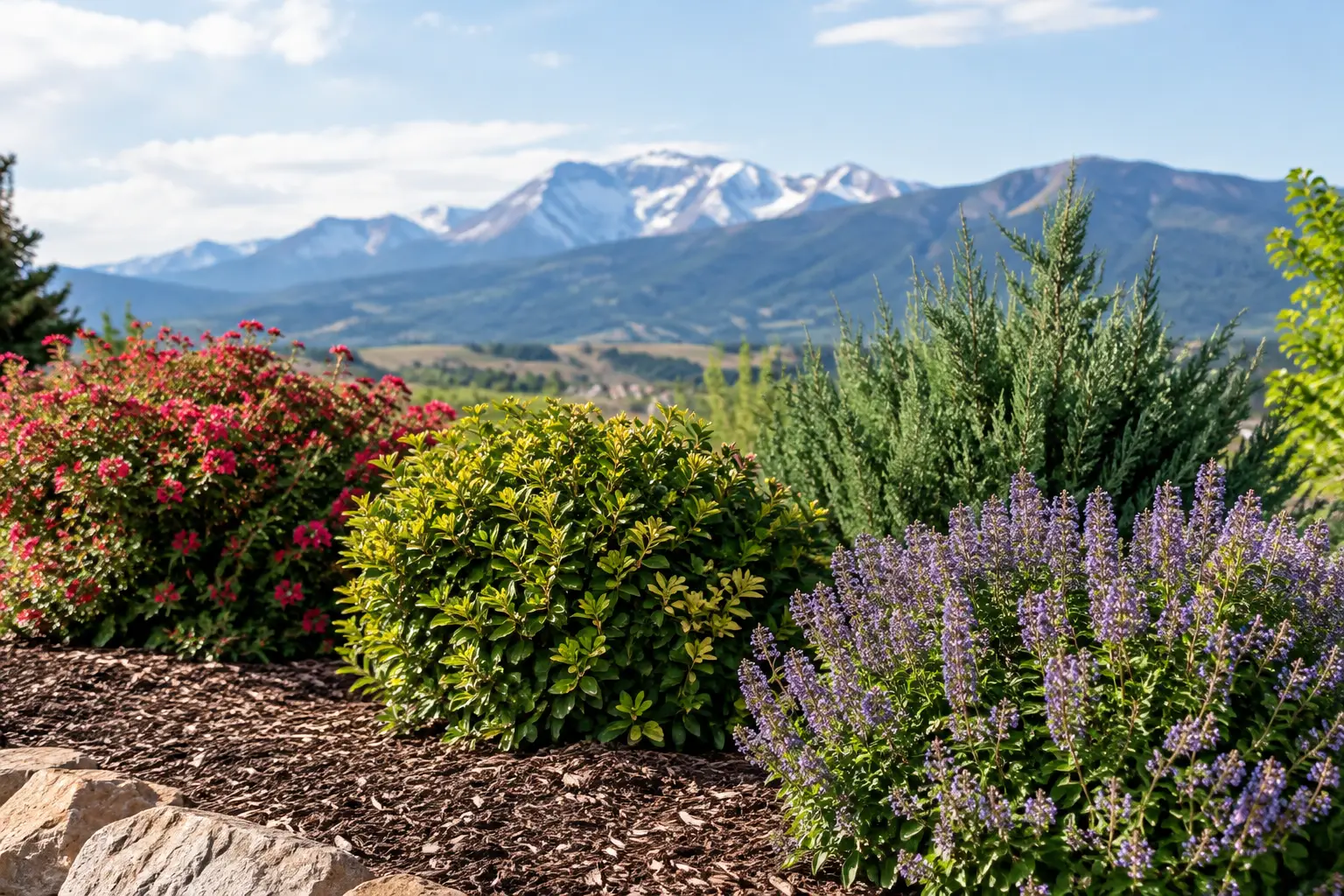
Colorado landscapes ask a lot from every plant. Intense sun, drying wind, clay-heavy soil, sudden temperature swings, and periodic water restrictions can challenge even well-established beds. The best low maintenance shrubs are not simply plants that survive tough conditions. They are shrubs that look intentional, hold their shape, and need limited water, pruning, and replacement once they are properly planted.
For homes in Parker, Castle Rock, Highlands Ranch, and nearby communities, the right shrub selection can reduce weekly landscape chores while improving curb appeal through every season. The key is matching each plant to its light, soil, mature size, and irrigation zone rather than expecting one shrub to work everywhere.
What Low Maintenance Really Means in Colorado
A low-maintenance shrub still needs attention during its first one to two growing seasons. New plants require consistent watering while roots establish, especially in sunny or exposed locations. Mulch, proper planting depth, and a well-adjusted irrigation system matter more than choosing a plant labeled drought tolerant.
After establishment, the best choices need only occasional deep watering, light seasonal pruning, and periodic checks for damaged branches or irrigation issues. They should also tolerate Colorado winters without wrapping, frequent spraying, or extensive cleanup.
Native and regionally adapted shrubs often perform well because they are suited to local weather patterns. That does not mean every native plant belongs in every yard. A shrub that thrives on a dry slope may struggle in a low area with heavier, wetter soil. Site conditions should always guide the final plant list.
12 Best Low Maintenance Shrubs for Colorado Yards
1. Shrubby Cinquefoil
Shrubby cinquefoil, also called potentilla, is a reliable choice for sunny beds. Its compact form, fine foliage, and long summer bloom period make it useful along walkways, foundations, and mixed borders. Yellow flowers are most common, though white and soft orange varieties are available.
Cinquefoil handles cold winters and clay soil better than many flowering shrubs. A light renewal pruning in early spring helps keep older plants dense, but it does not require frequent shaping.
2. Blue Mist Spirea
Blue mist spirea brings soft blue flowers to the late-summer landscape when many other shrubs have finished blooming. It prefers full sun and well-drained soil, making it a strong fit for warm, dry sections of the yard.
This shrub often dies back partially in winter, so homeowners can cut it back in early spring once new growth begins. Avoid planting it in areas that stay wet from irrigation runoff or poor drainage.
3. Apache Plume
Apache plume is one of the most distinctive dry-climate shrubs available. Its white flowers appear in spring, followed by feathery pink seed heads that add texture and movement through summer. The gray-green foliage also complements rock, mulch, and naturalized planting areas.
It is best suited for full sun and very well-drained soil. Apache plume is not the right choice for a formal hedge, but it performs beautifully in water-wise landscapes where a more natural shape is welcome.
4. Mountain Mahogany
Mountain mahogany is a tough native shrub valued for its silvery foliage, compact habit, and excellent drought tolerance after establishment. It works well in sunny beds, slopes, and exposed areas where wind and reflected heat can be hard on other plants.
Its understated appearance is a benefit for homeowners who prefer year-round structure over showy flowers. Give it room to grow and avoid overwatering, which can shorten its lifespan.
5. Gro-Low Sumac
Gro-Low sumac creates a broad, low mound of glossy green leaves that turn vivid red and orange in fall. It is especially effective on slopes, around larger beds, and in areas where erosion control is useful.
This shrub tolerates dry conditions and poor soil once established. It can spread beyond its original footprint over time, so it is better for open planting areas than narrow foundation beds.
6. Threeleaf Sumac
Threeleaf sumac is another hardy Colorado-friendly option with excellent fall color and strong tolerance for sun, wind, and lean soil. Its low, spreading growth habit works well on banks and in natural landscape designs.
Like other sumacs, it may form colonies through suckering. That is an advantage when you want broad ground coverage and a drawback when every shrub needs to stay in a precise location.
7. Dwarf Blue Rabbitbrush
Dwarf blue rabbitbrush offers blue-gray foliage and cheerful yellow flowers in late summer and early fall. It performs well in dry sites and brings a softer, more natural look to water-wise planting beds.
Rabbitbrush requires very little supplemental water after establishment. It can look loose rather than formal, so pair it with more structured evergreens or ornamental grasses if you want a balanced design.
8. Fernbush
Fernbush earns its name from its aromatic, fern-like leaves. In summer, clusters of white flowers brighten the plant, while the foliage provides fine texture for much of the season.
This shrub is an excellent fit for sunny, well-drained locations and is highly tolerant of dry conditions. Its natural form is attractive without regular shearing, which makes it a practical choice for homeowners who want a polished landscape without constant trimming.
9. Golden Currant
Golden currant is a versatile native shrub with fragrant yellow spring flowers, edible dark fruit, and warm fall color. It handles part shade better than many drought-tolerant shrubs, making it useful on the east side of a home or beneath open-canopy trees.
It benefits from occasional thinning of older stems to maintain airflow and shape. Golden currant is a good option when wildlife value and seasonal interest matter as much as low water use.
10. Littleleaf Mockorange
Littleleaf mockorange is a durable shrub with fragrant white flowers in late spring. It has a naturally upright habit and works well as a loose screen, a backdrop for lower perennials, or a transition plant between formal and natural areas.
It adapts to Colorado soils and handles dry periods once mature. Prune selectively after flowering only if needed, rather than shearing the plant into a tight ball.
11. Mugo Pine
For evergreen structure, mugo pine is a dependable choice. Its dense green needles provide winter color and help anchor mixed planting beds when deciduous shrubs are dormant.
Choose a cultivar with a mature size that fits the space. Some mugo pines remain compact, while others become much wider over time. It needs well-drained soil and should not be placed where sprinklers keep the foliage constantly wet.
12. Creeping Juniper
Creeping juniper is technically a shrub, though it is most often used as a spreading groundcover. It is useful along slopes, driveway edges, and sunny areas where turf struggles. Blue-green and silver-toned varieties can add contrast against stone and mulch.
Juniper needs full sun, drainage, and restraint with irrigation. Overwatering is one of the fastest ways to create problems, particularly in heavy clay soil.
Planting Practices That Keep Shrubs Low Maintenance
Even the toughest shrubs become high maintenance when planted incorrectly. Start by grouping plants with similar water needs together. A drought-tolerant shrub on the same irrigation zone as thirsty lawn or annual flowers is likely to receive too much water.
Plant at the same depth the shrub grew in its nursery container. The top of the root ball should sit level with, or slightly above, surrounding grade in clay soil. Backfill with existing soil rather than creating a pocket of heavily amended material that holds water differently from the surrounding ground.
Apply two to three inches of mulch around the planting bed, keeping it several inches away from stems. Mulch limits evaporation, moderates soil temperature, and reduces weeds, but mulch piled against the plant can trap moisture and invite decline.
Pruning should match the shrub rather than follow a fixed calendar. Flowering shrubs may need selective pruning after bloom, while shrubs that flower on new wood are often pruned in early spring. Shearing every shrub into the same rounded shape may look tidy at first, but it often removes flowers, creates dense outer growth, and increases long-term maintenance.
Design for Mature Size, Not Nursery Size
Many landscape problems begin when young shrubs are planted too closely together. A small container plant can look sparse on installation day, but crowding it to create an immediate full bed leads to poor airflow, overgrown walkways, and repeated pruning later.
Use mature width as the guide for spacing. A layered bed with a few well-placed shrubs, groundcovers, perennials, and mulch often looks better and performs better than a crowded collection of plants. Evergreens can provide structure, while flowering and deciduous shrubs add seasonal change.
A thoughtful shrub plan should make the property easier to care for year after year. Choosing plants that fit Colorado conditions, installing them correctly, and maintaining irrigation with purpose protects both landscape health and long-term curb appeal. When a planting area needs a more durable plan, Irrivive Outdoor Property Solutions can help homeowners build one from the ground up.