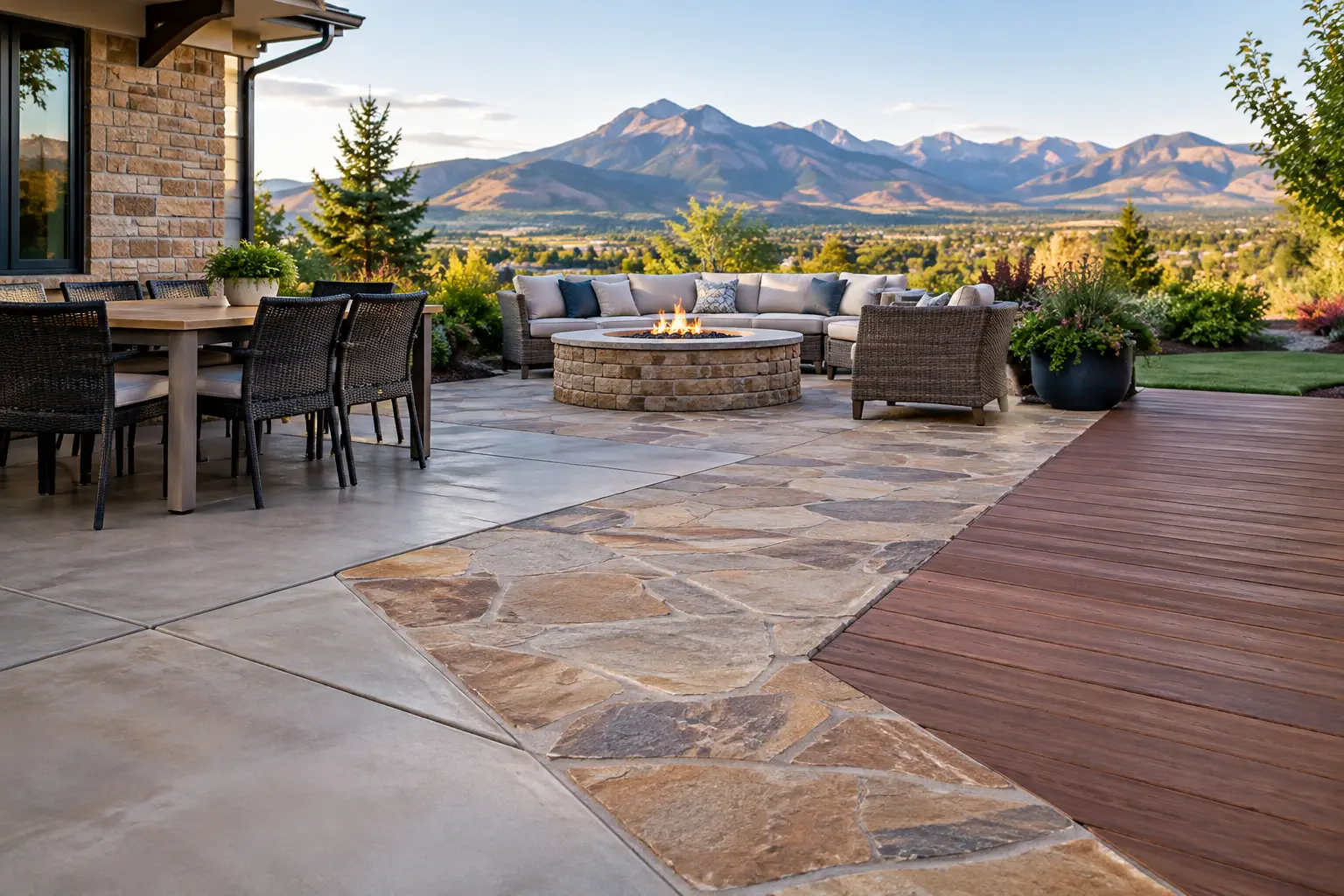
A patio can look excellent the day it is installed and still struggle after a few Colorado winters. Strong sun, sudden temperature swings, snowmelt, expansive clay soils, and uneven drainage all affect how a surface performs. Choosing the best patio materials Colorado homeowners can rely on means looking beyond appearance to consider the property, the intended use, and the preparation below the finished surface.
For homes in Parker, Castle Rock, Highlands Ranch, and nearby communities, the right answer is rarely one material for every yard. A patio that works beautifully on a protected, level backyard may not be the best choice for an exposed side yard or a sloped entertaining area. The material matters, but so do grading, base preparation, edge restraint, and drainage planning.
What Colorado Conditions Demand From a Patio
Colorado’s climate asks more of hardscape materials than a mild, consistently wet climate. Patio surfaces must tolerate intense UV exposure, freeze-thaw cycles, snow and ice, wind-blown debris, and seasonal moisture changes in the soil.
Freeze-thaw movement is a major consideration. Water that enters joints, cracks, or the base can expand when it freezes. Over repeated cycles, that movement can loosen pavers, widen concrete cracks, or shift natural stone. Proper compaction and drainage reduce the amount of water that stays where it should not.
Soil conditions also matter. Many Front Range properties have clay-heavy soil that expands when wet and contracts as it dries. A patio needs a stable, properly prepared base that can manage minor movement without creating a tripping hazard, low spot, or drainage problem. Material selection should support that goal rather than work against it.
Best Patio Materials for Colorado Homes
Concrete pavers: flexible, repairable, and dependable
Concrete pavers are one of the strongest all-around choices for Colorado patios. Individual units sit on a compacted aggregate base, usually with joint material and edge restraint designed to hold the system in place. Because the surface is made of separate pieces rather than one large slab, it can better accommodate small amounts of ground movement.
Pavers also offer practical long-term advantages. If a section settles or a utility repair is needed, individual pavers can often be lifted, the base corrected, and the surface reset. This is much more manageable than replacing a large section of cracked concrete. Their range of colors, textures, and laying patterns makes them a good fit for both traditional and contemporary homes.
The trade-off is that pavers need careful installation. A weak base, poor edge restraint, or improperly finished joints can lead to shifting and weeds between pavers. Quality craftsmanship below the surface is what makes a paver patio perform well over time.
Natural flagstone: distinctive character with site-specific needs
Natural flagstone gives a patio the irregular texture and visual warmth many homeowners want in a Colorado landscape. Sandstone, bluestone, and similar natural stones can work well for patios, garden paths, and outdoor living areas when selected and installed for the location.
Flagstone is especially appealing where a more organic, less uniform look complements planting beds, boulders, and native-inspired landscaping. It can be installed with tighter joints over a prepared base or set with wider joints that incorporate gravel or groundcover, depending on the desired finish and use.
However, natural stone is not automatically low maintenance. Some varieties are more porous or prone to flaking than others, and uneven pieces require skilled fitting to create a stable walking surface. Large joint gaps can collect debris and make snow removal more difficult. For a dining area or a high-traffic patio, a flatter stone with consistent thickness is usually more practical than highly irregular material.
Poured concrete: clean, practical, and preparation-dependent
Poured concrete remains a practical patio choice for homeowners who prefer a clean, simple surface. It works well for modern landscapes, grill areas, and patios where a smooth surface is useful for furniture, rolling carts, or accessibility.
Concrete’s limitation in Colorado is not that it will never crack. Most concrete will develop some cracking over time, particularly as soil moves and temperatures fluctuate. The goal is to control where movement occurs with properly placed joints, adequate reinforcement when appropriate, a stable base, and positive drainage away from the home.
A broom finish can improve traction during wet or icy conditions. Decorative finishes and color can add visual interest, but they should be chosen with Colorado sun exposure in mind. Very dark surfaces can become uncomfortably hot in direct summer sun, while some decorative coatings may require more maintenance than a natural finish.
Porcelain pavers: refined appearance with excellent durability
Outdoor-rated porcelain pavers are becoming a strong option for homeowners who want a crisp, contemporary look. They resist fading, staining, and moisture absorption better than many natural materials. Their consistent sizing can create clean lines, and lighter colors can help keep the surface more comfortable underfoot.
Porcelain is durable, but it is not a shortcut around installation requirements. The pavers need a correctly designed support system and suitable edge detailing. Because porcelain can be slick when wet if the wrong finish is selected, homeowners should use products specifically rated for exterior use and traction.
This material is often a good fit for covered patios, modern outdoor kitchens, and spaces where visual consistency is a priority. It may be less natural-looking than flagstone, which can be either an advantage or a drawback depending on the home and landscape design.
Gravel: useful for casual spaces, not every patio
Gravel can create an attractive, permeable patio for fire pit areas, secondary seating spaces, and informal garden settings. It allows water to move through the surface rather than collecting on top, which can be beneficial in the right location. Angular crushed gravel performs better than rounded rock because it locks together more effectively underfoot.
Still, gravel is not ideal for every outdoor living area. Chair legs can sink, loose stone can migrate into lawns and planting beds, and snow removal is more difficult. A properly contained gravel patio with a compacted base works best where homeowners want a relaxed look and do not need a perfectly firm, level surface.
How to Choose the Right Material for Your Yard
Start with how the patio will actually be used. A quiet bistro area near the garden has different needs than a large gathering space with a dining table, grill, and fire feature. Smooth concrete or porcelain may be more convenient for furniture, while flagstone may better suit a garden-centered retreat.
Next, look at exposure. South- and west-facing patios receive significant summer sun, so color and surface temperature deserve attention. Shaded north-facing areas may hold snow and ice longer, making traction and drainage especially important. Trees can add beauty but may also drop needles, leaves, or sap that influence maintenance needs.
The slope of the property should guide the design from the beginning. Patio surfaces need intentional drainage away from the home and away from areas where water could create erosion or ponding. In some yards, drainage improvements, retaining features, or grading adjustments should happen before the patio is installed. A beautiful surface cannot solve water moving in the wrong direction.
Finally, consider continuity with the rest of the property. The patio should work with existing walkways, landscape beds, lighting, irrigation zones, and lawn edges. A complete outdoor plan prevents common problems, such as sprinklers overspraying the patio, downspouts dumping water onto the base, or a new patio creating an awkward transition to the yard.
Installation Details That Protect Long-Term Performance
The visible patio material gets the attention, but the base is the real foundation of the project. Excavation depth, compaction, aggregate selection, grading, and edge restraint should be tailored to the material and site conditions. Skipping these steps can lead to settlement, rocking pavers, cracked slabs, and standing water.
Drainage deserves equal attention. A patio should have a subtle, intentional slope that directs water away from the house. Downspout discharge, irrigation runoff, and snowmelt need clear paths that do not undermine the patio base or saturate nearby soil.
For pavers and stone, joint selection also affects performance. Proper joint material helps stabilize units and limit unwanted growth. For concrete, well-planned control joints help manage cracking in predictable locations. These details are not decorative extras. They are part of building a patio that remains safe, functional, and attractive through changing seasons.
A Patio Should Fit the Property, Not Just the Photo
The best patio material is the one that suits your soil, drainage, exposure, lifestyle, and home design while allowing for proper installation. Concrete pavers offer adaptability and repairability. Flagstone brings natural character. Concrete provides a clean, practical surface. Porcelain delivers a refined modern finish, while gravel can create a relaxed, permeable gathering space.
Before choosing a finish, look at how water moves through the yard and how the space will be used in every season. A well-planned patio does more than create a place to sit. It becomes a durable part of the landscape that supports better drainage, clearer outdoor living areas, and lasting pride in the property.