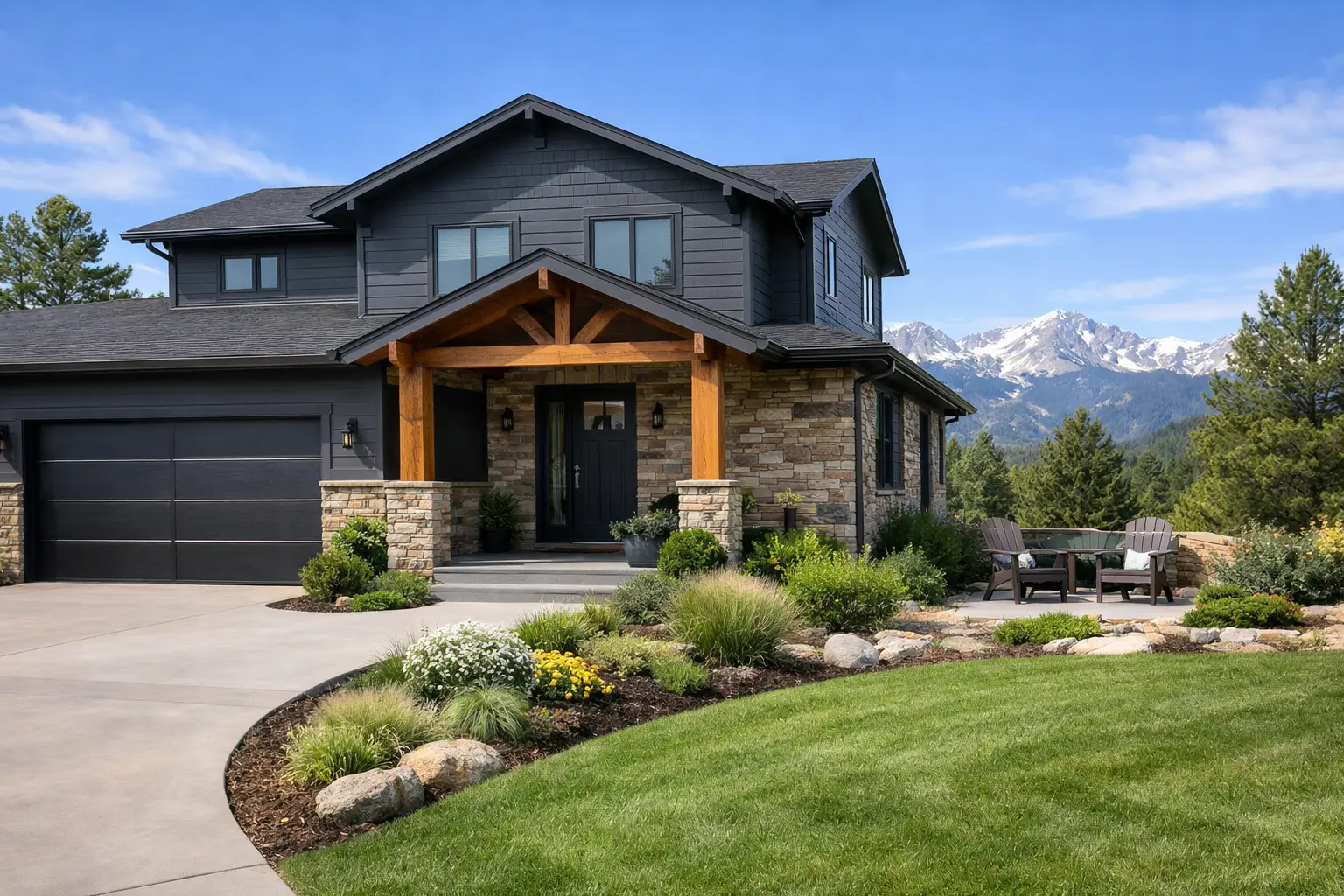
A curb appeal transformation is rarely about one dramatic feature. It is the result of a property that looks cared for from the curb to the front door: healthy turf, defined planting beds, functioning irrigation, clean edges, safe walkways, and lighting that makes the home feel welcoming after sunset. For Colorado homeowners, the work also has to hold up through dry summers, sudden temperature swings, hail, snow, and freeze-thaw cycles.
The most successful improvements begin with a clear look at what the property needs, not simply what looks good in a photo. A new layer of mulch can refresh a bed, but it will not solve struggling plants caused by poor drainage or uneven watering. New landscape lighting can add a finished look, but it works best when the walkways, entry, and key architectural features are already in good condition. Building curb appeal in the right order protects the work and creates results that continue to look intentional over time.
Start Your Curb Appeal Transformation With the Basics
Before selecting plants or materials, assess the elements people notice first. Stand across the street and look at the property as a visitor would. Are lawn areas full and evenly colored? Do shrubs block windows or crowd the entry? Are planting beds crisp, or have grass and weeds softened their edges? Does the front walk feel safe and easy to follow?
The condition of the landscape matters as much as its design. A front yard can have mature trees and attractive plantings yet still feel neglected if irrigation heads are spraying pavement, mulch has washed away, or lawn edges are uneven. Correcting those foundational issues often makes a more visible difference than adding another decorative feature.
Pay close attention to drainage as well. Water should move away from the home, not settle near the foundation, front walk, or planting beds. In Parker and nearby communities, spring moisture followed by summer storms can expose low spots and compacted soil quickly. Addressing drainage early helps protect both the landscape and the property while preventing recurring damage to beds, turf, and hardscape.
Create a Strong, Easy-to-Read Entry
The front entry should give the landscape a clear focal point. That does not require an oversized installation. It means creating a clean visual path from the street or driveway to the front door.
A well-maintained walkway, properly scaled planting beds, and purposeful lighting can do more for an entry than a crowded mix of colors and accessories. If the path is cracked, settling, or too narrow for comfortable use, a hardscape improvement may be the right starting point. If the path is sound but disappears at night, low-voltage lighting can improve both visibility and appearance.
Planting near the entry should frame the home rather than compete with it. Choose plants based on their mature size, sun exposure, water needs, and the space available around windows, steps, and utility equipment. A young shrub may look small when installed, but a poor placement becomes an ongoing pruning problem within a few seasons.
Color can be effective when it has a plan. Repeating a few complementary tones through seasonal flowers, containers, or foliage creates a more polished result than placing many unrelated varieties throughout the yard. For homeowners who prefer lower maintenance, texture, evergreen structure, ornamental grasses, and carefully selected perennials can provide interest without relying entirely on annual color.
Protect Landscape Health With Efficient Irrigation
A beautiful front yard depends on water being delivered where and when it is needed. Irrigation problems are one of the most common reasons a curb appeal project loses momentum after installation. A lawn may develop dry bands along the sidewalk, shrubs may become stressed in hot weather, or runoff may carry soil and mulch onto hard surfaces.
An irrigation review should look beyond whether the system turns on. Zones need appropriate run times, heads need proper coverage, and drip irrigation should reach plant root zones without oversaturating the soil. Seasonal adjustments are especially important in Colorado because water needs change sharply from spring to midsummer and again as temperatures cool.
Water efficiency is not about using less water at all costs. It is about using water accurately. Deep, well-timed watering encourages healthier roots, while overspray and frequent shallow cycles waste water and can weaken turf. Repairs to damaged heads, valves, nozzles, and drip lines should be handled before new landscape materials are installed whenever possible.
The same principle applies to soil. Compacted or depleted soil can make a healthy landscape difficult to maintain, even with reliable irrigation. Aeration, appropriate amendments, and mulch can support root development and help beds retain moisture. These details are not always visible on installation day, but they determine how well the finished landscape performs.
Add Definition With Edges, Beds, and Hardscape
Crisp definition is one of the fastest ways to make a property look maintained. Clear borders between lawn, planting beds, and walkways give the yard structure. They also make routine care easier by reducing grass creep and creating a clear line for mowing and trimming.
Mulch is useful for more than appearance. A properly prepared and mulched bed helps moderate soil temperature, reduce weeds, and retain moisture. However, mulch should not be piled against tree trunks, siding, or shrub stems. Too much material in the wrong place can hold excess moisture and create plant health concerns.
Hardscape features can add lasting function when they solve a real need. A refreshed front walkway, small retaining element, stone border, or expanded landing can improve traffic flow and create a more finished transition between the home and landscape. Material selection matters because freeze-thaw conditions can be hard on poorly prepared surfaces. Proper base preparation, grading, and drainage are what keep a hardscape feature stable and attractive.
There is a trade-off between elaborate design and long-term maintenance. Complex curves, numerous material changes, and tightly packed plantings may look impressive initially, but they can require more attention to keep clean and healthy. A simpler design with good proportions, durable materials, and room for plants to mature usually delivers a better long-term result.
Use Outdoor Lighting With Purpose
Outdoor lighting extends curb appeal past daylight hours, but it should be planned for function first. The entry, steps, changes in elevation, and primary path should be easy to see. From there, lighting can highlight a specimen tree, textured wall, or architectural detail that gives the home character.
Too many fixtures can make a front yard look busy or create glare through windows. A restrained approach usually feels more refined. Warm, well-aimed lighting creates depth and helps visitors see where they are going without turning the property into a bright display.
Lighting systems also need practical consideration. Fixtures should be durable, wiring should be protected, and the layout should allow for future landscape growth. A branch, shrub, or ornamental grass that is small today may block a fixture next season. Reviewing the placement as plants mature keeps the system effective.
Keep the Transformation Looking Finished
Curb appeal is not a one-time task. The difference between a landscape that looks newly installed and one that looks consistently well cared for is regular attention to small details. Seasonal cleanups, pruning, irrigation inspections, lawn care, mulch touch-ups, and lighting checks all protect the original investment in the property.
A practical maintenance plan should match the landscape itself. Homes with large lawn areas may need a stronger focus on mowing, fertilization, and irrigation coverage. Properties with extensive beds may benefit more from weed prevention, pruning, and drip-system monitoring. If drainage or hardscape concerns are present, those should remain part of seasonal inspections rather than being treated as isolated projects.
Colorado weather makes this proactive approach especially valuable. Spring is a good time to identify winter damage, activate irrigation, clean beds, and prepare turf. Summer attention focuses on water management and plant health. Fall is the time to adjust irrigation, remove debris, prepare beds, and protect the property before winter. Each season supports the next.
Choose Improvements That Fit Your Home
The right curb appeal transformation should make a home look better while making the outdoor space easier to use and maintain. It should respect the home’s architecture, the lot’s drainage and sun conditions, and the homeowner’s realistic level of upkeep. A front yard does not need to be elaborate to feel welcoming. It needs to be healthy, balanced, safe, and thoughtfully maintained.
For homeowners who want coordinated support across irrigation, landscaping, drainage, lighting, lawn care, and seasonal maintenance, Irrivive Outdoor Property Solutions can help identify the improvements that will have the most lasting impact. Start with the conditions already present on your property, then build outward with materials and plantings designed to perform well through Colorado’s changing seasons.