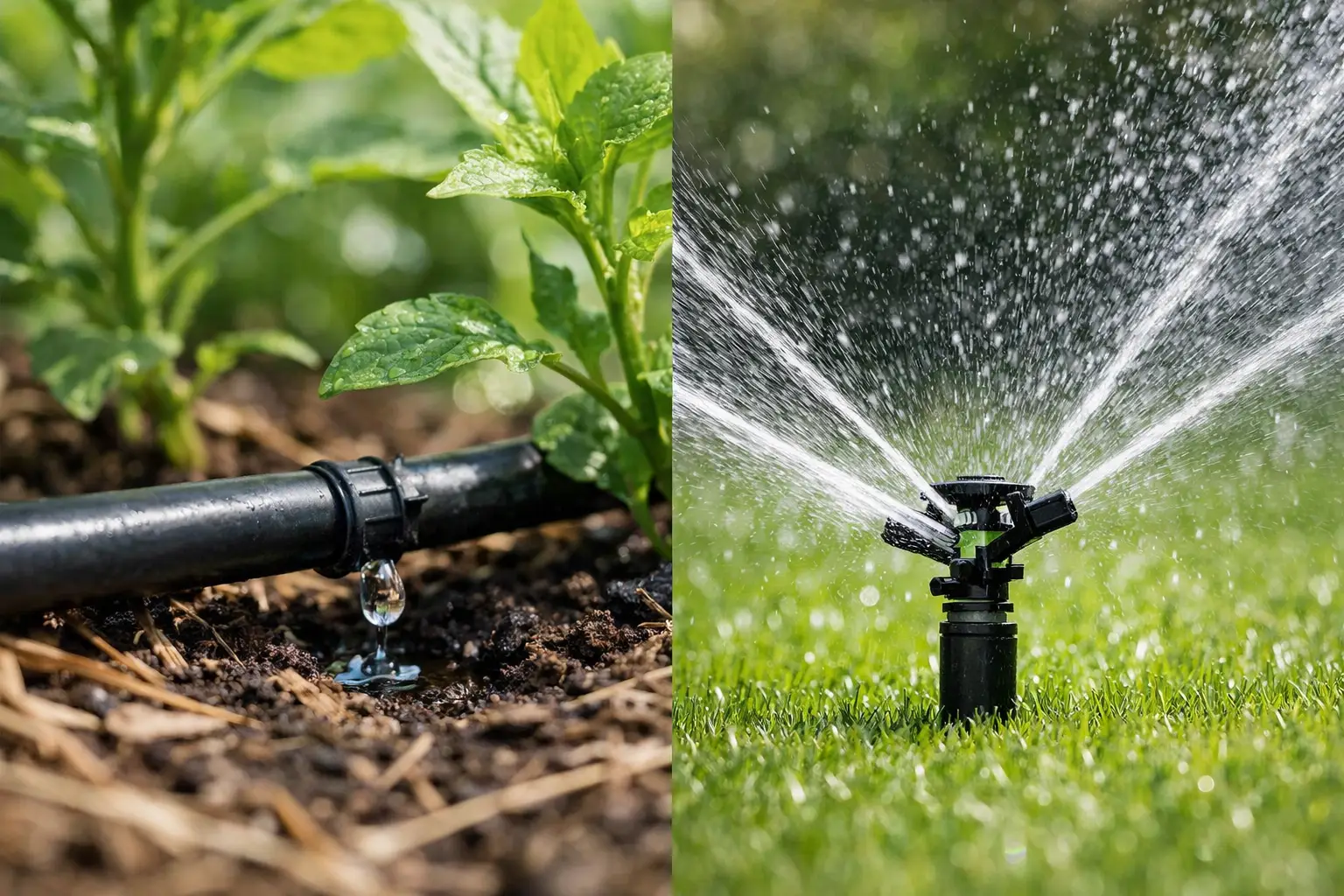
A healthy yard in Colorado rarely comes down to watering more. It comes down to watering the right way. When homeowners compare drip irrigation vs sprinklers, the better choice usually depends on what you are watering, how your landscape is designed, and how much control you want over water use.
For many properties, this is not an either-or decision. Lawns, planting beds, shrubs, and foundation plantings all have different watering needs. A system that works well for turf can be wasteful in a flower bed, and a setup that keeps shrubs efficient may not support broad lawn coverage. That is why irrigation planning should match the landscape, not force the landscape to fit one watering method.
Drip irrigation vs sprinklers: the real difference
The core difference is how water is delivered. Sprinklers apply water over an area, usually from above, to cover turf or larger open spaces. Drip irrigation delivers water slowly at or near the root zone through tubing, emitters, or drip lines.
That simple difference affects almost everything else. Sprinklers are built for coverage. Drip is built for precision. Sprinklers can water a lawn efficiently when the heads are matched, aligned correctly, and adjusted for the shape of the area. Drip systems are typically better where plants are spaced apart, soil needs slower absorption, or overspray would be a problem.
In a climate like Parker and nearby communities, that distinction matters. Wind, sun exposure, slope, and dry conditions can all reduce how effectively water reaches the root zone. The method you use can either support the landscape or work against it.
When sprinklers are the better fit
Sprinklers are usually the right choice for traditional grass lawns and larger, uniformly planted areas. Turf needs even distribution across the surface, and properly designed sprinkler zones are meant to do exactly that.
A well-maintained sprinkler system can support strong lawn coverage, keep watering cycles predictable, and make seasonal adjustments easier. This is especially useful on front lawns, backyard turf areas, and side yards where broad coverage matters more than plant-by-plant control.
Sprinklers also make sense when the landscape layout is simple. If you have large rectangular lawn sections or open turf with minimal obstacles, spray heads or rotors can often water those areas effectively. The system is easier to manage when head spacing, pressure, and arc adjustment are all working together.
That said, sprinklers are only efficient when they are functioning correctly. Tilted heads, clogged nozzles, poor pressure, and misdirected spray can all waste water quickly. Watering sidewalks, fences, or driveways is not a sprinkler-system feature. It is a maintenance issue.
When drip irrigation is the stronger option
Drip irrigation is often the better solution for planting beds, shrubs, trees, gardens, and narrow landscape strips. These areas usually do not need overhead watering, and they often perform better when moisture is delivered slowly and directly.
For example, shrubs planted along a fence line or around a foundation typically benefit from targeted root-zone watering. Flower beds with mulch also pair well with drip systems because the water can move beneath the surface layer instead of evaporating as quickly from overhead spray.
Drip is especially useful in areas where overspray creates problems. Near hardscapes, patios, retaining walls, windows, or walkways, precision matters. A drip system can keep water where it belongs and reduce runoff in tighter spaces.
It also gives better control in mixed planting zones. If one bed includes shrubs, perennials, and ornamental grasses, a drip design can be tailored more carefully than a spray zone that treats the entire area the same.
Water efficiency is not just about the hardware
Drip systems are widely viewed as the more water-efficient option, and in many situations that is true. But efficiency does not come from the label alone. It comes from design, maintenance, and seasonal adjustment.
A neglected drip zone with broken emitters, clogged lines, or poor pressure regulation can underperform just as badly as a sprinkler zone with misting heads and runoff. In the same way, a professionally adjusted sprinkler system can be highly efficient on turf, especially when watering times, head selection, and coverage patterns are set correctly.
The bigger question is whether the irrigation method matches the area. Using sprinklers in a narrow shrub strip often creates waste. Using drip across a large lawn is usually impractical. Water efficiency improves when each part of the landscape gets the delivery method it actually needs.
Landscape health and root development
One of the biggest differences in drip irrigation vs sprinklers is how they influence plant behavior below the surface. Sprinklers tend to wet the soil more broadly from the top down. Drip focuses moisture in a more concentrated area and often encourages deeper, more deliberate watering when run times are managed correctly.
For lawns, broad and even coverage is important because turf has a dense root zone spread across the surface. Sprinklers are designed for that pattern. For shrubs and ornamentals, a slower soak at the root area often supports healthier growth and less surface waste.
Still, there is a trade-off. Drip systems require thoughtful emitter placement as plants mature. A shrub that was small at installation may need adjusted watering coverage as its root zone expands. Sprinklers do not have that same plant-specific requirement, but they do need regular inspection for spacing and spray accuracy.
Maintenance matters more than most homeowners expect
No irrigation system stays efficient on its own. Seasonal use, weather shifts, and normal wear all affect performance.
Sprinkler systems often need head adjustments, nozzle checks, leak repairs, and zone-by-zone inspections. Heads can sink, get blocked by turf growth, or shift out of alignment. In spring and summer, even a minor issue can leave dry patches in one area and oversaturation in another.
Drip systems have their own maintenance demands. Emitters can clog, tubing can shift, and root intrusion or damage from landscape work can interrupt flow. Because drip problems are less visible than a broken spray head, issues can go unnoticed until plants begin to decline.
This is one reason professional irrigation service matters. Reliable performance is not just about installation. It is about keeping the system tuned to real landscape conditions through the season.
Why many Colorado properties benefit from both
For many residential landscapes, the strongest answer to drip irrigation vs sprinklers is both, used in the right places. Lawns generally need sprinkler coverage. Planting beds, trees, and shrubs often benefit from drip.
That mixed approach is common on well-designed properties because it reflects how landscapes actually function. Turf and ornamentals are not the same. Sun exposure may differ from the front yard to the backyard. Slopes, mulch beds, and narrow side yards all create different irrigation needs.
In Parker, Castle Rock, Highlands Ranch, Lone Tree, and Southeast Aurora, seasonal conditions can make those differences even more noticeable. Hot, dry stretches and wind exposure can challenge inefficient watering patterns fast. A property with the right irrigation method in each zone is usually easier to manage and better positioned for long-term landscape health.
How to decide what your yard needs
If most of your outdoor space is established lawn, sprinklers will likely carry the larger workload. If your property includes extensive beds, shrubs, and decorative planting areas, drip should probably play a major role. If your landscape includes both, the decision is less about choosing sides and more about assigning the right system to the right zone.
It also helps to look beyond the equipment itself. Ask whether your current system matches the layout of your yard, whether water is reaching roots effectively, and whether certain areas always seem too dry or too wet. Those patterns usually point to design or maintenance issues, not just watering habits.
For homeowners who want dependable irrigation performance without guessing through the season, a professional inspection can clarify what is working, what is being wasted, and where upgrades or repairs would improve control.
The best irrigation system is not the one with the most features. It is the one that fits your landscape, supports healthy growth, and delivers water with purpose every time it runs.