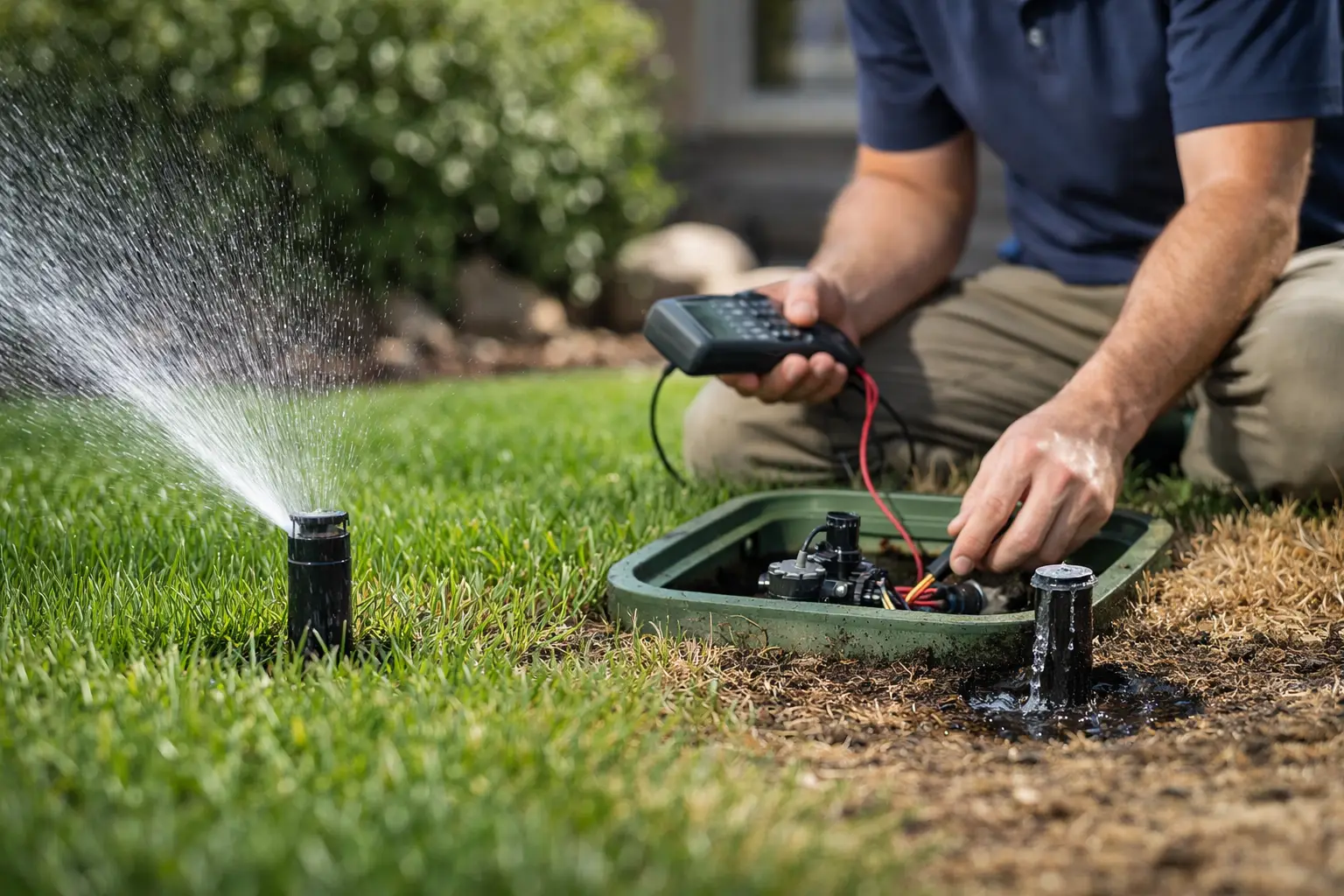
A lawn rarely declines all at once. More often, one section starts turning dry, another stays soggy, and a strip near the sidewalk looks fine. That pattern is usually the first clue in how to detect sprinkler zone issues before they turn into larger repair problems.
Sprinkler systems are built in zones so different parts of the landscape can be watered according to sun exposure, plant type, slope, and soil conditions. When one zone stops performing the way it should, the symptoms tend to show up in the yard before they show up at the controller. Catching those signs early helps protect turf health, reduce water waste, and prevent strain on the rest of the system.
What a zone problem actually looks like
A sprinkler zone issue does not always mean the zone has completely stopped working. In many cases, the zone still runs, but not correctly. You may see heads that do not pop up fully, dry patches that widen over time, misting instead of proper spray, or water that lingers long after the cycle ends.
Some problems are obvious. A zone may fail to turn on, fail to shut off, or flood one area. Others are subtler. Pressure may be lower than normal, coverage may be inconsistent, or one section may activate later than expected. These are still zone issues, even if the controller appears to be operating normally.
In Colorado landscapes, those differences matter. Heat, wind, soil variation, and seasonal system wear can make one weak zone show up quickly in the form of stressed turf or runoff.
How to detect sprinkler zone issues during a system check
The most reliable way to spot a zone issue is to run each zone one at a time and observe what happens from start to finish. This is not just about seeing whether water comes out. You are checking whether the zone activates properly, waters evenly, and shuts down cleanly.
Start at the controller and manually run one zone for a few minutes. As it starts, pay attention to the delay between command and activation. A normal system may take a moment, but a long delay can point to valve trouble, wiring issues, or a restricted line.
Then walk the zone. Watch every head. Are all of them popping up to full height? Is the spray pattern complete and consistent? Is one head bubbling while another is throwing too far? A single damaged head can affect coverage, but if several heads behave poorly in the same zone, the issue may be pressure-related or tied to the valve.
Stay through shutdown as well. If water continues to trickle after the cycle ends, that can suggest a valve that is not sealing properly. If one area drains excessively, there may be a low-head drainage problem or a grading issue that needs correction.
Signs the issue is in the valve or wiring
When a zone will not turn on at all, homeowners often assume the controller has failed. Sometimes that is true, but the problem is often more localized.
A faulty zone valve may stay closed even when the controller sends a signal. In other cases, the valve may stick open, causing the zone to run when it should be off. Wiring problems can create similar symptoms. A damaged wire splice, corroded connection, or failed solenoid may prevent the valve from opening consistently.
You may also notice intermittent behavior. The zone works one day, then not the next. That usually points away from a simple scheduling issue and toward an electrical or mechanical fault. Intermittent zone problems are worth addressing early because they can be difficult to trace once lawn stress begins showing in multiple areas.
Pressure problems often show up first in one zone
Low pressure does not always affect the entire irrigation system evenly. If one zone is supplied through a problem valve, has a leak in the lateral line, or contains clogged nozzles, it may be the first area to lose performance.
The visual signs are usually clear once you know what to watch for. Spray heads may not rise fully. Rotor streams may fall short of their normal arc. Instead of defined spray, you may see fine mist drifting away in the wind. That is not just poor coverage - it is wasted water.
High pressure can create its own issues. Excessive misting, fogging, or premature head wear may indicate the zone is operating above the ideal range for the sprinkler type. The fix depends on the cause. Sometimes it is a pressure regulation issue. Sometimes the heads or nozzles are mismatched.
It depends on whether the symptom is isolated to one head, one section of the zone, or the entire zone. That distinction matters because it helps narrow the repair path.
Leaks and line breaks are not always dramatic
A broken pipe gets attention when it creates obvious pooling or a geyser. But smaller leaks often stay hidden longer and still affect zone performance.
If a zone seems weaker than before, or if one section of turf stays greener and softer than everything around it, there may be an underground leak. Another clue is a sudden shift in how long the zone takes to build pressure. Water escaping below grade can reduce output at the heads while saturating the soil nearby.
Look for ground that feels unusually soft, areas that sink slightly underfoot, or persistent dampness when the system has not recently run. In established landscapes, a leak may show up as healthy-looking grass at first because it is getting extra water. Over time, runoff, root problems, and uneven coverage tend to follow.
Head alignment and nozzle issues can mimic bigger failures
Not every zone problem starts with the valve or pipe. Sometimes the zone is working, but distribution is off because the heads are misaligned, blocked, worn, or fitted with the wrong nozzle.
A tilted head can send water into pavement instead of turf. A clogged nozzle can create a weak pattern that leaves a dry patch. Grass growing around a spray head can block output enough to make it look like the whole zone is underperforming.
This is where a careful visual inspection helps. If the problem follows one or two heads, the repair is usually more localized. If coverage problems appear across most of the zone, the cause is more likely tied to pressure, valve performance, or zone design.
Wet spots can mean overwatering, but not always
When one zone produces standing water or runoff, the first assumption is often that the schedule is too long. That may be part of it, but it is not the only explanation.
A valve that leaks through after shutdown can keep feeding the zone slowly. A low spot may collect water because nearby heads are aimed poorly. Heavy soil in one section of the yard may absorb water differently than another. In sloped areas, a zone can appear to be failing when the real issue is distribution and drainage working against each other.
For homeowners in Parker, Castle Rock, and nearby communities, this matters because sun exposure, grade changes, and wind can vary sharply across a single property. A zone may need adjustment, repair, or both.
When the controller is not the real problem
Controllers get blamed often because they are visible and easy to access. But if the settings are correct and only one zone is acting up, the controller may not be the source.
Still, it is worth checking a few basics. Confirm the zone is assigned to the expected program. Make sure the run time was not changed accidentally. If the controller shows the zone running but there is no field response, that points back to wiring, the solenoid, or the valve itself.
If several zones fail at once, the diagnosis changes. That may indicate a common wire issue, a controller output problem, or a supply-side concern. One weak zone usually means localized trouble. Multiple affected zones suggest a broader system fault.
When professional diagnosis makes sense
Some sprinkler zone issues are easy to spot but harder to confirm without testing. A valve may look fine from above grade and still fail electrically. A pressure issue may be caused by a hidden leak, a partially closed valve, or nozzle mismatch. Because irrigation systems combine hydraulic and electrical components, symptoms can overlap.
That is where a specialized irrigation service brings value. A proper zone inspection does more than identify the obvious broken part. It checks activation, pressure behavior, head performance, drainage, and overall water efficiency together.
For homeowners who want dependable landscape performance without wasting water, a professional evaluation is often the fastest way to stop the guesswork. Irrivive Sprinklers focuses on that kind of targeted system care, especially when one zone starts showing signs that the rest of the system may soon follow.
The best time to address a sprinkler zone issue is when the lawn first starts telling you something is off. A dry corner, a soggy strip, or a head that no longer behaves like the others is usually enough reason to take a closer look.