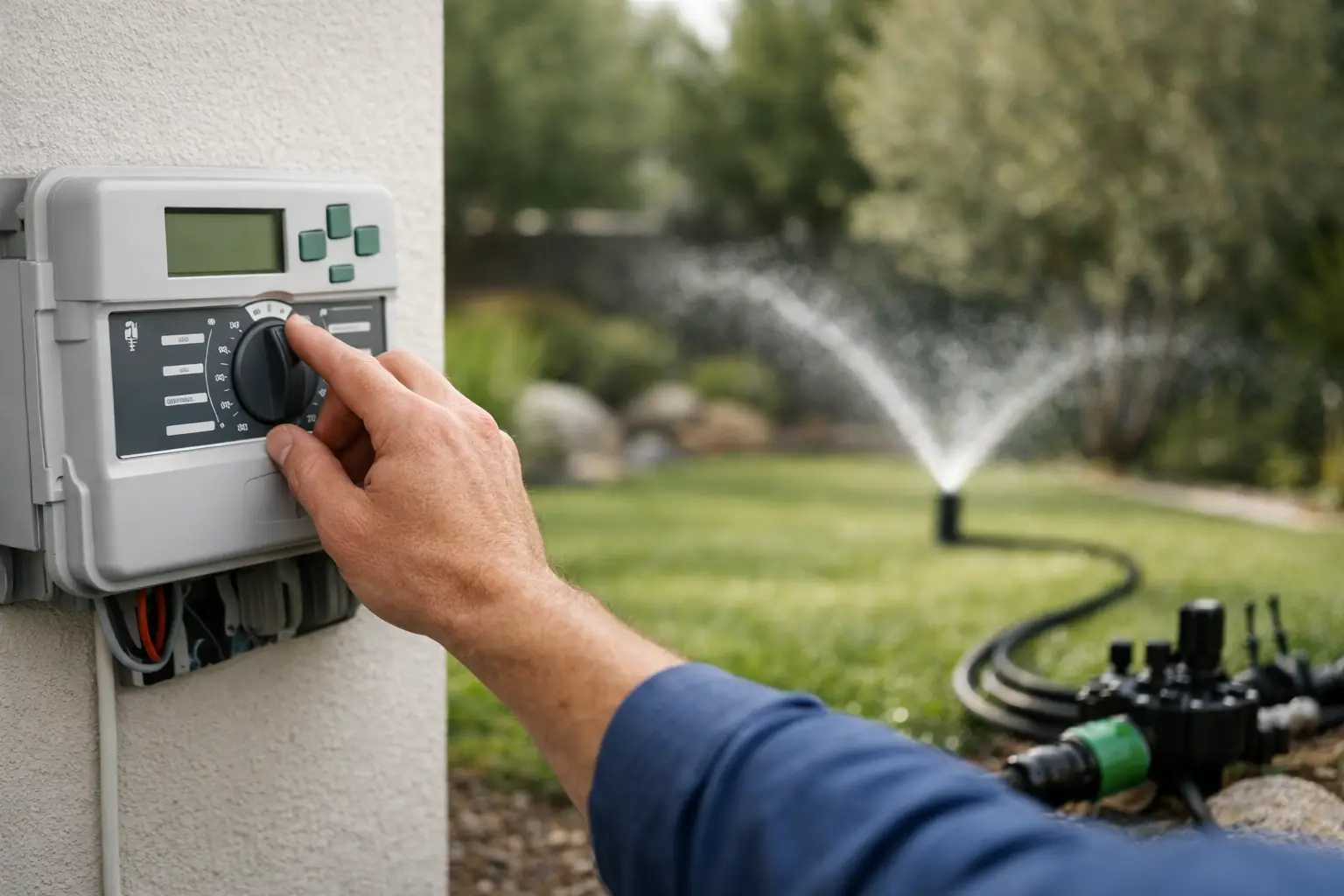
If your lawn is getting watered at the wrong time, too often, or not at all, the controller is usually where the problem starts. Learning how to program irrigation controller settings correctly can make the difference between a healthy landscape and wasted water, especially in Colorado where weather shifts quickly and watering needs change through the season.
For many homeowners, the controller looks more complicated than it really is. Most models follow the same basic logic even if the buttons and screen layout vary. Once you understand what each setting actually controls, programming becomes much more straightforward and much less trial and error.
How to program irrigation controller basics
An irrigation controller does three main things. It tells each zone when to start, how long to run, and which days to water. That is the core of programming, whether you have a simple timer or a smart controller tied to weather data.
The first thing to know is that a program is not the same thing as a zone. This is one of the most common points of confusion. A program, often labeled A, B, or C, is a full watering schedule. Zones are the individual areas of your yard, such as front lawn, backyard turf, shrubs, or drip lines. In most homes, one program is enough. Multiple programs are useful only when different parts of the landscape need fundamentally different schedules.
If you accidentally set start times in more than one program, your system may run more often than expected. If you add multiple start times within the same program, every zone assigned to that program will repeat the full cycle each time. Homeowners often think they are setting separate zone times when they are really telling the controller to repeat the whole schedule.
Start with the right controller information
Before changing anything, identify which zones control which parts of the landscape. Run each zone manually and make a simple note of what it covers. This matters because watering duration should match the sprinkler type and plant material, not just the size of the area.
Spray heads usually apply water faster than rotors, so they need shorter run times. Drip zones are different again and often need longer but less frequent watering depending on emitter type and soil conditions. Turf and shrubs should not usually share the same schedule. If they do, the controller may be programmed correctly but the system design is still working against efficient watering.
It also helps to confirm the current date and time on the controller. That sounds basic, but incorrect time settings are a frequent cause of overnight watering at the wrong hour or watering on the wrong day.
Set watering days before run times
When homeowners ask how to program irrigation controller schedules correctly, they often focus first on minutes per zone. In practice, the better starting point is watering frequency. How many days per week you water has a major effect on root depth, plant health, and runoff.
For established lawns, fewer deeper watering days are usually better than light daily watering. Shrub beds and drip zones may need a different pattern. In Parker and nearby areas, the right schedule also depends on sun exposure, slope, soil type, and how hot and dry the week has been.
Most controllers let you choose between specific days of the week, odd-even scheduling, or interval watering. Day-of-week scheduling is easiest for most residential properties. Odd-even settings can be useful if local watering restrictions require them. Interval schedules are sometimes helpful for new seed or closely managed planting areas, but they can become confusing if no one updates them seasonally.
Program start times carefully
A start time is when the watering cycle begins for a program, not for an individual zone. This is one of the biggest programming mistakes we see in the field. If you enter four start times because you have four zones, the controller will run all four zones four separate times.
In most cases, one start time per program is enough. Set it early in the morning when evaporation is lower and wind is usually calmer. That gives water a better chance to soak in evenly. Watering late at night can sometimes leave turf wet too long, which may increase disease pressure in certain conditions.
If your system has low pressure or many zones, a second start time may occasionally be used for cycle-and-soak watering. That means splitting run time into shorter rounds to reduce runoff on slopes or compacted soil. But that should be intentional, not accidental.
Set zone run times based on sprinkler type
After days and start times are set, move to run times for each zone. This is where the controller becomes specific to your property.
Rotor zones usually need longer run times than fixed spray zones because they apply water more slowly. Spray zones may need shorter cycles to avoid puddling and runoff. Drip irrigation can vary widely depending on emitter spacing and plant needs. New plantings also need different care than established landscapes.
There is no universal minute setting that works for every yard. South-facing turf in full sun may dry out faster than shaded lawn on the north side of the home. Clay-heavy soil holds water differently than sandy soil. If one area stays soggy while another dries out, the issue may be run time, head performance, coverage, or all three.
A good controller schedule should be adjusted as part of overall system observation. If water is running into the sidewalk or street, increasing efficiency is not just about changing the timer. It may also mean nozzle adjustment, pressure issues, poor spacing, or broken components.
How to program irrigation controller settings for seasons
One schedule should not stay untouched from spring through fall. In Colorado, seasonal changes matter. Cool spring weather, summer heat, and early fall conditions all affect how much water the landscape actually needs.
Many controllers include a seasonal adjust or water budget feature. This is one of the most useful settings on the unit. Instead of changing every individual zone run time, you can raise or lower the overall watering percentage. For example, a schedule built for peak summer can be scaled back in spring or fall without reprogramming each station from scratch.
Smart controllers go further by adjusting for local weather inputs, but they still need correct base programming. A weather-based controller cannot compensate for a zone assigned to the wrong program, excessive start times, or mismatched sprinkler hardware.
Seasonal changes are also the right time to check whether your schedule still matches your landscape. Plant growth, tree shade, nozzle wear, and repair history all affect irrigation performance over time.
Common mistakes that lead to wasted water
Most controller problems are not caused by the controller failing. They come from settings that seem small but create major inefficiency.
Multiple unintended start times are at the top of the list. The next is using too many programs without a clear reason. Another common issue is setting every zone to the same run time even though the sprinkler types are different. Homeowners also forget to update schedules after repairs, seasonal weather shifts, or changes in daylight hours.
Rain delay functions are often underused. If your controller has that feature, use it. There is no benefit to irrigating during or right after meaningful rainfall. The same applies when temperatures cool significantly.
If the controller appears to be programmed correctly but the yard is still showing dry spots, overspray, or runoff, the issue may be mechanical rather than digital. A damaged valve, clogged nozzle, tilted head, wiring issue, or pressure imbalance can all mimic a programming problem.
When programming is enough and when service makes sense
Knowing how to program irrigation controller settings is valuable, but it has limits. If your system is fundamentally sound, correct scheduling can improve water efficiency and landscape performance quickly. If the system has head alignment issues, leaks, valve problems, or poor zone layout, programming alone will not solve the bigger issue.
That is often where professional irrigation support becomes worthwhile. An experienced technician can look at run times, precipitation rates, coverage, pressure, and seasonal demands together instead of treating the controller as the only variable. For homeowners who want dependable irrigation without constant trial and error, that broader approach usually protects the landscape better.
A well-programmed controller should feel predictable. Your lawn and planting beds should be getting the water they need, at the right time, without constant manual correction. If your schedule still feels like guesswork, it may be time to stop adjusting buttons and start evaluating the system itself.
The best controller setting is not the one with the most features. It is the one that matches your landscape, the season, and the way your irrigation system actually performs.