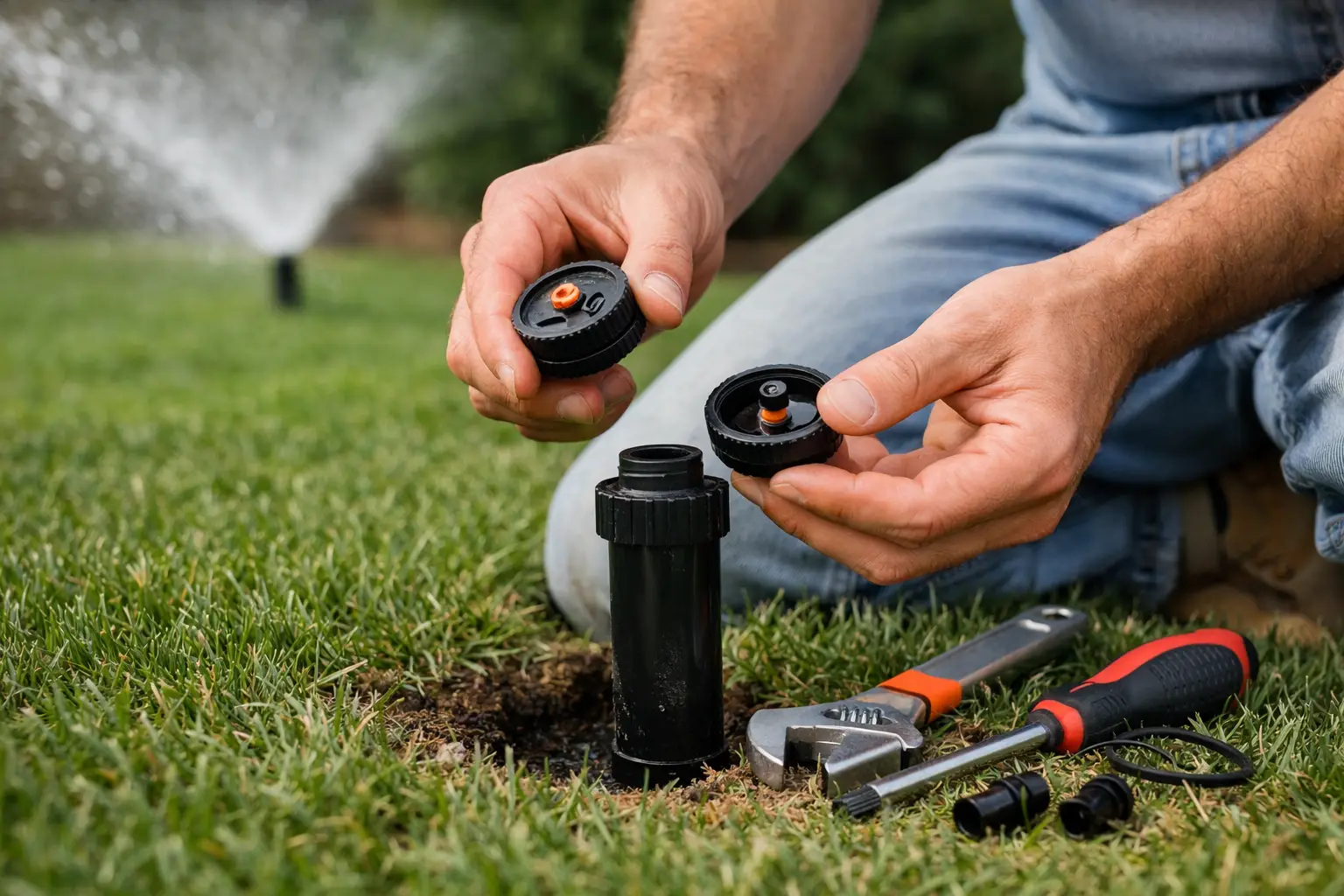
A sprinkler head that sputters, leaks, stays buried, or sprays the sidewalk instead of the lawn usually is not an isolated annoyance. If you are searching for how to repair sprinkler head problems, the real goal is restoring even coverage without wasting water or stressing the rest of the irrigation system.
For many homeowners, the visible problem is only part of the story. A tilted head may have been pushed out of alignment by foot traffic or mower contact. A weak spray pattern can point to a clogged nozzle, low pressure, or a damaged seal. A head that will not pop up may be dealing with grit in the stem, internal wear, or a deeper zone issue. Knowing which kind of failure you are looking at matters, because the right repair is often simple, while the wrong one can leave the system underperforming for weeks.
How to repair sprinkler head problems the right way
Start by running the affected zone and watching the head in operation. This tells you more than a dry inspection ever will. Look for water pooling around the base, a stream that is too short or uneven, a head that does not rise fully, or a spray arc aimed away from the intended area.
If the sprinkler head is leaking only while the zone is active, the issue may be in the cap, seal, or nozzle connection. If it leaks after shutoff, that can suggest low-head drainage, a valve issue, or elevation-related drainage within the line. Those are different repair paths, and treating all of them like a bad head often leads to repeat service.
Once the zone is off, clear away soil and turf around the head carefully. A surprising number of performance issues come from heads that have sunk below grade or become packed in by soil. When the body is buried, the spray pattern is blocked before it ever reaches the lawn.
Common sprinkler head failures
The most common repair is not full replacement. It is correcting one worn or obstructed component. Nozzles clog with debris. Risers crack from impact. Internal seals wear out over time. Spray heads get buried or knocked crooked. Rotor heads can stop rotating because of debris, worn gears, or damage inside the assembly.
There is also the connection point below the surface to consider. If the head itself looks intact but water is bubbling up from the soil around it, the fitting underneath may be cracked. In that case, replacing only the top assembly will not fix the actual leak.
When a repair is enough and when replacement makes more sense
If the issue is limited to the nozzle, filter, spray pattern, or minor alignment, repair is usually the most efficient option. If the body is split, the threads are damaged, or the internal mechanism is failing after repeated adjustments, replacement is typically the better long-term move.
It also depends on age and system consistency. If one head in an older zone has failed and neighboring heads are showing the same wear, replacing a single part may solve the symptom but not the overall coverage problem. That is especially true in systems that have seen years of seasonal expansion, soil movement, and routine landscape activity.
Inspect the full zone before you repair one head
A well-repaired sprinkler head still will not perform properly if the surrounding zone has pressure or coverage issues. Before making the fix, run the entire zone and check whether nearby heads are operating normally. If several heads are weak, misting, or failing to extend, the problem may be pressure-related or tied to a valve, break, or restriction further upstream.
This is where experience matters. A single broken head can look obvious, but irrigation systems are interconnected. One leak changes pressure. One mismatched nozzle changes precipitation rate. One sunken head leaves dry spots that tempt overwatering. Homeowners often notice the symptom in one place when the system imbalance has already spread beyond that point.
Signs the issue may be larger than the head itself
If the same zone has soggy patches, inconsistent arc distances, or heads that perform differently during the same cycle, it is worth stepping back. You may be dealing with poor pressure regulation, root intrusion, a damaged lateral line, or a mismatch between head types. Repairing the visible head without correcting the system condition can keep the lawn alive, but not efficient.
That matters in Colorado landscapes, where irrigation timing and water distribution have a direct impact on turf health. Uneven coverage often shows up as stressed grass, runoff, or repeated dry spots that seem to return no matter how often the system runs.
The basic process to repair a sprinkler head
If the problem has been isolated to the head, turn off the irrigation zone and expose the body carefully. Remove built-up soil so nothing drops into the line during service. Unscrew the nozzle or cap depending on the head style and inspect for grit, cracked parts, or worn seals.
Clean the filter if one is present, flush the line briefly if debris is suspected, and confirm the riser moves freely. If the stem sticks, the head may be dirty internally or physically damaged. Reassemble the head, align the spray direction, and make sure the top sits at proper grade - not buried and not standing too high above the turf.
For a full head replacement, match the spray pattern, throw distance, and precipitation characteristics as closely as possible. This is where repairs often go off course. Installing a head that physically fits but performs differently than the rest of the zone creates uneven watering. The lawn then gets too much in one area and too little in another.
Why nozzle matching matters
Nozzle selection is not cosmetic. It determines how much water is applied and where it lands. Even a small mismatch can disrupt coverage across a zone. If one repaired head throws farther or applies more water than the others, you may solve a dead spot only to create overspray, runoff, or fungal stress in another section.
Professional irrigation repair focuses on restoring balance, not simply stopping the leak. That means checking the head type, arc setting, spacing, and operating pressure as part of the repair.
Mistakes homeowners make when trying to fix it themselves
The biggest mistake is replacing the wrong part because the visible symptom seems straightforward. A head that does not pop up is often assumed to be broken, when it may actually be blocked by compacted soil or starved by low pressure. A leaking head may be replaced entirely when the actual failure is below grade at the swing joint or fitting.
Another common issue is disturbing the grade around the head. If the repair leaves the sprinkler too low, the lawn blocks the spray. Too high, and it becomes vulnerable to mower damage. Alignment matters too. A few degrees off can waste water on concrete, fencing, or planting beds instead of the intended coverage area.
Temporary fixes also create long-term service issues. Over-tightening components can crack plastic parts. Mixing incompatible heads or nozzles can make a zone look functional while quietly reducing irrigation quality.
When professional sprinkler repair is the better call
If the repair involves digging, recurring leaks, pressure inconsistencies, or uncertainty about nozzle matching, professional service usually protects the system better than trial and error. The goal is not only to get the head working again. It is to restore proper operation across the zone and avoid wasting water in the process.
That is especially relevant for homeowners who expect their landscape to stay healthy through the season without constant adjustment. A specialized irrigation technician can identify whether the failed head is the real problem or just the visible sign of a broader issue.
For homes in Parker and nearby communities, that local knowledge matters. Seasonal conditions, soil movement, and regular startup and winterization cycles all affect how sprinkler heads wear and fail. A repair approach that accounts for those patterns is more dependable than a quick part swap.
Preventing the next sprinkler head problem
Most sprinkler head failures are easier to prevent than to chase down after the lawn starts showing stress. Seasonal inspections help catch heads that are sinking, tilting, clogged, or losing pressure before the problem spreads. It also helps to check alignment after mowing, edging, or landscape work, since head damage often starts with impact rather than age alone.
Routine system care is what keeps a minor head issue from becoming a larger irrigation problem. That is part of why homeowners who prioritize landscape health often treat sprinkler service as system maintenance, not one-off repair.
If one head is acting up, it is worth paying attention now. The lawn will usually tell you when coverage is off, but by then, the system has often been underperforming longer than it appears. The right repair brings back more than spray - it brings back control.