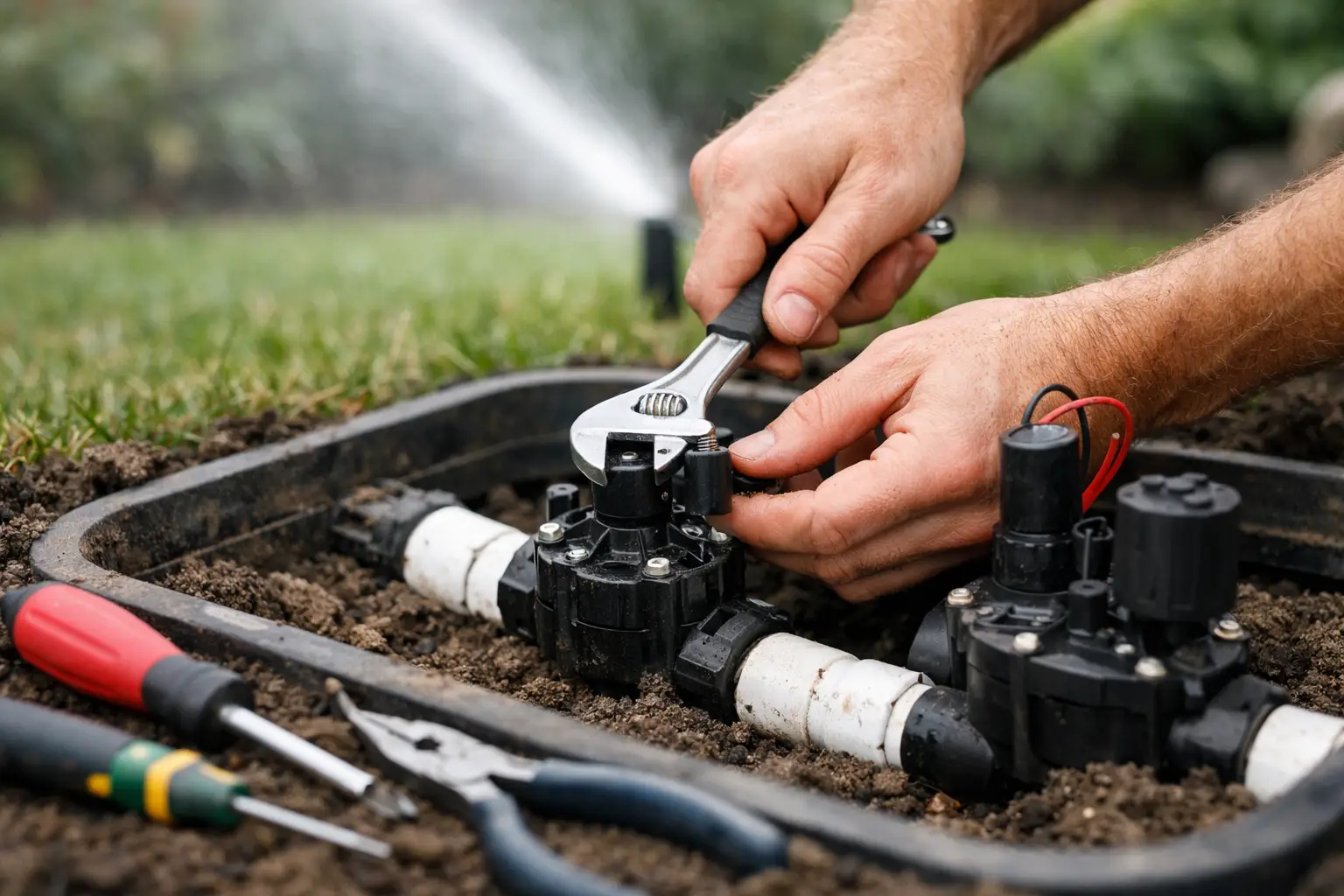
A sprinkler zone that will not shut off usually gets your attention fast. Water keeps running, pressure drops across the yard, and suddenly a small valve issue turns into wasted water and a stressed landscape. If you are searching for how to repair sprinkler valve problems, the first step is knowing whether the issue is truly in the valve or somewhere else in the system.
Sprinkler valves are the control point for each irrigation zone. When they open and close correctly, your system waters on schedule and distributes pressure where it belongs. When they fail, the symptoms can look simple from the surface, but the cause may be electrical, mechanical, or related to debris and wear inside the valve body.
How to Repair Sprinkler Valve Issues the Right Way
Before taking a valve apart, confirm the symptom. A zone that stays on, fails to turn on, leaks around the valve, or runs weakly can all point to different causes. In some cases, the valve is the problem. In others, the controller, wiring, solenoid, or even a downstream line break is creating the same effect.
Start by shutting off the irrigation water supply if the valve is stuck open or leaking heavily. Then locate the valve box and clear away dirt so you can inspect the assembly. A professional approach matters here because forcing parts or working in a muddy valve box often creates a larger repair.
Common signs of a bad sprinkler valve
A failing valve usually shows up in one of a few predictable ways. The most common is a zone that continues to run after the controller cycle ends. Another is a zone that will not activate at all, even when the timer and other zones appear normal. You may also see water seeping around the bonnet, low pressure in one zone, or chattering when the valve attempts to open.
These symptoms do not all point to the same fix. A stuck valve diaphragm is different from a burned-out solenoid, and both are different from damaged field wiring. That is why diagnosis should come before repair.
Diagnose the Problem Before You Replace Parts
If the zone will not turn on, begin with the controller. Run that station manually and listen at the valve. A soft click often means the solenoid is receiving power. No sound at all could indicate a wiring or controller issue, though a failed solenoid is also possible.
If the zone stays on after the cycle ends, debris inside the valve is a likely cause. Small particles can keep the diaphragm from sealing fully. In areas where seasonal start-up and shutdown matter, freeze movement or age-related wear can also distort internal components and prevent a proper seal.
Leaks around the top of the valve often suggest a worn bonnet seal, loose screws, or a cracked housing. If the plastic body is damaged, a rebuild may not be enough. At that point, replacement of the full valve assembly is often the better long-term decision.
Check the solenoid and wiring
The solenoid is the small cylindrical component mounted on the valve that receives the electrical signal to open and close the zone. Sometimes a valve issue is simply a loose wire connection or corrosion at the splice. If the wiring is compromised, replacing internal valve parts will not solve the problem.
A solenoid can also stick or fail electrically. In many cases, it can be replaced without rebuilding the entire valve. That said, if the valve body and diaphragm are already worn, replacing only the solenoid may restore operation temporarily without correcting the underlying reliability issue.
Check for debris inside the valve
Debris is one of the most common reasons a sprinkler valve will not close completely. Sand, grit, small stones, or fragments from aging pipe can enter the valve and lodge under the diaphragm. Even a small obstruction can allow continuous water flow.
If you open the valve, inspect the diaphragm, spring, and internal ports carefully. Clean all components with water and check for tears, warping, or stiffness. If the diaphragm has lost flexibility, cleaning alone is rarely enough.
Basic Sprinkler Valve Repair Steps
Once you confirm the valve itself is the problem, the repair usually falls into one of three categories: cleaning the internal components, replacing the diaphragm and bonnet parts, or replacing the solenoid. In some cases, full valve replacement is the most dependable solution.
Turn off the water supply before disassembly. Remove the screws from the top of the valve carefully and keep the parts organized. Lift the bonnet and diaphragm straight up so you can inspect how everything is seated. If you reinstall the diaphragm incorrectly, the valve may leak or fail to operate even after the repair.
Clean the valve interior and flush out debris. Inspect the diaphragm for cracks, stretching, or hardened rubber. Replace any worn internal parts with the correct components for that exact valve model. Reassemble evenly so the lid seats properly and the screws tighten down without distortion.
After reassembly, restore water slowly and test the zone manually. Watch for leaks, confirm the zone turns on cleanly, and make sure it shuts off fully when the cycle ends. A repair is only complete when the valve performs consistently through a full on-off test.
When repair is enough
If the valve body is intact and the issue is limited to a worn diaphragm, debris, or a failed solenoid, repair is often the right path. This is especially true when the rest of the manifold is in good condition and the valve model is still serviceable.
A focused repair can restore normal operation without disrupting the surrounding piping. For a relatively isolated issue, that is often the most efficient and least invasive option.
When replacement makes more sense
If the valve body is cracked, the threads are damaged, the plastic is brittle, or multiple components are failing at once, replacement is usually the more dependable choice. The same applies when prior repairs have been pieced together over time and the assembly no longer offers consistent performance.
For homeowners who value dependable irrigation through the full season, recurring valve problems are a sign to think beyond the immediate symptom. A full replacement can reduce repeat failures and improve zone reliability, especially in systems that have seen years of weather exposure and seasonal cycling.
Why Sprinkler Valve Problems Are Common in Seasonal Climates
In Colorado landscapes, irrigation systems work through hot, dry periods and then sit through winter conditions that can stress fittings, seals, and valve components. Seasonal transitions matter. A valve that seemed fine at shutdown can reveal wear at spring start-up, especially if debris entered the line, seals stiffened over time, or components shifted under freeze conditions.
That is one reason professional irrigation service often looks at the entire operating condition of the zone, not just the single failed part. A valve problem may be connected to pressure irregularities, wire damage, manifold strain, or maintenance gaps elsewhere in the system.
When to Call a Professional
If the issue involves electrical troubleshooting, cracked fittings, buried valve access, or repeated failures in the same zone, it is usually time for specialized irrigation service. The same is true if the valve box is flooded, the manifold layout is tight, or the system has mixed components from prior repairs.
Homeowners often start with the question of how to repair sprinkler valve trouble and then find the bigger concern is system reliability. A zone that fails once is frustrating. A zone that fails again during peak watering season can affect turf health, plant performance, and water efficiency across the property.
A professional technician can isolate whether the problem is the valve, the control signal, the hydraulic conditions, or a larger maintenance issue. That level of diagnosis protects the repair itself and helps prevent unnecessary replacement of working parts.
For properties in Parker and nearby communities where irrigation performance matters through changing seasons, a specialized approach usually delivers better long-term results than trial-and-error repair. Irrivive Sprinklers focuses on that kind of dependable system care, especially when valve issues are part of a broader irrigation reliability problem.
Sprinkler valves are small components with an outsized role in landscape health. If one zone is acting up, treat it early, diagnose it carefully, and aim for a repair that restores confidence in the whole system - not just a temporary fix.