A cracked manifold in January usually starts with a shortcut in October. That is why homeowners asking how to winterize sprinkler system equipment are really asking how to avoid expensive spring repairs, uneven coverage, and wasted water when the season returns.
In Colorado, winterization is not just a seasonal checkbox. It is a protective service that matters because irrigation systems hold water in places you cannot see - lateral lines, valves, fittings, swing joints, and backflow assemblies. When temperatures drop, trapped water expands. That expansion can split PVC, damage seals, and weaken components that looked fine when the system was shut off.
Why proper sprinkler winterization matters
A sprinkler system is built for controlled water movement, not freeze expansion. Even a small amount of water left in the wrong section can cause damage that does not show up until spring startup. By then, the issue may look like a bad head or poor pressure, when the real problem is an underground crack or a compromised valve.
This is especially relevant along the Front Range, where fall days can stay mild right up until a hard freeze arrives. Homeowners in Parker and nearby areas often see sudden temperature swings, which means waiting too long can create unnecessary risk. Winterization protects the physical system, but it also helps preserve irrigation efficiency. A damaged line or leaking valve in spring can waste a significant amount of water before the problem is fully diagnosed.
How to winterize sprinkler system components the right way
The correct process depends on your setup, but the goal is always the same - isolate the water supply, remove pressurized water from the system, and protect exposed components from freeze damage.
Start by shutting off the irrigation water supply. This is typically a dedicated shutoff for the sprinkler system, separate from the main domestic line. Once the water is off, the system controller should also be turned to the off or rain mode setting so it does not try to run during freezing weather.
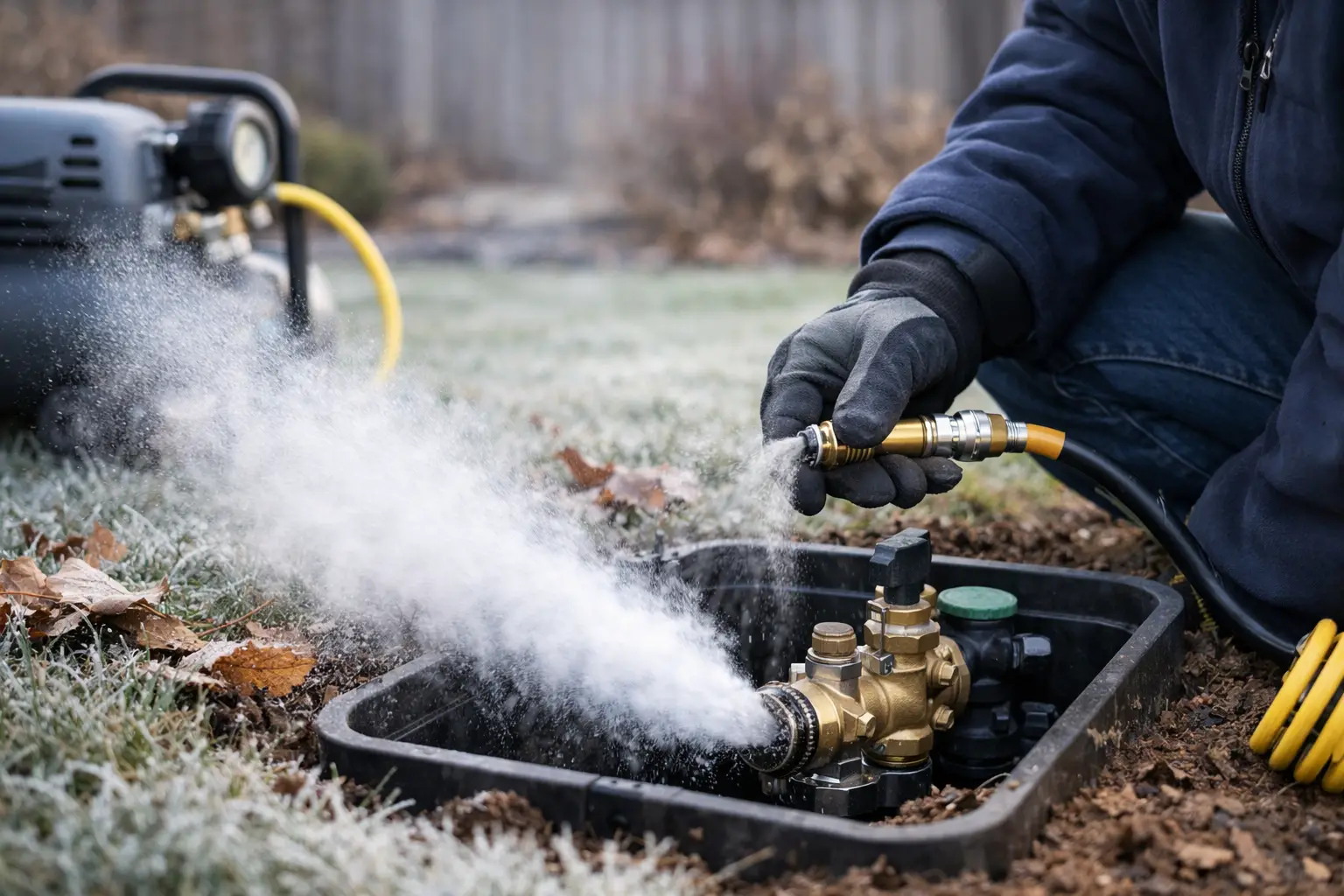
The next critical step is draining or blowing out the irrigation lines. In climates with regular hard freezes, compressed air is the standard method because gravity draining alone often leaves water trapped in low spots and valves. That trapped water is where winter damage begins.
Backflow prevention devices also need attention. These assemblies are especially vulnerable because they are above ground and exposed. If water remains inside, freezing can crack the housing or damage internal checks and seals. In many cases, the isolation valves are shut down and test cocks are opened to allow drainage, but the exact procedure depends on the device type and installation.
Blowouts are effective, but they need to be done carefully
Many homeowners assume winterization is mainly about introducing air into the lines. In practice, it is about using the right pressure and volume for the specific irrigation system. Too little air can leave water behind. Too much pressure can damage heads, fittings, valve diaphragms, or drip components.
This is where DIY attempts often go wrong. A small portable compressor may not provide enough air volume to clear the zones properly, while an oversized setup in inexperienced hands can create avoidable stress on the system. Professional irrigation technicians use equipment sized for sprinkler blowouts and understand how long to run each zone without overheating components or forcing unnecessary pressure through the lines.
Rotor zones, spray zones, and drip zones do not all behave the same way. Rotor lines generally need a different approach than smaller spray zones, and drip irrigation often requires extra care because emitters, filters, and pressure regulators can be more sensitive. If your system includes multiple zone types, the blowout process should account for those differences rather than treating every section the same.
What the winterization process usually includes
A professional winterization appointment is typically straightforward, but it should still be methodical. The water supply is shut off, the backflow assembly is secured, and each irrigation zone is cleared using compressed air in a controlled sequence. The technician also checks whether valves are holding properly and whether obvious issues should be addressed before spring startup.
That last point matters more than many homeowners realize. Seasonal service is not only about getting water out. It is also an opportunity to catch visible concerns such as damaged heads, leaking fittings, poor nozzle alignment, or aging valve boxes before they turn into larger repairs later.
For homeowners who value convenience and system reliability, this is often the real advantage of working with a specialized irrigation provider. The winterization is completed correctly, and the system gets a professional set of eyes on it before the off-season begins.
Signs your sprinkler system may need more than a basic blowout
Sometimes the question is not just how to winterize sprinkler system lines. It is whether the system is healthy enough to shut down cleanly in the first place.
If you have zones that never seemed to run correctly during the season, heads that leaked after cycles ended, soft spots in the lawn, or unexplained pressure loss, those symptoms can point to underlying problems. Winterization can still move forward, but it may be wise to note those issues for spring repair or inspection. A leaking valve, for example, can allow water to re-enter a section after blowout if the system is not fully isolated.
Older systems also deserve closer attention. Components wear over time, especially in systems that have gone through repeated freeze-thaw cycles or have been repaired in sections over the years. Mixed materials, uneven grading, and outdated controllers can all affect how efficiently the system shuts down and restarts.
Timing matters more than many homeowners think
The best time to winterize is before the first hard freeze, not after a cold snap has already arrived. Once overnight temperatures begin trending toward freezing, the window narrows quickly. While one chilly night does not guarantee major damage, repeated exposure increases risk, particularly for backflow assemblies and exposed piping.
Scheduling earlier also gives you more flexibility if the system needs a minor repair before it can be shut down properly. Waiting until the last minute can turn a routine seasonal service into an urgent problem.
In areas like Parker, Castle Rock, Highlands Ranch, Lone Tree, and Southeast Aurora, weather can change fast enough that proactive scheduling makes sense. Fall irrigation demand may drop gradually, but freeze risk does not always do the same.
A few common mistakes to avoid
The most common mistake is assuming the controller being off means the system is protected. It is not. If the line is still charged with water, the system is still vulnerable.
Another mistake is leaving the backflow assembly exposed without proper drainage. This component often takes the first hit in freezing weather because it sits above grade and cools quickly.
The third issue is incomplete blowouts. Seeing air come through a few heads does not necessarily mean the zone is clear. Water can remain in low sections, valve bodies, or branch lines if the process is rushed or the air supply is not adequate.
Finally, drip irrigation should never be treated as an afterthought. It may be lower flow, but it still contains water in tubing, filters, and regulators that can be damaged by freezing conditions.
When professional service is the better choice
For homeowners who want dependable results, professional winterization is often the most sensible route. Irrigation systems are specialized, and the blowout process is one of those tasks where experience matters. The goal is not just to empty the lines. It is to do it without damaging the system and while accounting for how your specific setup is built.
A specialized irrigation company will understand zone layout, backflow protection, controller settings, and the practical differences between older systems and newer smart water setups. That level of attention supports both system protection and long-term water efficiency.
At Irrivive Sprinklers, that is the standard seasonal approach - careful shutdown, system-aware service, and dependable irrigation support built for Colorado conditions.
If you are planning your fall maintenance, think of winterization as protection for next season, not just the end of this one. A properly shut down system stays in better condition, starts up with fewer surprises, and gives your landscape a stronger start when warmer weather returns.