The first hard freeze usually arrives right after your lawn still looks like it has a few good weeks left. That is exactly why an irrigation winterization homeowner guide matters. Sprinkler systems rarely fail because of one dramatic event. More often, they fail because water stayed trapped in the wrong place when temperatures dropped below freezing.
For homeowners, winterization is less about shutting a system off and more about protecting every component that holds pressure or retains water. Pipes, valves, backflow assemblies, manifolds, and sprinkler lines can all be damaged by expansion when water freezes. In Colorado, where fall temperatures can swing quickly and overnight freezes are common, timing and technique matter.
What winterization actually protects
A residential irrigation system looks simple from the yard, but the vulnerable parts are often out of sight. Underground lateral lines can hold residual water even after the controller is turned off. Backflow devices are especially exposed because they are above ground and directly affected by cold air. Zone valves, fittings, and pipe connections also face stress when water freezes and expands.
Winterization reduces that risk by isolating the water supply, draining accessible components, and using compressed air to clear irrigation lines. If one step is skipped, the system may appear fine until spring startup reveals cracked fittings, broken valves, or a backflow assembly that no longer seals correctly.
That is where many homeowners get caught off guard. A system can survive mild cold for a while, then suffer damage during one sharper freeze. The goal is not to react after the weather changes. The goal is to have the system fully prepared before freezing becomes consistent.
Irrigation winterization homeowner guide: what to do before freezing weather
Start with the irrigation shutoff. If your system has a dedicated isolation valve inside the home, basement, or crawlspace, that valve needs to be turned off so water no longer feeds the outdoor irrigation line. Then the controller should be placed in the off position or set to rain mode if the controller retains programming that way. This prevents accidental operation after the system has been winterized.
Next, drain what can be drained safely. That usually includes opening test cocks on the backflow device and relieving pressure where the system design allows it. This part matters because compressed air should not be doing all the work. The less standing water left in the system before blowout, the better the result.
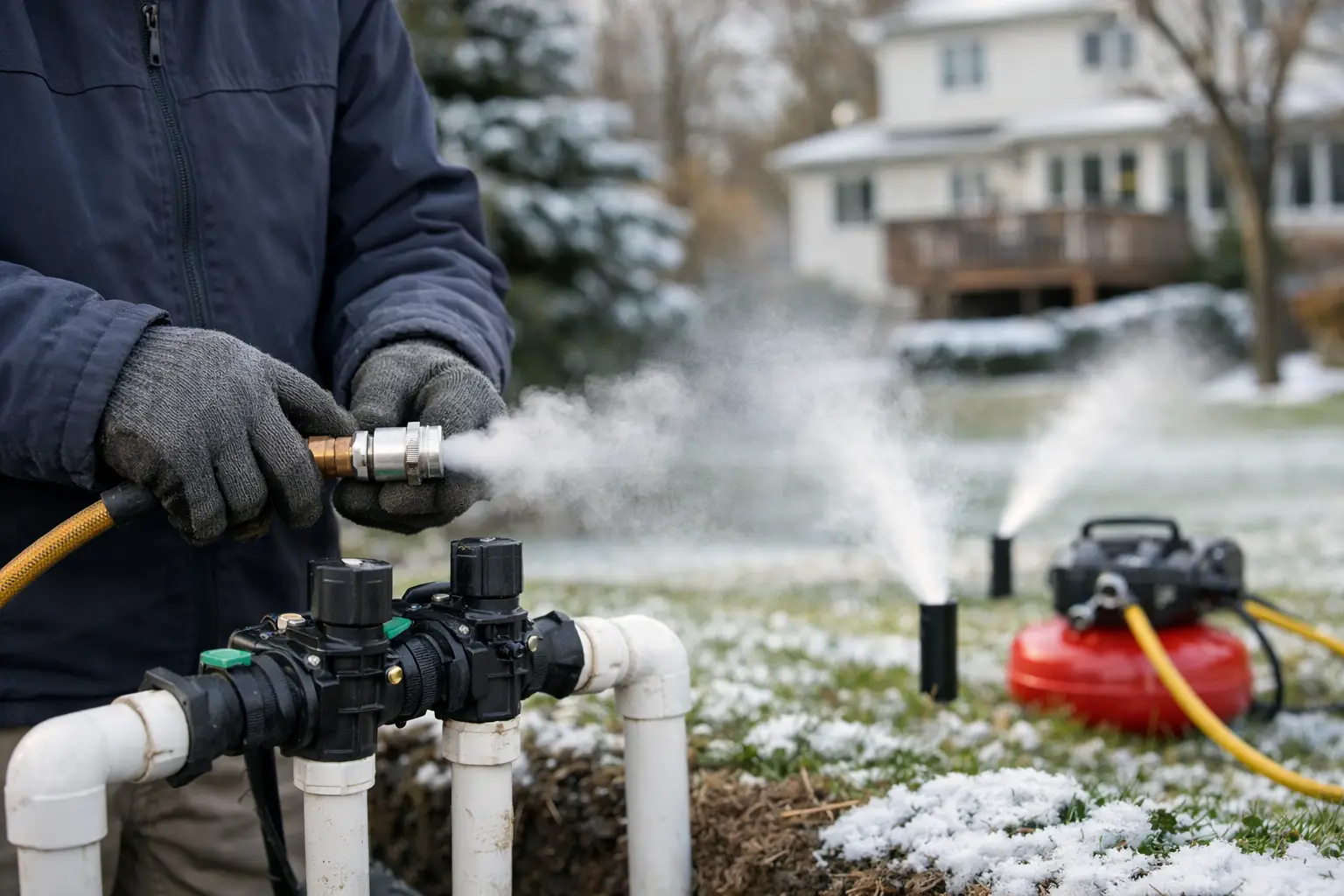
After that comes the line clearing process. Compressed air is introduced in a controlled way, one zone at a time, to push remaining water out through the sprinkler heads. This is the step homeowners most often underestimate. It is not just a matter of attaching an air compressor and opening valves. Air pressure, volume, zone sequencing, and run time all need to be managed carefully.
Why sprinkler blowouts are not a simple DIY task
The phrase sprinkler blowout sounds straightforward, but the process has real technical limits. Too little air and water stays in the lines. Too much pressure and heads, fittings, or valves can be damaged. High-volume airflow is usually more important than raw pressure, which is one reason standard homeowner compressors often are not ideal for full-system winterization.
There is also the issue of system layout. A smaller lawn with short lateral runs behaves differently than a large yard with multiple zones, elevation changes, drip areas, and mixed head types. Rotor zones, spray zones, and drip conversions do not all clear the same way. Some zones purge quickly. Others hold water longer and require careful timing to avoid overheating components or over-spinning dry heads.
Backflow assemblies require attention as well. These devices are critical to the safety of the irrigation system, but they are also one of the first components to crack in freezing weather. Improper handling during winterization can create the same kind of damage that freezing would have caused.
For homeowners who want confidence going into winter, the trade-off is simple. A partial DIY effort may seem sufficient on a mild fall day, but incomplete clearing can leave hidden water in the system. Professional winterization is really about reducing uncertainty.
Signs your system may be more vulnerable than average
Some properties need winterization earlier or with more care than others. If your sprinkler system is older, has a history of repairs, or includes upgrades added over time, there may be more connection points and more opportunities for water to remain trapped. Homes with exposed backflow preventers, long pipe runs, or significant grade changes also deserve closer attention.
Drip irrigation can be another point of confusion. Many homeowners assume drip lines are safer because they operate at lower pressure. In practice, drip zones still need to be winterized properly. Filters, pressure regulators, emitters, and low spots in tubing can all retain water.
If your system has had inconsistent pressure, sticking valves, leaking heads, or wet spots in the lawn during the season, do not assume winter will be kind to those issues. Existing weaknesses often become more obvious after a freeze-thaw cycle.
The best timing for winterization in Colorado
In Parker and nearby communities, weather can turn quickly in early to mid-fall. The safest approach is to winterize before overnight freezing becomes a repeated pattern, not after the first damaging cold snap. Waiting until the lawn is fully dormant can be too late if temperatures drop suddenly.
That said, there is no single perfect date every year. It depends on weather trends, exposure, and the specific design of your system. A property with more exposed piping or a backflow assembly in a windy area may warrant earlier service than a more sheltered setup.
Homeowners also benefit from scheduling before the seasonal rush peaks. Once cold nights start stacking up, appointment calendars fill quickly. Planning ahead reduces the chance of a preventable problem caused by timing rather than system condition.
What a professional winterization visit should include
A proper winterization service is not just air through the lines. It should begin with identifying the shutoff, verifying the controller status, and evaluating how the system is configured. From there, the technician should clear zones methodically, watching for discharge quality, timing, and any signs of abnormal performance.
That process can also reveal issues worth addressing before spring. A zone that does not clear normally may point to a valve problem. Weak discharge could indicate a blockage, a break, or pressure irregularity. A backflow assembly that does not behave as expected may need closer inspection. Winterization is often the last good diagnostic window before the system sits dormant for months.
For homeowners who value dependable property care, that matters. Seasonal service should not be treated as a box to check. It should protect the system now and help set up a smoother startup later.
Irrigation winterization homeowner guide: common mistakes to avoid
The most common mistake is assuming the controller off button is enough. It is not. Turning off automatic watering does nothing to remove water from lines, valves, or backflow components.
Another mistake is using the wrong air source or the wrong pressure. Residential irrigation systems are not designed for uncontrolled compressed air. Damage from over-pressurizing can be immediate, but even when it is not obvious, stressed parts may fail later.
Homeowners also sometimes skip isolated zones, drip areas, or auxiliary lines because they are less visible. Those overlooked sections can still freeze and split. And finally, many people wait too long because daytime weather still feels mild. Irrigation damage happens at night, often before the calendar says winter has really started.
Why seasonal service protects more than the sprinkler system
A damaged irrigation system affects more than convenience. Spring leaks can oversaturate planting beds, weaken turf, stain hardscapes, and create avoidable water waste right when the landscape is coming back to life. What appears to be a small winter crack can become a larger repair once the system is repressurized.
Reliable winterization supports the broader goal of efficient water management. It helps preserve the performance of the system you depend on during the growing season and reduces the chance of hidden failures that waste water later. For homeowners who care about landscape health and responsible property upkeep, that is a practical reason to treat winterization as essential maintenance rather than optional cleanup.
If your system has not been winterized yet, the right time is before the next freeze tests it for you. A careful seasonal shut-down now is one of the simplest ways to protect your lawn, your irrigation equipment, and your peace of mind heading into winter.