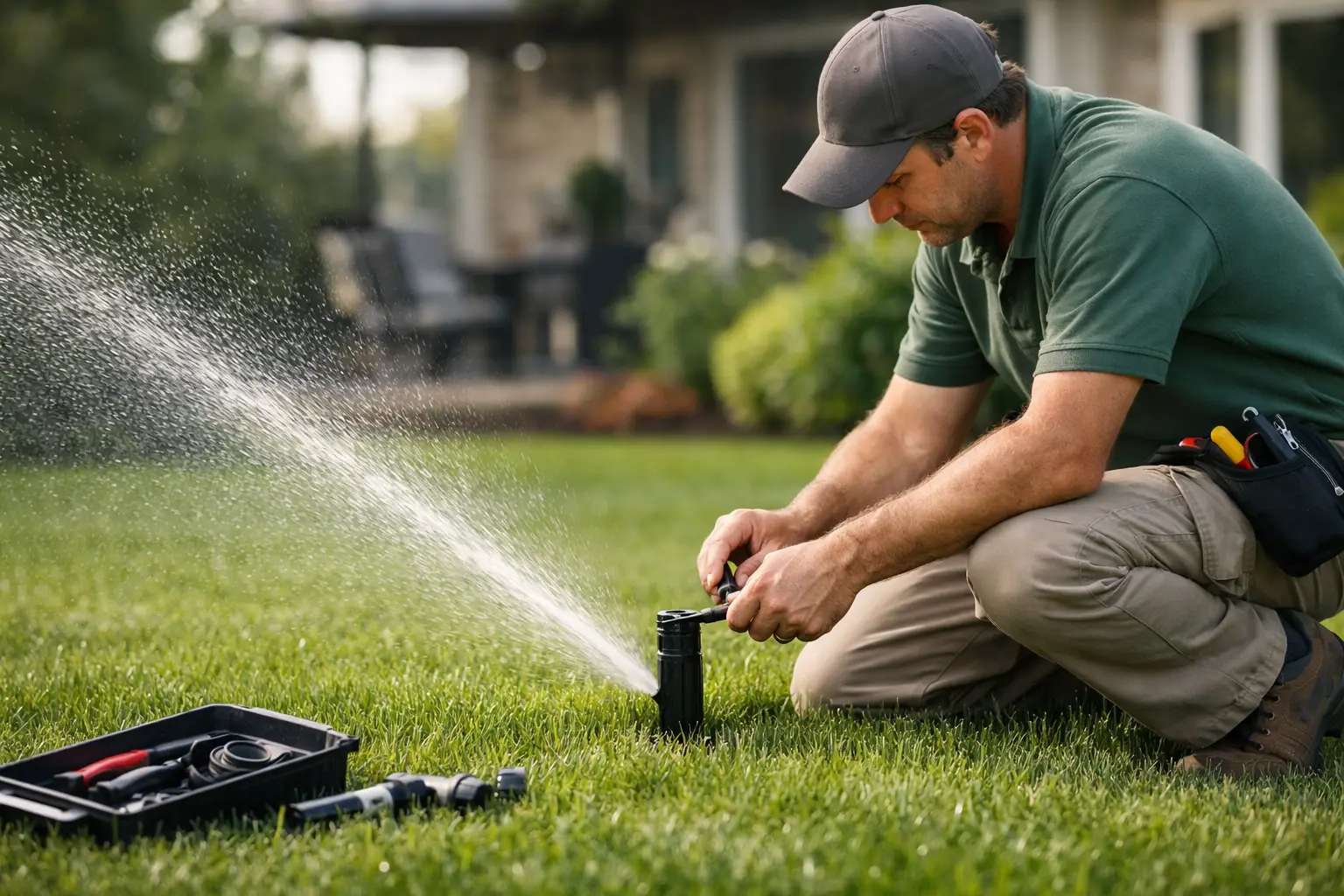
A green lawn can hide an irrigation system that is wasting water, missing key planting areas, or putting stress on turf roots. A professional lawn irrigation tune up service looks beyond whether sprinkler heads turn on. It evaluates how the full system performs so your landscape receives the right amount of water, in the right places, at the right time.
For homeowners in Parker and nearby communities, that attention matters. Colorado's dry climate, changing temperatures, wind, and intense summer sun can expose small irrigation problems quickly. A system that was acceptable last season may no longer provide even coverage or efficient run times this year.
What a Lawn Irrigation Tune Up Service Checks
A tune-up is a focused service visit designed to improve system performance before minor issues become landscape damage or water waste. The technician runs each zone, observes the spray pattern, and checks the components that control delivery across the property.
Sprinkler heads are a primary focus. Heads can settle below grade, tilt after winter movement, become blocked by turf, or get damaged by mowers and foot traffic. A head that sprays into a fence, driveway, or sidewalk is not simply an annoyance. It takes water away from the lawn or planting bed that needs it.
The service also checks nozzles for clogs, cracks, incorrect sizing, and uneven output. Different zones often need different precipitation rates. A rotor zone, fixed-spray zone, drip area, and newly planted bed should not be treated as if they all water the same way. Proper nozzle selection and adjustment help create more consistent coverage.
Valves, visible fittings, backflow components, and irrigation lines may also show signs of leakage or pressure concerns. Not every issue is visible above ground, which is why an experienced technician watches for wet spots, unusually soft turf, weak spray, or zones that continue running after their scheduled cycle ends.
Controller Settings Need Seasonal Attention
The irrigation controller is the system's operating center, but it only works as well as its programming. A tune-up includes reviewing start times, run times, days of operation, and zone schedules. The goal is not to apply the same amount of water everywhere. The goal is to match watering to the landscape, soil conditions, weather, sun exposure, and season.
For example, a shaded side yard may need a shorter cycle than a sunny slope. Clay-heavy soil can benefit from cycle-and-soak scheduling, which applies water in shorter intervals to reduce runoff and allow moisture to move into the root zone. New plantings may require different care than established turf.
Smart controllers and weather-responsive adjustments can be valuable tools, but they still need professional oversight. A connected controller cannot correct a broken nozzle, a low-pressure zone, or a programming setup that does not reflect the property’s actual needs.
Signs Your System Is Due for a Tune-Up
Most homeowners notice irrigation concerns through changes in the landscape rather than through the controller itself. Brown strips between sprinkler patterns, soggy patches near a valve box, water on pavement, or a zone that does not come on as expected are all reasons to schedule service.
Some signs are less obvious. If your lawn looks uneven despite regular watering, coverage may be incomplete. If one area grows much faster than another, it could be receiving too much water. A sudden change in water use can point to a leak, a stuck valve, or a line issue that deserves prompt attention.
Seasonal timing is another reason to act. A spring start-up is the right time to identify winter damage, confirm that each zone operates correctly, and set schedules for early-season conditions. Midseason adjustments can keep a system aligned with hotter weather and changing landscape needs. Before colder temperatures return, winterization helps protect irrigation components from freeze damage.
Waiting until the lawn is visibly struggling can make the repair process more urgent. A proactive tune-up gives homeowners time to correct performance issues before turf, shrubs, and garden beds show the effects of inconsistent watering.
Why Coverage Matters More Than Longer Run Times
When a section of lawn turns brown, the common response is to increase the controller run time. That can help in some circumstances, but it often treats the symptom rather than the cause. If the area is outside the sprinkler’s reach, longer run times may overwater the areas that already have adequate coverage while the dry spot remains dry.
Good irrigation performance depends on head-to-head coverage, appropriate nozzle output, adequate pressure, and proper alignment. Water from one sprinkler should reach the next sprinkler's coverage area. This overlap helps account for wind, evaporation, and natural variation in spray patterns.
Pressure deserves special attention. Low pressure can reduce spray distance and create weak coverage. Excessive pressure can produce misting, where water becomes fine droplets that drift away rather than reaching the soil. The right repair may involve adjusting a head, replacing a nozzle, addressing a valve concern, or evaluating the design of the affected zone. It depends on what the technician finds during testing.
Efficient Watering Protects the Landscape Investment
Water efficiency is not about keeping a lawn on the edge of dryness. It is about delivering water with intention. Healthy turf develops stronger roots when it receives appropriate watering without frequent shallow cycles or prolonged saturation.
Overwatering can be as damaging as underwatering. Constantly wet soil can limit oxygen around roots, encourage disease pressure, and create weak growth. It can also carry water off slopes and onto hard surfaces. Underwatering, meanwhile, can stress turf and leave plants more vulnerable during hot, dry periods.
A professional tune-up helps find the balance. Zones are reviewed individually, and adjustments are made based on the equipment and the landscape it serves. That approach is especially useful for properties with mature trees, sloped lawns, mixed planting beds, or additions that have changed how the original irrigation system performs.
Repairs and Optimization Often Go Together
A tune-up may uncover a straightforward repair, such as a damaged head or clogged nozzle. It may also reveal a broader opportunity to improve the way water moves through the property. Replacing mismatched nozzles, converting an appropriate planting bed to drip irrigation, correcting overspray, or updating controller programming can improve day-to-day performance.
The right recommendation should be based on the system's condition, not a one-size-fits-all checklist. An established lawn with reliable coverage may only need targeted adjustments. A property with recurring dry areas or significant runoff may benefit from a more detailed irrigation evaluation.
This is where specialized service makes a difference. Irrigation systems involve water pressure, zone layout, controller logic, seasonal weather changes, and the health of the landscape itself. A careful technician connects those details rather than addressing only the most visible sprinkler head.
Make Tune-Ups Part of Seasonal Irrigation Care
A single service visit can solve immediate problems, but regular seasonal care provides better long-term control. Spring start-up establishes a reliable baseline. A midseason tune-up addresses growth, heat, and changing conditions. Winterization protects the system when freezing temperatures are possible.
Keeping a record of recurring zone issues can also be useful. If the same area needs repeated adjustment, that may signal a coverage, pressure, or component issue that needs a more permanent solution. Homeowners do not need to diagnose the cause, but noting what they observe helps a technician assess the system efficiently.
Irrivive Sprinklers provides specialized irrigation support for homeowners who want dependable system performance and practical water management. A well-timed tune-up is a simple way to protect your lawn, reduce avoidable waste, and head into the season with confidence that each zone is doing its job.