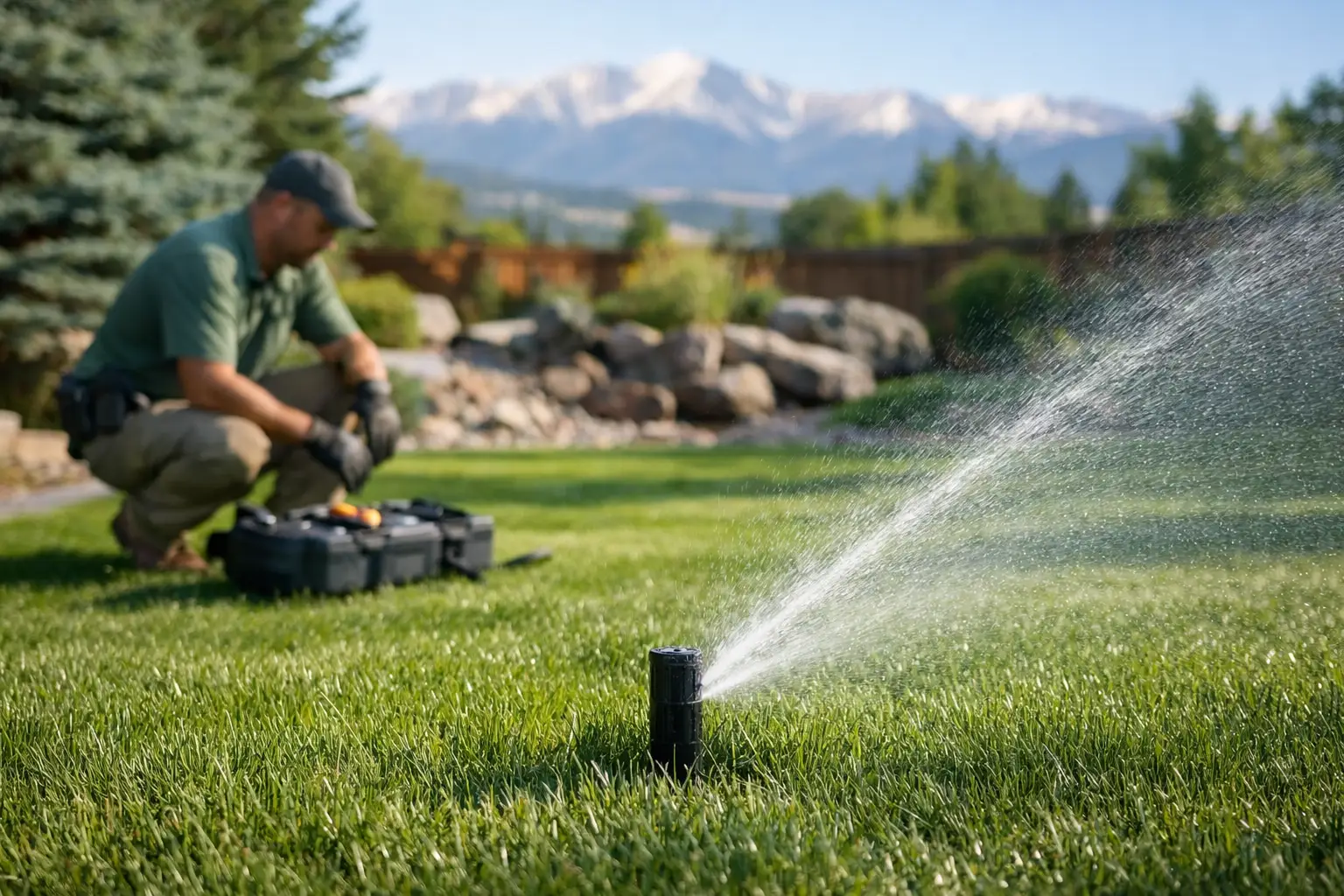
A monthly irrigation service plan gives your landscape something a one-time repair cannot: consistent attention as weather, plant needs, and water demands change. In Colorado, an irrigation system can look fine one week and develop a dry zone, leaking valve, or overwatered planting bed the next. Regular service helps homeowners protect the landscape they have invested in while avoiding problems that grow quietly underground.
For properties in Parker, Castle Rock, Highlands Ranch, Lone Tree, and nearby communities, irrigation care needs to account for clay soils, hot sun, sudden storms, wind, and sharp temperature swings. A dependable monthly visit creates a practical routine for keeping the system efficient and the property looking cared for.
What a Monthly Irrigation Service Plan Covers
A monthly plan is not simply someone turning a controller on and off. It is ongoing system oversight designed to keep water going where it belongs and identify concerns before they affect the lawn, shrubs, flower beds, or hardscape.
During a typical visit, a qualified irrigation technician runs through active zones, checks spray patterns and coverage, looks for visible leaks, and inspects heads for damage, clogs, or poor alignment. They also review the controller settings and make seasonal adjustments when conditions call for them. A head that sprays a sidewalk, fence, or driveway is not just inefficient. It can leave the area that needs water under-watered.
The exact scope should reflect the property. A simple lawn system may need straightforward monitoring, while a larger property with drip zones, multiple planting areas, mature trees, slopes, or separate controllers requires a more detailed approach. The goal is the same: deliver the right amount of water as evenly and reliably as possible.
Routine checks prevent small problems from becoming landscape problems
Irrigation components work outdoors, often out of sight. Mower damage, shifting soil, growing roots, worn seals, and clogged nozzles can all change how a zone performs. A broken sprinkler head might be obvious, but a slow valve leak or an improperly programmed controller may not be noticed until turf begins thinning or a water bill arrives higher than expected.
Monthly inspections make it easier to catch those issues early. They also create a record of what the system is doing over time, which is valuable when a recurring problem needs a lasting repair rather than another temporary adjustment.
Why Monthly Care Matters in Colorado
Colorado landscapes do not need the same irrigation schedule all season. Early spring conditions can be cool and wet, while midsummer heat may increase demand quickly. Late-summer storms can provide meaningful moisture in one neighborhood and miss another entirely. A controller left on a fixed schedule will not respond to those changes on its own.
A monthly irrigation service plan keeps settings aligned with current conditions. That does not mean watering more. In many cases, it means watering more deliberately, with changes based on rainfall, temperatures, plant type, soil conditions, and the amount of sun each area receives.
Water efficiency starts with coverage
Homeowners often assume a brown or stressed area needs more runtime. Sometimes it does. Just as often, the issue is uneven coverage. A tilted rotor, clogged nozzle, low-pressure zone, or blocked spray can leave one section dry while another gets too much water.
Correcting coverage is a more responsible first step than simply adding minutes to the controller. It reduces runoff, helps prevent wasted water, and supports deeper, healthier root growth. It can also protect nearby hardscape, siding, and fences from repeated overspray.
Landscape health depends on timing as well as volume
Too little water can leave turf thin and shrubs stressed. Too much can create shallow roots, encourage disease, and make certain areas soft or muddy. Watering at poor times of day can also increase evaporation or leave foliage wet longer than necessary.
A professional service plan considers how the entire landscape is responding. Sun exposure, soil compaction, slope, drainage, mulch coverage, and the age of plantings all matter. There is no single controller setting that works perfectly for every yard, every month, or every zone.
What Homeowners Should Expect From Reliable Service
Dependable irrigation care should be clear, responsive, and focused on the condition of the property. Homeowners should know when service is taking place and receive straightforward communication when repairs or system improvements are recommended.
Quality service also means distinguishing between a quick adjustment and a condition that deserves further attention. Replacing a damaged nozzle may solve the immediate issue. But repeated damage in the same area might point to a poorly placed head, insufficient clearance from lawn equipment, or a zone design issue. Honest recommendations address the cause when possible.
At Irrivive Outdoor Property Solutions, irrigation service is approached as part of the larger outdoor environment. Lawn condition, drainage patterns, landscape beds, lighting, and hardscape features all affect how a property performs and looks. That broader perspective helps prevent irrigation decisions from creating problems elsewhere in the yard.
How Monthly Visits Change Through the Season
The value of regular service is most visible when the schedule changes with the season. Each stage of the year brings different priorities.
Spring: start up carefully and inspect thoroughly
Spring is the time to bring the system online, test zones, and identify damage that may have occurred over winter. Heads can shift, fittings can fail, and controllers may need new programming before warm weather arrives. This is also a good time to assess whether new landscaping, construction, or changes to planting beds have affected coverage.
Summer: adjust for heat, growth, and storms
Summer visits focus on water use and performance. Plants are actively growing, turf is exposed to heat, and sprinkler coverage can change as shrubs fill in or lawn edges are altered. Monthly adjustments help prevent the common cycle of reacting to stress only after visible damage appears.
Fall: taper watering and prepare for winterization
As temperatures cool, irrigation needs usually decrease. Continued high-water schedules can be wasteful and may leave areas overly wet. Fall service helps reduce runtimes appropriately, monitor late-season landscape health, and prepare the system for professional winterization before freezing temperatures create risk.
When Monthly Service Is Especially Worth Considering
Any homeowner can benefit from routine irrigation oversight, but monthly care is particularly useful for properties with larger lawns, extensive planting beds, multiple irrigation zones, drip irrigation, slopes, or mature landscaping. These systems have more variables and more opportunities for an unnoticed issue to affect the property.
It is also a strong fit for homeowners who travel frequently, manage busy family schedules, or simply want confidence that their irrigation system is receiving regular professional attention. A well-maintained system supports curb appeal without requiring the homeowner to troubleshoot controllers and inspect every zone throughout the season.
Newer systems need monitoring too. Modern controllers and efficient sprinkler components can improve control, but they still require accurate programming, seasonal changes, and occasional field checks. Technology is useful, but it cannot replace someone noticing a broken head, a sinking valve box, or water flowing where it should not.
Choosing the Right Monthly Irrigation Service Plan
Look for a provider that evaluates the property rather than treating every system the same. The service should include active zone checks, controller review, clear communication, and recommendations based on visible conditions and long-term performance.
Ask how the provider handles seasonal adjustments, repair findings, and concerns that extend beyond the irrigation system, such as drainage or declining plant health. A good partner will explain what they found in plain language and help you understand which actions protect the property most effectively.
Consistency matters as much as technical knowledge. The best irrigation plan is one that is carried out reliably, adapts as the season changes, and gives you confidence that your landscape is not being left to chance.
A healthy Colorado landscape does not require constant guesswork. With regular attention, thoughtful adjustments, and timely repairs, your irrigation system can support a lawn and outdoor space that looks cared for through every stage of the growing season.