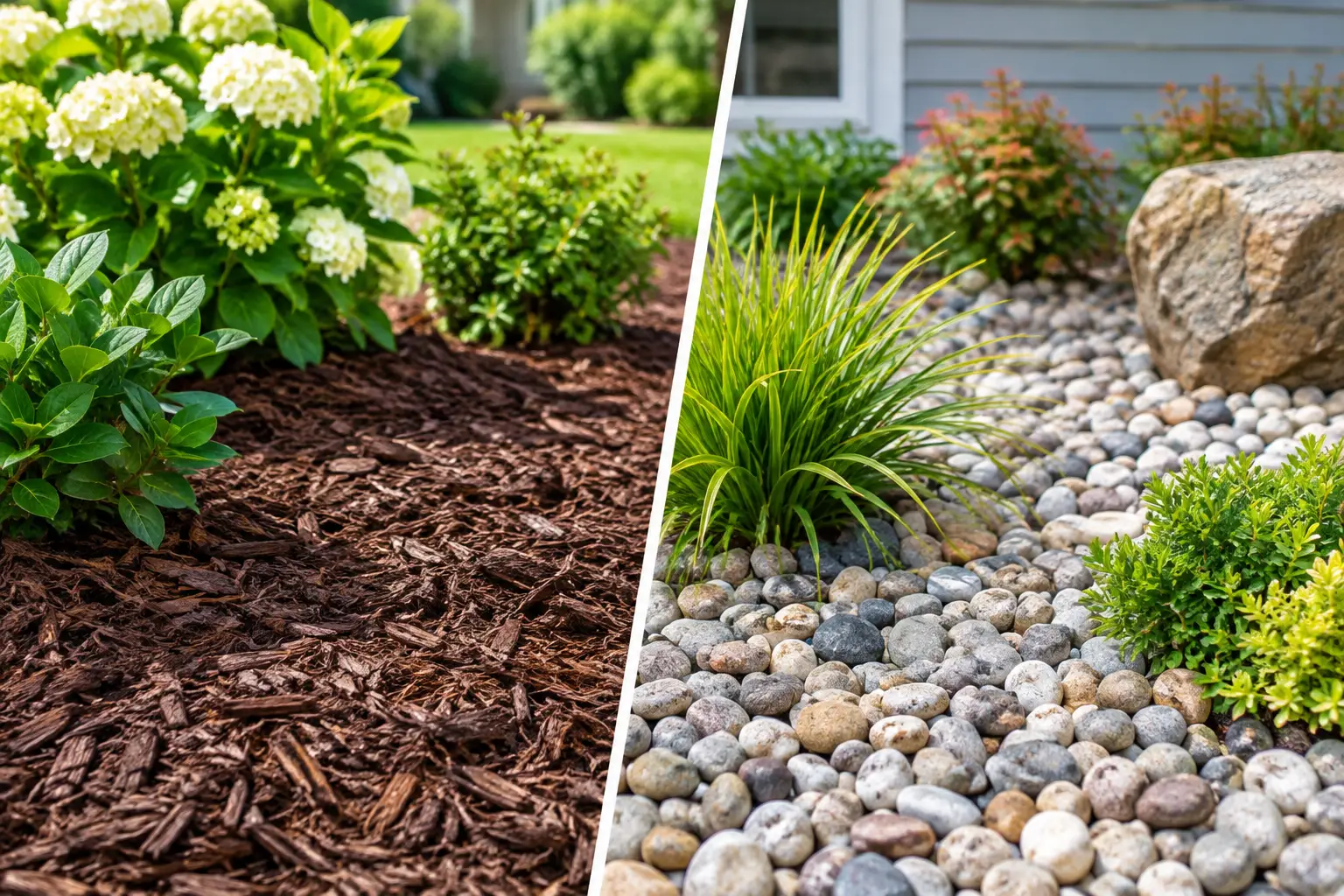
A fresh layer of mulch or a clean rock bed can make a Parker-area home look finished in a single day. The better choice is not always the one that looks best at installation, though. Mulch versus rock landscaping is really a decision about plant health, irrigation efficiency, maintenance expectations, and how your yard will perform through Colorado sun, wind, snow, and temperature swings.
Both materials have a place in a well-designed landscape. The right answer depends on where the material is going, what is planted there, how much sun the area receives, and whether the space needs to solve a drainage or erosion concern.
Mulch Versus Rock Landscaping: The Core Difference
Mulch is an organic ground cover, usually made from shredded bark, wood chips, or composted material. It slowly breaks down over time, adding organic matter to the soil. Rock is an inorganic ground cover, often installed as river rock, crushed stone, or decorative gravel. It remains in place much longer, but it does not improve the soil below it.
That difference matters most around trees, shrubs, and planting beds. Living plants benefit from cooler soil, steadier moisture, and better soil structure. Mulch supports those conditions naturally. Rock can be attractive and durable, but it absorbs and reflects heat, which can create a tougher environment for some plants during dry Colorado summers.
Neither option is maintenance-free. Mulch needs replenishing as it decomposes. Rock does not decompose, but it still collects leaves, windblown debris, soil, and weed seeds. Once those materials settle between stones, weed control and cleanup can become more involved.
Why Mulch Often Supports Healthier Plant Beds
For planted landscape beds, mulch is usually the stronger long-term choice. A properly installed layer helps hold moisture in the soil, reduces rapid evaporation, and protects roots from temperature extremes. That is especially useful along south- and west-facing exposures, where sun and reflected heat can dry beds quickly.
Mulch also limits the force of rain hitting bare soil. This reduces splashing, soil compaction, and erosion around shrubs and perennials. As organic mulch breaks down, it contributes to healthier soil over time, which can help plants develop stronger root systems.
The key is proper depth. Too little mulch provides limited benefit, while an overly thick layer can hold excess moisture around stems and restrict airflow. In most beds, a layer about 2 to 3 inches deep is sufficient. Keep mulch pulled back several inches from tree trunks, shrub stems, foundations, and siding. Piling mulch against a trunk, often called a mulch volcano, can trap moisture against the bark and invite disease or pest problems.
Mulch is not a permanent weed barrier, but it does reduce weed germination when installed over prepared soil. It also makes the weeds that do appear easier to pull before they become established.
Where Mulch Makes the Most Sense
Mulch works particularly well in foundation plantings, tree rings, perennial beds, and shrub borders. It is also a practical choice for areas where irrigation is present and landscape health is the priority. Homeowners who want a softer, more natural appearance often prefer mulch because it complements foliage and seasonal color rather than competing with it.
Color matters, but material quality matters more. Natural brown mulch tends to age gracefully and works with most home exteriors. Dyed products can create a strong initial contrast, although their color fades over time and may need more frequent refreshing to maintain a uniform look.
When Rock Is the Better Landscape Material
Rock is a smart choice in the right location. It performs well in dry, open areas with limited planting, along pathways, beside hardscape features, and in sections designed for drainage. Decorative stone can provide crisp visual definition and a more permanent finish than mulch.
For homes with modern architecture, rock can also create a clean, structured look. It pairs well with boulders, steel edging, ornamental grasses, and drought-tolerant plant palettes. In a carefully designed xeriscape, rock may be used as an accent around plants rather than as a blanket across every bed.
Rock is often helpful where water needs to move safely away from the house. It can be incorporated into dry creek beds, drainage swales, or areas below downspouts when the underlying grading and drainage design are correct. The rock itself is not a substitute for proper slope, drainage piping, or irrigation adjustments. If water is pooling near a foundation, the source of the problem should be evaluated before adding decorative material over it.
The Heat Factor Homeowners Should Consider
Colorado's high elevation sun changes the rock conversation. Dark stone and large expanses of rock can become very hot in summer. That stored heat may stress nearby plants, increase soil drying, and make a patio-side bed less comfortable to work around.
This does not mean rock should be avoided altogether. It means placement matters. A narrow rock border, a drainage feature, or a low-planting area may perform well. A broad rock bed around thirsty shrubs on a hot south-facing wall may require more thoughtful plant selection and irrigation management.
Maintenance Is Different, Not Eliminated
A common reason homeowners choose rock is the expectation of no maintenance. Rock lasts a long time, but it needs attention to stay clean and functional. Leaves, pine needles, grass clippings, and dust settle into the stone. Over several seasons, this debris can become a growing medium for weeds.
Removing debris from rock without disturbing the stone takes more effort than raking a mulch bed. Blowing debris may move lightweight gravel into lawns or walkways. Weeds can also become difficult to remove once roots grow through landscape fabric and into the soil below.
Mulch requires periodic renewal, but refreshing it is straightforward. Existing mulch can often be loosened, redistributed, and topped off as needed. A maintained mulch bed also tends to be easier to modify when plants are added, removed, or divided.
Landscape fabric deserves careful consideration with either material. It may provide short-term separation and weed reduction, but it does not stop airborne weed seeds. Over time, fabric can tear, become exposed, or complicate plant changes and irrigation repairs. In many planted beds, healthy soil, correct mulch depth, and regular maintenance are more useful than relying on fabric alone.
Choosing by Location, Not One Rule for the Entire Yard
The most successful properties often use both materials with a clear purpose. Mulch can support the planted areas where roots need protection and moisture retention. Rock can define a pathway, create a dry creek bed, stabilize a low-planting zone, or provide a durable accent near hardscape.
Before deciding, look at the site closely. Consider sun exposure, the type and maturity of existing plants, irrigation coverage, slope, drainage patterns, and the amount of leaf or needle drop nearby. A bed under mature trees may benefit from mulch because it protects feeder roots and makes seasonal cleanup easier. A narrow strip between a walkway and a fence, planted with low-water ornamental grasses, may be a better candidate for rock.
It is also worth thinking ahead. If you may want to add shrubs, seasonal color, or new irrigation lines later, mulch offers more flexibility. If the area will remain largely plant-free and needs a durable visual edge, rock may be the better fit.
Installation Details That Protect Your Investment
Whether you choose mulch or rock, preparation determines how the finished bed performs. The area should be cleared of established weeds and debris, graded to keep water moving away from the home, and edged cleanly to prevent material from spilling into turf or sidewalks.
Irrigation should be checked before material is installed. Broken heads, poor coverage, or overspray are much easier to correct before rock is placed. Drip irrigation is often a strong option for planting beds because it delivers water near the root zone and helps reduce evaporation. It should still be inspected regularly to confirm emitters are not clogged, buried too deeply, or watering the wrong area.
For rock beds, the stone size should match the use of the space. Small gravel can migrate easily, while oversized stone may look out of scale in a compact bed. For mulch beds, use a consistent material and depth so water can reach the soil while roots receive the protection they need.
A good landscape does not need one material everywhere. It needs the right material in the right place, installed with the health of the property in mind. If you are planning a refresh, start with how each bed needs to function through the seasons, then choose the finish that will keep supporting that goal long after the installation day.