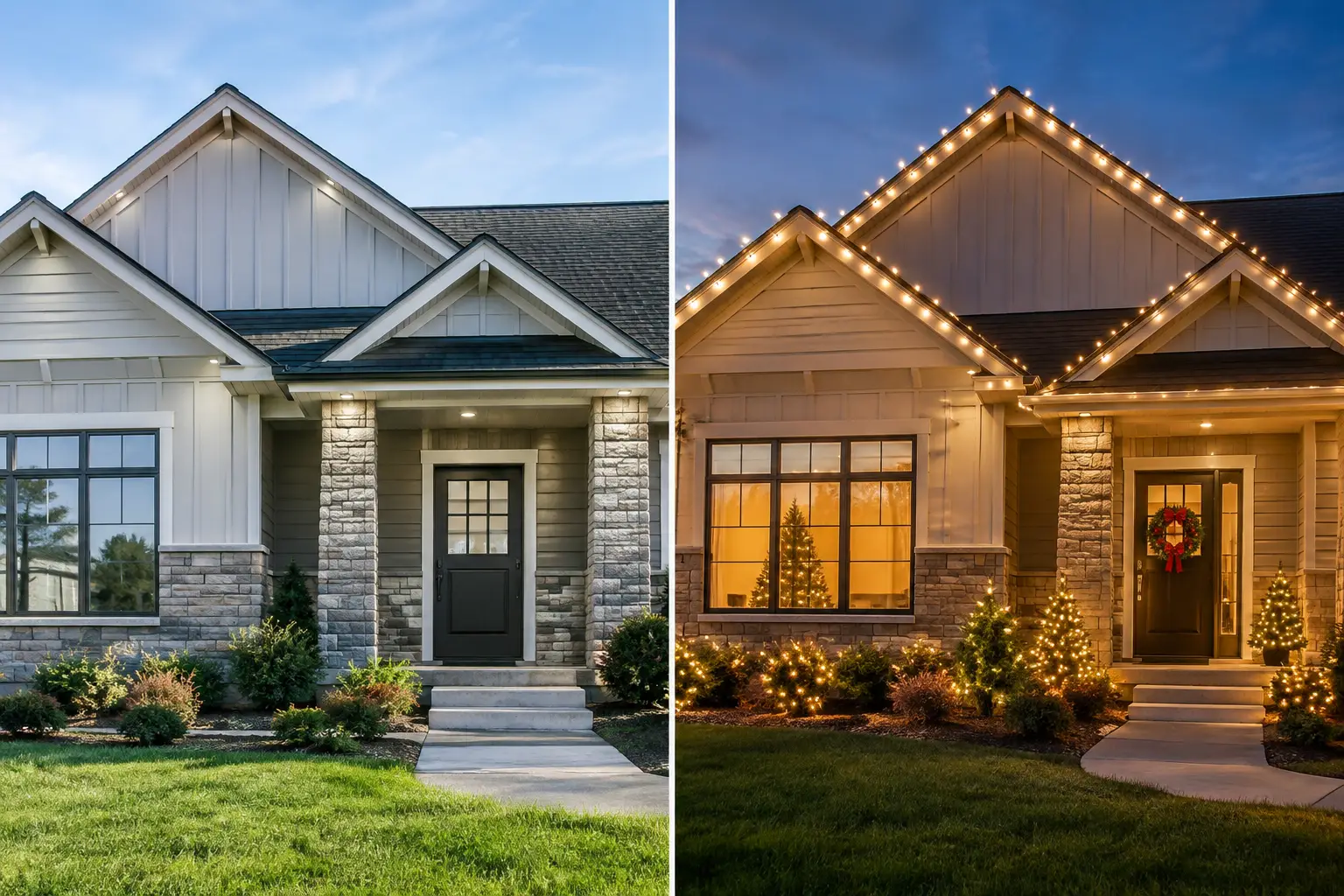
The first cold weekend of the season is not an ideal time to be on a ladder, untangling light strands or trying to secure clips to a frozen gutter. That practical reality is why many homeowners consider permanent versus holiday lighting before the decorating season arrives. Both options can create a welcoming home, but they serve different purposes, require different levels of planning, and perform differently through Colorado weather.
For homes in Parker, Castle Rock, Highlands Ranch, and nearby communities, the right choice usually comes down to how often you want to use lighting, what look you prefer, and how much seasonal work you want to take on. A well-designed system should enhance the property without creating unnecessary maintenance or visual clutter.
Permanent Versus Holiday Lighting: The Core Difference
Holiday lighting is installed for a limited season, then removed and stored. It can be simple white roofline lights, colorful displays, wrapped trees, pathway markers, or a more elaborate seasonal design. Its temporary nature gives homeowners freedom to change colors, layouts, and decorations from one year to the next.
Permanent lighting is installed as part of the home or landscape. It may include low-profile programmable lights mounted beneath eaves, architectural accent lighting, path lights, uplighting for trees, deck lighting, or illumination around outdoor living areas. Some permanent systems are designed primarily for holidays, while others provide useful, understated light throughout the year.
The distinction matters. A permanent roofline system can offer holiday color displays without the annual installation process. A permanent landscape lighting system is less about seasonal decoration and more about safety, curb appeal, and how the property functions after dark. Homeowners sometimes use both, with each system designed for its intended role.
When Holiday Lighting Is the Better Choice
Temporary holiday lighting makes sense when your style changes often. If one year you prefer classic warm white lights and the next you want a colorful display around trees and shrubs, seasonal lights leave room for that creativity. They are also a good fit for homeowners who only want lighting during the winter holidays and prefer the home to look unchanged for the rest of the year.
Holiday displays can extend beyond the roofline in ways that feel festive and personal. Wreaths, garlands, lighted planters, and tree wraps bring visual interest to the entire front landscape. Because these elements are temporary, they can be adjusted to work around new landscaping, fresh exterior paint, or changing family traditions.
There are practical limitations, though. Temporary light strands must be installed carefully, especially around roofs, gutters, walkways, and mature trees. Loose cords, overloaded connections, and poorly placed fixtures can create safety issues or leave the display looking uneven. Colorado’s wind, snow, and rapid temperature swings can also expose weak clips, aging strands, and connections that are not rated for outdoor use.
Seasonal lighting also requires a plan for removal and storage. Leaving temporary lights up long after the season can affect curb appeal and shorten the life of materials exposed to sun, wind, and weather. Homeowners who enjoy decorating but do not enjoy ladders, cords, and post-holiday cleanup may find that the flexibility is no longer worth the yearly effort.
Where Permanent Lighting Adds Value
Permanent lighting is a strong option for homeowners who want a clean, consistent look without recurring seasonal installation. Discreet roofline lighting can be nearly invisible during the day, then illuminate the home in warm white for everyday use or in color for holidays, game days, and special occasions. The ability to control patterns and colors can provide variety while keeping the installation itself orderly.
Permanent landscape lighting offers a different kind of value. It can define a front walk, illuminate changes in elevation, highlight a stone wall, or bring attention to mature trees and planting beds. These details help a property feel finished after sunset. More importantly, thoughtfully placed lighting improves visibility around entrances, stairs, patios, and side yards.
For Colorado homeowners, fixture quality and installation method matter as much as the lighting design. Outdoor components need to handle intense sun, winter moisture, irrigation overspray, shifting soils, and changing temperatures. Wiring should be protected, connections should be properly made, and fixtures should be positioned so they illuminate the intended area instead of shining into windows or neighboring yards.
A permanent system also benefits from restraint. More fixtures do not automatically create a better result. Even, layered light is usually more attractive than harsh brightness. The goal is to reveal the home’s architecture and landscape features, not make every surface equally bright.
Permanent Lighting Needs Thoughtful Planning
Unlike a temporary display, permanent lighting should be considered alongside the full property. Existing trees may grow and change the direction of light. New planting beds can alter where wiring needs to run. Irrigation repairs, drainage work, and hardscape improvements may affect access to fixtures and underground components.
This is why coordinated outdoor planning produces better long-term results. Lighting placement should work with irrigation zones, plant health, walkways, retaining walls, and future landscape improvements. A system installed with those details in mind is easier to maintain and more likely to look intentional over time.
Consider the Look You Want All Year
The best decision often starts with a simple question: What should your home look like on an ordinary evening in July?
If the answer is “dark, except for basic porch and entry lights,” a holiday-only display may be the right fit. You can create a festive look for a few weeks each year, then return the home to its usual appearance.
If the answer includes a softly lit walkway, a visible front entry, illuminated trees, or a finished-looking patio, permanent landscape lighting is worth considering. It serves a practical purpose every month of the year, while still supporting seasonal accents when desired.
Homeowners who want holiday flexibility without visible strands and clips may prefer a permanent roofline system. It is especially useful for homes with tall roof peaks, difficult-to-reach eaves, or architectural features that make annual installation inconvenient. The system can remain subtle when it is not in use, then shift to a holiday display with the right programming.
Maintenance Is Different, Not Eliminated
Permanent lighting reduces the need for annual hanging and removal, but it is not maintenance-free. Fixtures can shift, lenses can collect debris, plant growth can block light, and underground wiring can be affected by landscape work. Controls and connections should also be checked periodically to keep the system operating as intended.
Holiday lighting has a more concentrated maintenance cycle. Before installation, inspect each strand for damaged sockets, frayed wires, or failing bulbs. During the season, check that cords remain secure and that snow, wind, or ice has not pulled sections loose. After removal, dry and organize lights before storing them to make the next season easier.
In either case, avoid treating lighting as an afterthought. Good outdoor lighting depends on reliable materials, safe connections, clean installation, and a design that respects the property. A rushed display may look fine from the street for a day or two, but poor placement and weak components become obvious quickly.
How to Choose for Your Property
Choose holiday lighting when you enjoy changing the display, use lights only for a limited season, and want the freedom to decorate beyond a fixed layout. It is also a sensible choice for homeowners who prefer a traditional seasonal look and do not need regular exterior illumination.
Choose permanent lighting when you want year-round curb appeal, safer movement around outdoor spaces, less time spent on ladders, or a consistent architectural look. It is particularly useful when the home has areas that deserve regular illumination, such as front walks, stairs, patios, entrances, specimen trees, or stonework.
A combined approach can be the most practical answer. Permanent landscape lighting can handle visibility and everyday beauty, while seasonal décor adds warmth and personality during the holidays. This keeps festive elements optional instead of asking a single system to do everything.
For homeowners planning a new lighting project, Irrivive Outdoor Property Solutions can help evaluate how lighting fits with the landscape, irrigation, hardscape features, and long-term care of the property. The right system should look good on opening night, but it should also continue supporting a well-maintained outdoor space through every season.
A thoughtful lighting plan starts by looking at your home after sunset: notice where people walk, which features deserve attention, and where darkness makes the property less welcoming. Those observations will point you toward lighting that works for your home rather than simply adding more light.