A residential drainage planning guide starts with one simple question: where does water go after it lands on your property? In Colorado, that answer can change quickly. A fast summer storm, spring snowmelt, compacted clay soil, and sloped lots can all send water toward a foundation, across a patio, or into planting beds that were never meant to hold it.
Good drainage is not just about getting rid of puddles. It protects your home, supports healthier turf and plants, preserves hardscapes, and helps your outdoor space perform well through changing weather. The right plan is tailored to the property rather than built around a single drain or quick fix.
Start With How Water Moves Across Your Property
The most useful drainage planning happens during or shortly after a rainstorm. Walk the property and look for water that pools, flows too quickly, or lingers longer than it should. Watch roof runoff, downspout discharge points, low areas in the lawn, patio edges, retaining walls, and the ground around the foundation.
Some water movement is normal. The concern is water that repeatedly collects near structures, saturates the root zones of plants, erodes mulch or soil, or creates slippery areas near walkways. A wet spot in the lawn may be caused by poor grading, but it can also point to a leaking irrigation line, an overwatered zone, or a downspout that empties too close to the home.
Before recommending a solution, identify the source. Treating the symptom without correcting the source often leads to repeated repairs and disappointing results.
Look Beyond the Lowest Spot
Water naturally follows gravity, but the lowest visible area is not always the real problem. A shallow depression may simply be receiving runoff from an improperly pitched patio, a neighboring slope, a roof valley, or a compacted section of turf. Likewise, water near a foundation may be coming from roof runoff rather than the surrounding grade.
A drainage assessment should consider the entire route water takes, from where it begins to where it can safely end. That larger view prevents a common mistake: moving water out of one problem area only to create another issue farther downhill.
Protect the Foundation First
The ground next to a home should slope away from the foundation so water does not settle against the structure. As a general benchmark, residential grading commonly drops about six inches over the first ten feet away from the house, though site conditions, landscaping, and local requirements can affect the right approach.
Settling soil, landscape renovations, edging, and mulch buildup can gradually change this slope. Over time, an area that once drained properly can begin trapping water along the foundation. This is especially common near downspouts, window wells, exterior stairs, and additions where the original grading has been altered.
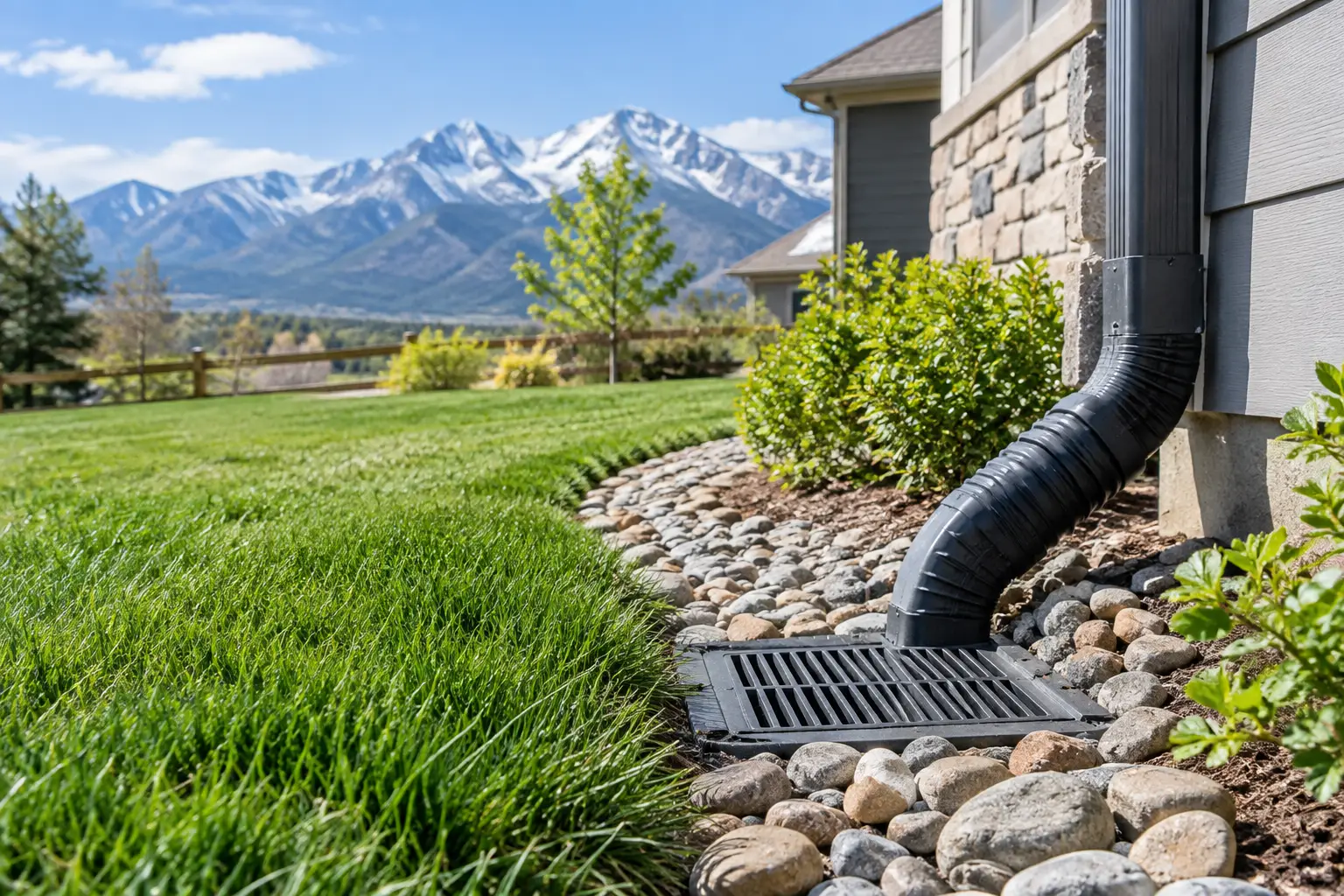
Downspouts deserve close attention. They should move roof water away from the home and release it in a controlled location that will not wash out a bed, flood a walkway, or direct runoff onto a neighboring property. Extensions, buried solid pipe, and properly designed catch areas may all be appropriate depending on the lot.
Never assume that sending water underground solves the problem. Underground drainage needs positive slope, durable connections, an appropriate outlet, and access for cleaning when necessary. Without those details, a buried line can hold water, clog with sediment, or discharge where it causes a new problem.
Match the Drainage Solution to the Problem
Drainage systems work best when each component has a clear purpose. Swales, grading adjustments, surface drains, catch basins, drain pipe, dry creek beds, and rock-lined channels can all be useful. The right choice depends on how much water is involved, how often the problem occurs, soil conditions, available elevation change, and the finish of the surrounding landscape.
A shallow swale can be an effective, natural-looking way to guide sheet flow through an open lawn area. It generally works well when there is enough room to create a gradual path and a safe outlet. On the other hand, a narrow side yard with concentrated roof runoff may need a catch basin and solid drain pipe rather than a broad grading change.
French drains are often requested for wet areas, but they are not a universal answer. A French drain is designed to collect water moving through soil and redirect it through perforated pipe surrounded by washed rock. It can help in certain saturated areas, but it is less effective when the main issue is fast-moving surface runoff. In that situation, surface grading or a collection drain may be the better fit.
Decorative drainage features also require practical design. A dry creek bed can add texture and curb appeal while guiding water through a landscape, but it must be sized for expected flow, built over a stable base, and tied into a real outlet. Decorative rock alone will not correct poor grade or concentrated runoff.
Account for Colorado Soil and Weather
Homes in Parker, Castle Rock, Highlands Ranch, and nearby communities often face drainage conditions shaped by clay-heavy soils, dramatic temperature changes, intense summer storms, and snow accumulation. Clay soil can shed water when it is dry and compacted, then stay saturated longer after a storm. That combination can create runoff in one area and standing water in another.
Snowmelt deserves the same planning as rainfall. Snow piled along a driveway, beside a patio, or near a foundation becomes a concentrated water source when temperatures rise. If meltwater has no clear route away from the home, it can find low points at door thresholds, steps, and foundation walls.
Freeze-thaw cycles also affect drainage components. Pipe connections, basins, pavers, edging, and grading can shift over time. Quality installation matters because drainage features must continue functioning below the finished surface, not simply look tidy on the day they are installed.
Coordinate Drainage With Irrigation and Landscaping
Drainage, irrigation, and landscaping should be planned together. An irrigation system can worsen a wet area if a zone runs too long, sprays hardscape, or applies water faster than the soil can absorb it. A drainage system can also be compromised when roots, mulch, new planting beds, or landscape borders block its inlet or change the surrounding grade.
Review irrigation schedules before adding drainage improvements. If a wet lawn area is caused by overwatering or a damaged valve, correcting the irrigation issue may resolve the concern without major grading work. Water-efficient scheduling also helps the landscape develop stronger roots while limiting runoff.
Plant selection matters as well. Plants that tolerate occasional moisture can be placed near drainage paths, while drought-tolerant plants are generally better suited to higher, faster-draining areas. Keep mulch at a sensible depth and away from siding. Too much mulch near a foundation can hold moisture, conceal drainage problems, and gradually flatten the intended slope.
Hardscapes need the same level of coordination. Patios, walkways, and retaining walls should direct water intentionally. A patio that drains toward the house, even slightly, can create a persistent problem that nearby drains may not fully overcome. Proper base preparation, slope, and edge treatment protect both the surface and the landscape around it.
Plan a Safe Outlet Before Installation
Every drainage system needs a destination. Water may discharge to a suitable lower area of the property, a landscaped collection area, or another approved location based on site conditions and local rules. The outlet must be able to handle the expected volume without causing erosion, standing water, or impacts to adjacent properties.
This is where professional planning becomes valuable. Drainage is often connected to property grading, existing utilities, irrigation lines, hardscape elevations, and neighborhood requirements. A visible wet spot may appear simple, while the correct repair requires careful measurement and a plan for the full drainage path.
Avoid directing runoff across sidewalks, into streets, or toward a neighbor's lot without understanding applicable requirements. Local regulations and HOA standards can affect how drainage improvements are designed, particularly on tightly graded residential lots.
Maintain the System After the Work Is Done
Drainage systems need occasional attention, especially after heavy storms and seasonal cleanup. Clear leaves, mulch, and debris from grates and catch basins. Check that downspout outlets remain connected and that soil has not settled around the foundation or along a swale. Watch for erosion near discharge points and replace displaced rock or mulch before a small washout grows.
If a previously dry area becomes wet, do not assume the drain has failed. Check irrigation first, then look for clogged inlets, damaged pipe, settled grade, and changes made during recent landscape work. Addressing the issue early protects the investment in your home and outdoor space.
A well-planned drainage system should feel almost invisible. Water moves where it should, lawns stay healthier, patios remain usable, and your property is ready for the next Colorado storm instead of reacting to it.