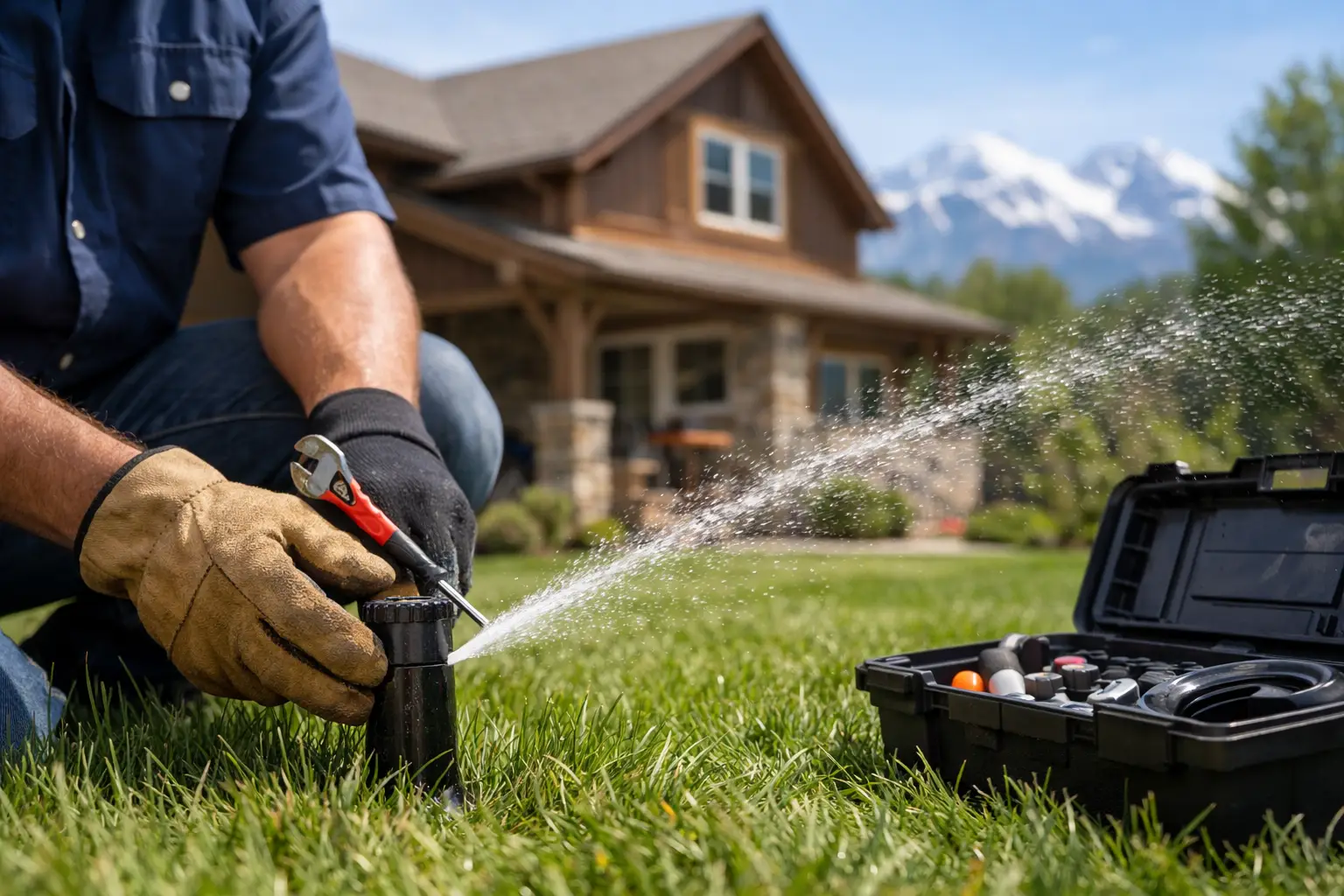
A healthy Colorado lawn can show irrigation problems before you see water pooling or a sprinkler head fail. Dry arcs near the sidewalk, unusually green patches, runoff on a slope, and low water pressure are all signs worth addressing early. This residential sprinkler maintenance guide helps homeowners protect landscape health, use water responsibly, and keep an irrigation system dependable through Colorado's changing seasons.
Sprinkler maintenance is not just about turning the controller on in spring and shutting it down in fall. It is a practical routine of checking coverage, correcting small issues, and adjusting watering to match weather, soil, plant needs, and local watering guidance. A few timely inspections can prevent stressed turf, damaged plants, wasted water, and larger repairs later.
Start Each Season With a System Inspection
Before regular watering begins, walk the property while each irrigation zone runs. Do not rely on the controller alone. A visual inspection is the fastest way to find problems that may have developed during winter or while the system was off.
Look for broken, tilted, buried, or clogged sprinkler heads. Heads should rise fully above the soil or mulch, then retract properly after the zone stops. A head that sits too low can be blocked by grass, while one that leans may spray a driveway, fence, or siding instead of the landscape.
Watch the spray pattern from every zone. The goal is consistent head-to-head coverage, meaning the spray from one head reaches the next. Gaps leave dry areas, while excessive overlap can create soggy soil and runoff. Adjusting a nozzle or replacing a mismatched head can make a noticeable difference in lawn appearance and water use.
Also pay attention to pressure. A weak spray may indicate a leak, clogged nozzle, partially closed valve, or pressure issue. Misty spray that blows away in the wind often signals pressure that is too high. Both conditions reduce uniform coverage, and both deserve a closer look.
Check for Leaks Below and Above Ground
Not every irrigation leak creates a visible puddle. Underground leaks can show up as a persistently soft area, a patch of grass that grows faster than the rest of the lawn, soil erosion, or unexplained water use. If one zone seems to run normally but leaves water collecting after it shuts off, the issue may be a leaking valve or a damaged line.
Above-ground leaks are easier to identify during a run-through. Check connections at sprinkler heads, drip emitters, valves, backflow components, and exposed pipes. Even a small drip can affect pressure in a zone and add up over a season.
If water continues flowing from a sprinkler after the zone has stopped, do not assume the head is simply draining. A small amount of drainage on sloped properties can be normal, especially without check valves. Continued flow or standing water, however, may point to a valve that is not closing correctly. This is the kind of issue that is best diagnosed before it affects the lawn or creates water damage near the home.
Adjust Watering for Colorado Conditions
A fixed irrigation schedule rarely performs well all season. Parker-area lawns experience cool spring weather, hot summer days, sudden rain, wind, and dry fall conditions. The controller should change with those conditions.
In spring, landscapes typically need less water than they do during summer heat. As temperatures rise, adjust run times gradually and observe the results. A lawn that develops a blue-gray cast, folded leaf blades, or footprints that remain visible may need water. A lawn that feels spongy, develops fungus, or produces runoff may be receiving too much.
Watering deeply and less often generally encourages stronger root growth than frequent shallow watering. The exact schedule depends on soil type, sun exposure, slope, turf variety, and plant material. Clay-heavy soil common along the Front Range can absorb water slowly. In those areas, cycle-and-soak watering is often more effective: run a shorter cycle, allow time for water to soak in, then run a second short cycle. This reduces runoff while getting moisture into the root zone.
Avoid watering during the hottest, windiest part of the day. Early morning is usually the best window because evaporation is lower and foliage has time to dry. Watering late at night can leave grass wet for extended periods, which may contribute to disease in certain conditions.
Maintain Sprinkler Heads, Nozzles, and Drip Areas
Sprinkler heads need room to work. Keep grass, mulch, groundcover, and soil from covering the top of the head. After mowing, edging, aerating, or landscape work, take a quick look at exposed heads near lawn borders. These are common areas for accidental damage.
Clean clogged nozzles carefully with water and a soft brush. Avoid forcing debris farther into the nozzle with sharp objects. If a nozzle is cracked, worn, or spraying an uneven pattern after cleaning, replacement is usually the better solution. Use the correct nozzle type and arc for that location. Mixing nozzles with different precipitation rates in the same zone can create uneven watering even when every head appears to be working.
Drip irrigation deserves the same attention as turf zones. Check tubing for damage, inspect emitters for clogs, and confirm water reaches plants without flooding the mulch bed. Drip is effective for shrubs, perennials, and garden areas, but only when emitters are placed and maintained for the current size of the plants. As shrubs mature, the watering pattern often needs to expand with the root zone.
Test the Controller and Rain Sensor
Your irrigation controller is only useful if its programming matches the property and the season. Review the start times, zone run times, watering days, and seasonal adjustment setting at least once a month during the active season. One common mistake is programming multiple start times when the goal is simply to water each zone longer. Multiple starts can cause the entire schedule to repeat, wasting water and overwatering the landscape.
A functioning rain sensor can pause scheduled watering after rainfall. Test it periodically and make sure it is not blocked by leaves or positioned where it cannot receive rain. Smart controllers can also help adjust schedules based on weather, but they still need accurate zone settings and periodic review. Technology supports good irrigation management; it does not replace inspection.
Protect Your System Before Freezing Weather
Winterization is essential for residential irrigation systems in Colorado. Freezing water can crack pipes, damage valves, and affect other components that are costly and disruptive to repair. Simply turning off the controller is not enough. Water must be properly removed from irrigation lines using the correct process and equipment.
Before the first sustained freezing conditions, stop routine watering, turn off the irrigation water supply as appropriate for the system, and schedule professional winterization. Avoid attempting a blowout with equipment that is not designed for irrigation systems. Excessive air pressure or improper technique can damage components, while an incomplete blowout leaves water behind where it can freeze.
After winterization, protect exposed backflow equipment according to professional guidance, but do not use insulation as a substitute for removing water from the system. A covered component can still freeze if water remains trapped inside.
Know When a Professional Inspection Makes Sense
Homeowners can handle basic observations, controller changes, and light cleanup. More complex concerns call for trained diagnosis. A professional inspection is especially helpful when you notice recurring leaks, zones that will not turn on or shut off, persistent low pressure, electrical controller issues, major dry spots, or water pooling near the foundation.
It is also worthwhile after landscaping changes. New trees, expanded beds, retaining walls, patios, and drainage improvements can alter irrigation needs and coverage. A system designed for an open lawn may no longer serve the property well once shade, roots, hardscape, or new planting areas change the landscape.
Irrivive Outdoor Property Solutions helps homeowners maintain irrigation systems with long-term landscape performance in mind. Reliable sprinkler care protects more than the lawn. It supports healthy plant material, preserves curb appeal, and helps your outdoor spaces work the way they should.
A simple habit makes the biggest difference: run one zone while you are outside each month, watch where the water goes, and correct small issues before the landscape has to pay for them.