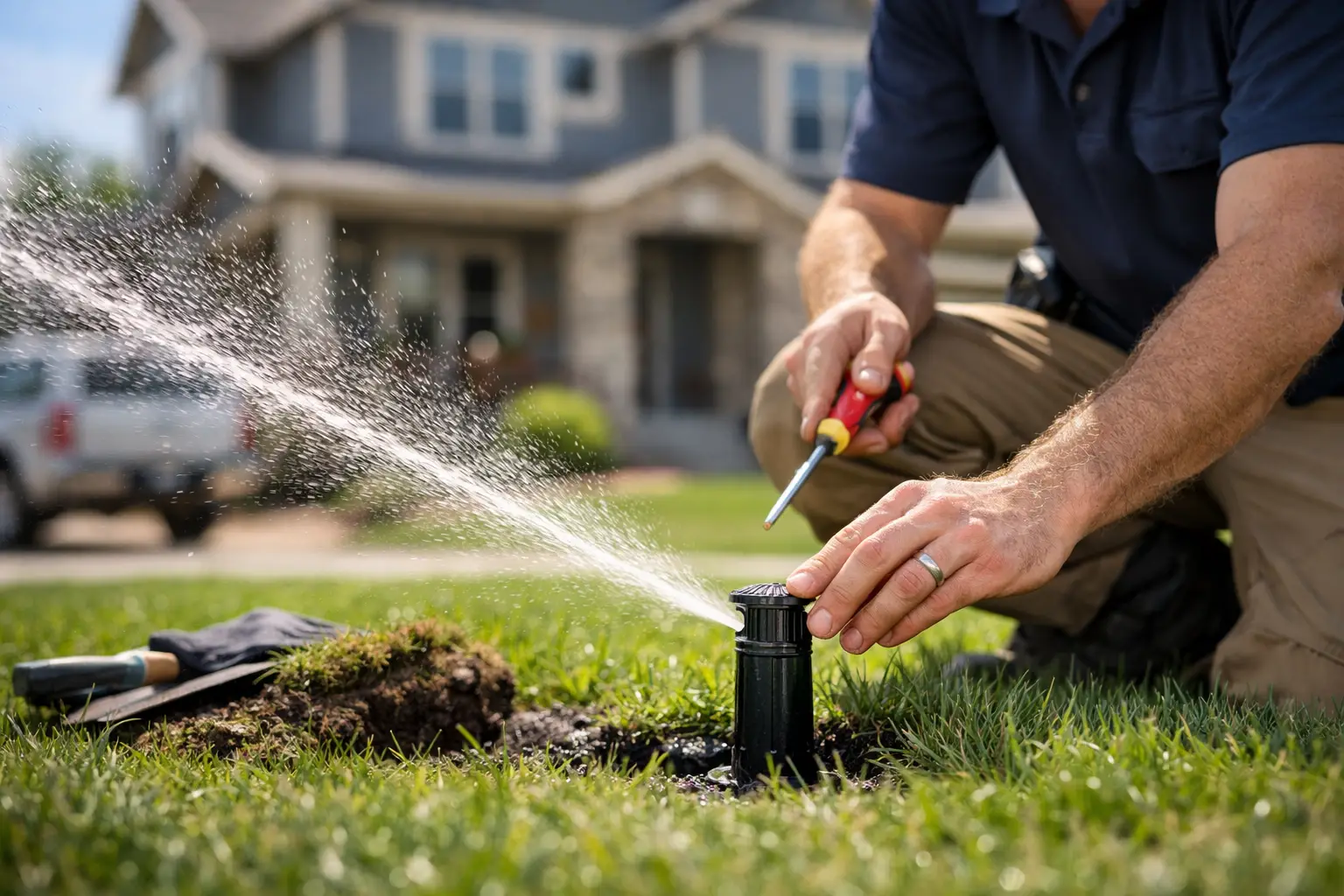
A dry strip along the driveway, a geyser near the curb, or heads that keep running after the zone shuts off usually point to one thing: your irrigation system needs professional attention. For residential sprinkler repair Parker homeowners can rely on, the goal is not just getting water back on. It is restoring even coverage, protecting the landscape, and reducing waste before a small issue turns into a larger one.
In Parker, sprinkler problems are rarely random. Seasonal temperature swings, clay-heavy soils, shifting ground, and normal system wear all affect performance over time. A head that tilted slightly in spring can miss turf by midsummer. A valve issue that seems minor at first can leave one zone soggy and another stressed. That is why effective repair starts with a full system view, not a quick patch.
Why residential sprinkler repair in Parker needs a local approach
Irrigation systems in Colorado work under conditions that change fast. Spring start-ups can reveal freeze damage that was not visible at winter shut-down. Summer heat exposes coverage gaps quickly, especially in areas with full sun or reflected heat from hardscapes. Early fall often brings the opposite problem - homeowners keep watering based on summer habits even when turf demand starts to change.
A local repair approach matters because the symptoms do not always identify the actual failure. Brown grass does not always mean a broken head. It can come from low pressure, poor nozzle selection, a wiring issue, root intrusion, valve trouble, or simple misalignment after mowing and foot traffic. Parker properties also vary widely in grade, plant material, and exposure, so what works for one yard may not fit another.
When a technician understands local conditions, repair decisions tend to be more accurate. That means less trial and error, better zone performance, and more efficient water use across the property.
The signs your system needs professional service
Most residential systems give warning signs before they fully fail. The challenge is that many of those signs are easy to ignore until landscape stress becomes obvious.
If one zone does not turn on, turns on late, or stays on after the controller advances, the issue may involve the valve, solenoid, wiring, or controller programming. If several heads in one area have weak spray or uneven throw, pressure loss or a leak may be affecting performance. If water pools near a sprinkler body, the problem could be a damaged seal, cracked fitting, or lateral line break below the surface.
There are also quieter signs. A noticeable jump in water use, sidewalks getting sprayed every cycle, or beds receiving turf-head overspray all suggest the system is no longer operating as designed. These issues do not always look urgent, but they steadily waste water and compromise plant health.
Homeowners who invest in their landscape usually notice when the yard stops looking uniform. Professional repair helps identify whether the issue is mechanical, hydraulic, electrical, or operational - because each requires a different fix.
What a proper residential sprinkler repair Parker service should include
Good repair work is more than replacing a broken part. A strong service visit begins with diagnosis. The technician should inspect the affected zone, observe system operation, test components where needed, and confirm the reason for failure before recommending the repair.
That matters because irrigation systems are interconnected. A damaged head may be the visible symptom, but not the root cause. Excess pressure can shorten head life. Poor spacing can make one area appear under-watered even when every component technically works. A valve that does not fully close can create drainage issues that mimic a line leak.
A repair appointment should also consider efficiency. If a nozzle is wrong for the area, or a head is positioned too low after settling, simply swapping the part without correcting performance leaves the homeowner with the same problem in a different form. Premium irrigation service looks at function, coverage, and water use together.
For residential properties, this is especially important around lawn edges, planting beds, slopes, and narrow turf strips where runoff and overspray are common. Those areas need precision, not guesswork.
Common repairs that benefit from specialist attention
Broken sprinkler heads are common, but they are rarely the only issue on a system. Valves can fail mechanically or electrically. Underground leaks can reduce pressure enough to affect an entire zone. Rotors may stop rotating due to debris, wear, or internal damage. Controllers can lose programming, develop station faults, or run schedules that no longer match seasonal conditions.
Backflow-related concerns, drip zone inconsistencies, and wiring faults also require care. In many cases, the system needs adjustment after the repair is complete so the restored component works properly with the rest of the zone. That is where specialized irrigation service stands apart from general home repair.
Why delayed repairs usually create bigger landscape problems
Sprinkler issues tend to compound. A small leak may not seem serious at first, but over time it can soften soil, affect root health, and create hidden waste. A stuck valve can overwater one section of lawn while starving another zone that never receives enough runtime. A clogged nozzle can leave dry spots that homeowners try to solve by increasing the schedule, which often creates overwatering elsewhere.
The trade-off is simple: waiting may avoid the inconvenience of booking service today, but it often leads to more stressed turf, less efficient watering, and a system that becomes harder to optimize later. Irrigation problems are easier to correct when the landscape has not already been pushed into decline.
This is particularly true during peak watering season, when uneven coverage shows up quickly. Turf can recover from short-term stress, but repeated inconsistency often weakens it and opens the door to broader maintenance issues.
Seasonal timing matters as much as the repair itself
In Parker, timing has a major effect on irrigation performance. Spring is the season when many hidden issues appear. Cracked components, damaged fittings, misaligned heads, and non-responsive zones often show up during start-up because the system is being pressurized again after winter.
Summer brings a different set of concerns. Systems run more frequently, demand is higher, and small inefficiencies become visible fast. If a lawn has sections that look different from each other by July, there is a good chance the system needs correction, not just more water.
Fall is the time to resolve lingering issues before winterization. A system with unresolved leaks, valve problems, or controller confusion is harder to shut down with confidence. It also increases the chance that preventable problems will carry into the next season.
This is why ongoing irrigation care is often more effective than waiting for a visible failure. Reliable seasonal service keeps the system aligned with actual landscape needs, not just past settings.
Choosing a provider for residential sprinkler repair in Parker
Not every company approaches irrigation the same way. For homeowners who care about landscape appearance, system reliability, and efficient water use, specialization matters. Residential sprinkler repair in Parker should be handled by a provider that understands diagnostics, zone performance, seasonal operation, and water-management best practices.
A professional irrigation partner should communicate clearly, show up prepared, and focus on long-term system function rather than temporary fixes. That includes identifying whether a repair is isolated or part of a broader maintenance pattern. It also means recognizing when adjustment, optimization, or seasonal support would improve results after the immediate issue is resolved.
This is where a service-focused company like Irrivive Sprinklers fits the needs of homeowners who want dependable irrigation care without the uncertainty of generic repair work. The value is in precision, consistency, and attention to how the full system performs over time.
Protecting your lawn starts with system performance
A healthy landscape depends on more than regular watering. It depends on the right amount of water reaching the right area at the right time. When sprinkler systems fall out of adjustment or develop mechanical problems, the lawn is usually the first place the damage shows up.
Professional repair restores more than operation. It brings the system back to a standard where coverage is even, runoff is reduced, and each zone works as intended. For homeowners in Parker, that means better protection for the landscape they have invested in and fewer surprises during the busiest parts of the irrigation season.
If your system is showing signs of uneven coverage, leakage, poor pressure, or unreliable zone performance, the best next step is to address it before the lawn starts telling you more clearly than the controller does.