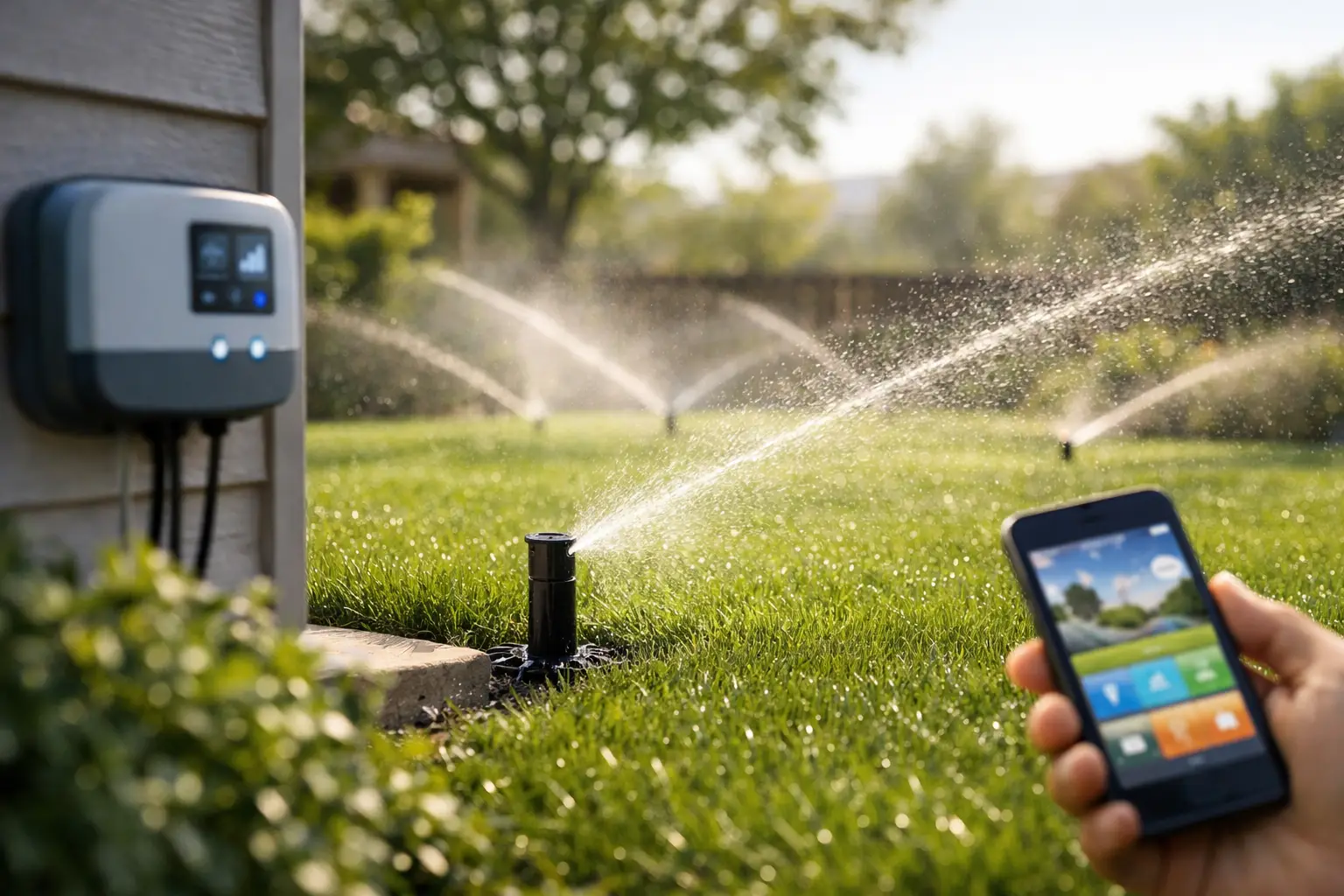
A lawn can look stressed long before a sprinkler system looks broken. In Colorado, that gap matters. Hot afternoons, dry air, changing soil conditions, and watering restrictions can turn a small scheduling issue into brown spots, runoff, or unnecessary water use. That is why smart irrigation has become less of a convenience upgrade and more of a practical way to protect both landscape health and system performance.
For homeowners who care about curb appeal and want their irrigation system to work reliably through the season, smart irrigation offers better control over when, where, and how water is applied. It does not replace the need for a well-maintained system. It improves the decisions the system makes.
What smart irrigation actually means
Smart irrigation is the use of connected controllers, weather-based adjustments, sensors, and zone-specific programming to make watering more precise. Instead of running on the same fixed schedule week after week, the system responds to real conditions. That may include recent rainfall, temperature swings, seasonal changes, or the moisture needs of specific areas of the yard.
In practical terms, a smart irrigation setup often centers on a controller that can automatically adjust runtimes and watering days. Some systems use local weather data. Others rely on soil moisture sensors or flow monitoring to improve performance and catch problems earlier. The goal is straightforward - apply the right amount of water at the right time without overwatering or leaving sections of the landscape under stress.
That sounds simple, but the results depend on more than the controller itself. A smart device connected to a poorly maintained sprinkler system will still inherit the same issues. Misaligned heads, pressure problems, broken nozzles, clogged emitters, and leaking valves can all reduce the value of the upgrade.
Why smart irrigation matters in Colorado landscapes
Front Range landscapes deal with a climate that punishes waste and inconsistency. Dry conditions can increase watering demand, but afternoon heat and wind can also make poorly timed irrigation far less effective. Add in clay-heavy soils, sloped areas, mixed sun exposure, and seasonal temperature shifts, and a fixed schedule starts to show its limits.
This is where smart irrigation is especially useful. A controller that adjusts to changing conditions helps reduce those common patterns homeowners see every summer - soggy spots near sidewalks, dry turf over roots or slopes, and water running off before it ever reaches the root zone. Better timing also helps reduce evaporation losses, particularly when the system is programmed to water in the most effective part of the day.
There is also a maintenance advantage. Some smart systems can flag unusual water use, which may point to a leak, a stuck valve, or a line issue before it becomes a larger repair. That kind of visibility is valuable for busy homeowners who want dependable operation without having to monitor the system constantly.
Smart irrigation is only as good as the system behind it
One of the biggest misconceptions is that installing a smart controller automatically solves irrigation problems. It does not. It improves management, but it cannot correct poor coverage, failing components, or bad zoning.
A zone with mismatched sprinkler heads will still water unevenly. A drip area with a pressure issue will still struggle. A controller may reduce unnecessary runtimes, but if the system has physical problems, the landscape can still suffer. That is why professional inspection and system condition matter so much when homeowners start considering a smart irrigation upgrade.
In many cases, the best results come from combining modern control technology with practical system corrections. That might mean repairing heads, adjusting spray patterns, checking pressure, updating nozzles, or reworking runtimes to match slope, soil, and plant type. Smart features perform best when the underlying system is already operating the way it should.
Where homeowners see the biggest benefits
The most immediate benefit is better watering consistency. Instead of relying on guesswork or manually changing schedules every time the weather shifts, the system can make informed adjustments. That helps protect turf and planting beds from both overwatering and drought stress.
Another major benefit is efficiency. Many residential systems waste water not because they run too often every day, but because they run too long after conditions change. A cooler stretch of weather, a passing storm pattern, or a seasonal shift may not seem dramatic, yet fixed schedules often continue unchanged. Smart irrigation helps close that gap.
Convenience matters too. Homeowners with full schedules often do not have time to monitor controllers closely, especially during spring startup, peak summer demand, and fall adjustments. Remote access and automatic scheduling can make system management much easier. That said, convenience should not be confused with a set-it-and-forget-it approach. Even smart systems need seasonal review, inspection, and occasional programming refinement.
When smart irrigation makes the most sense
Not every property needs the same level of irrigation technology. For some homes, a smart controller paired with professional seasonal service is enough. For others, especially larger landscapes or yards with multiple sun exposures and planting zones, more advanced monitoring can be worthwhile.
Smart irrigation tends to make the most sense when a homeowner has recurring dry spots, signs of runoff, difficulty keeping up with seasonal adjustments, or a strong interest in reducing water waste without sacrificing lawn quality. It is also a strong fit for homeowners who travel often or who want better visibility into how their system is operating throughout the season.
There are trade-offs. More technology can mean more setup decisions and a greater need for correct programming. If the installer does not understand the property, the soils, or the zone requirements, even a high-quality controller can be programmed poorly. The right solution is not always the one with the most features. It is the one that matches the landscape and is supported by proper service.
Professional setup matters more than the hardware alone
The controller gets most of the attention, but setup is where performance is won or lost. A professionally configured smart irrigation system should reflect the actual conditions of the property. That includes sun and shade patterns, plant material, nozzle precipitation rates, slope, soil behavior, and drainage concerns.
This is also where local expertise matters. In areas like Parker, Castle Rock, and Highlands Ranch, irrigation timing is not just about heat. It is about how fast the soil takes in water, how exposure changes across the yard, and how quickly weather can shift from one week to the next. A generic programming approach often misses those details.
Professional service also helps homeowners avoid a common problem after installation: assuming the technology will compensate for neglect. Seasonal startup, midseason inspection, repairs, and winterization still matter. Smart irrigation works best as part of a complete service strategy, not as a substitute for one.
A better way to think about irrigation upgrades
For most homeowners, the question is not whether smart irrigation is worth considering. It is whether the current system is ready to benefit from it. If the answer is yes, the improvement can be significant - healthier turf, less waste, better timing, and a system that responds more intelligently to real conditions.
If the answer is not yet, the next step is usually not more technology. It is better system performance. Once the sprinkler system is repaired, adjusted, and maintained correctly, smart controls become much more effective.
That is the practical value of modern irrigation service. It is not about adding features for their own sake. It is about making sure your landscape gets the water it needs, when it needs it, through a system you can depend on.
A well-watered lawn should not require constant guesswork. With the right support, smart irrigation turns watering into a more controlled, reliable part of protecting your landscape season after season.