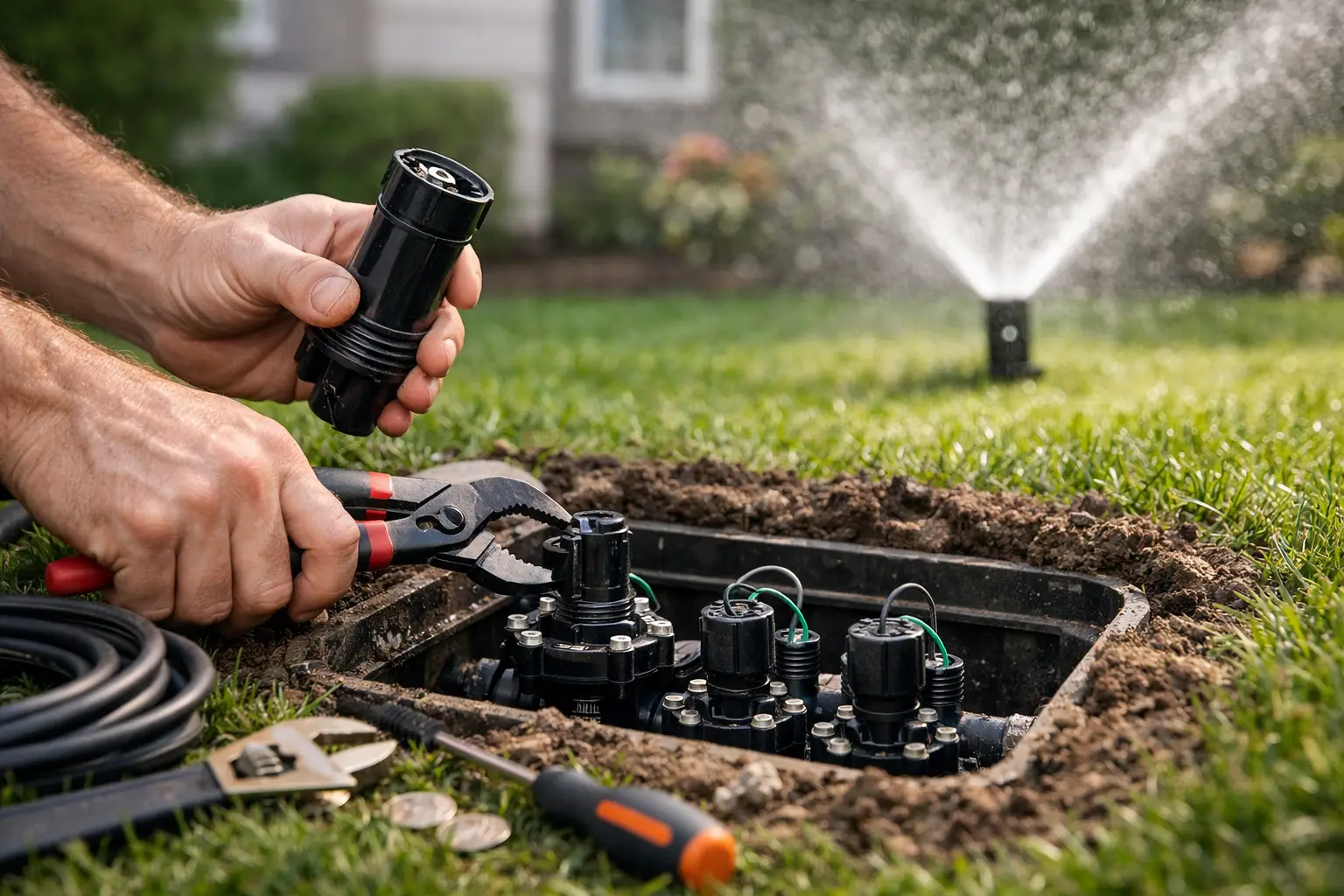
A sprinkler problem rarely stays small for long. One broken head, a valve that will not close, or a zone that stops coming on can quickly turn into brown patches, runoff, and higher water bills. For homeowners in Parker, understanding sprinkler repair cost starts with knowing what failed, how accessible the issue is, and whether the repair solves one symptom or corrects a larger system problem.
What affects sprinkler repair cost
Sprinkler repair pricing is not based on a single flat rate because irrigation systems fail in different ways. A cracked spray head near the curb is a very different service call than diagnosing low pressure across multiple zones or finding a damaged wire underground. The more time needed to locate the issue, expose components, test the system, and confirm proper operation after the repair, the more the cost can increase.
The type of component matters as well. Replacing a standard sprinkler head is usually one of the more straightforward repairs. Valve work, controller issues, wiring faults, pressure regulation problems, and hidden leaks often require more labor and more technical troubleshooting. On properties with larger landscapes, multiple zones, or mixed irrigation like sprays, rotors, and drip, repair complexity tends to be higher.
Seasonality also plays a role. In Colorado, irrigation systems experience freeze-thaw cycles, spring startup issues, summer wear, and fall shutdown needs. A repair discovered during startup may reveal damage from winter freezing. A midsummer service call may expose stress from heavy use, clogged nozzles, shifting soil, or root intrusion. That is why the final repair cost sometimes reflects more than the first visible problem.
Typical sprinkler repair cost ranges
For many homeowners, the most useful question is not just what sprinkler repair cost means in theory, but what they are likely to pay in practice. Minor repairs often fall at the lower end of the range, especially when the failed part is easy to access and the diagnosis is clear. That can include replacing a damaged head, correcting a nozzle issue, or making a simple adjustment to restore coverage.
Moderate repairs usually involve more labor or more valuable parts. Valve replacement, small leak repair, wiring corrections, or resolving zone performance problems often land in a middle price range. These jobs are still common, but they require more system knowledge and testing to complete correctly.
Higher repair costs generally show up when the issue is underground, intermittent, or spread across multiple components. A technician may need to locate a buried leak, trace electrical faults, address manifold problems, or correct poor pressure conditions affecting the whole system. In those cases, labor and diagnostic time become a larger portion of the bill.
As a general benchmark, homeowners often see simple repairs start around the cost of a basic service visit and increase from there based on parts, labor, and system complexity. Many minor repairs may fall roughly in the low hundreds, while more involved work can move into several hundred dollars. When multiple problems are found in one visit, the total may be higher, but bundling repairs can still be more efficient than repeated service calls.
Common repairs and how pricing usually breaks down
A broken sprinkler head is one of the most frequent calls. Heads get damaged by mowers, foot traffic, settling soil, or age. If the line below the head is intact and the replacement is straightforward, this is usually among the more affordable repairs.
Valve repairs tend to cost more because valves are central control points for each zone. When a valve sticks open, fails to activate, or leaks, the issue may involve the valve body, solenoid, diaphragm, wiring, or surrounding connections. Diagnosis takes time, and access is sometimes limited by valve box conditions, mud, or older system layouts.
Leaks can vary widely in price. A visible leak near the surface may be relatively simple to address. A hidden lateral line leak, a damaged fitting under turf, or a problem beneath established landscaping can take longer to locate and repair cleanly. That is one reason leak-related sprinkler repair cost can range from modest to significant.
Controller and wiring issues are another category where pricing depends on diagnosis. Sometimes the fix is a programming correction or a terminal reconnection. Other times, it involves replacing a failed controller component, tracking a wire break, or solving a zone activation issue tied to electrical failure.
Pressure and coverage corrections can be the most misunderstood. Homeowners may assume they need one replacement part, when the real problem is poor head spacing, clogged nozzles, worn seals, pressure imbalance, or multiple failing components. The repair may still be cost-effective, but it often requires a system-wide view rather than a quick swap.
Why two quotes can look very different
If you compare estimates, the numbers may not match, and that does not always mean one is overpriced. One company may quote only the immediate replacement part. Another may include full diagnostics, system testing, adjustment, and confirmation that the repaired zone is operating efficiently. For irrigation work, that difference matters.
A lower quote can look appealing until the same zone fails again because the original cause was not fully addressed. A professional irrigation specialist is not only replacing parts. They are evaluating pressure, arc, run time, component wear, and whether the repair improves water distribution instead of simply restarting a malfunctioning section.
This is especially important for homeowners who care about landscape quality and water efficiency. The right repair protects turf, plantings, and hardscape while reducing waste. In that context, value is not just the lowest invoice. It is the quality of the diagnosis and the reliability of the fix.
Parker, Colorado factors that can influence cost
Local conditions matter. In Parker, sprinkler systems deal with elevation, sun exposure, seasonal temperature swings, and periods of dry weather that put irrigation performance under pressure. Clay-heavy or shifting soils can affect head alignment and underground fittings. Winter damage is also a real concern if a system was not properly winterized or if a weak component gave way after freezing.
Water efficiency expectations are another factor. Many homeowners are not just asking for a repair. They want the system to run better than it did before the problem appeared. That may mean adjusting spray patterns, replacing inefficient nozzles, correcting overspray, or resolving runoff issues during the same appointment. Those upgrades can increase the immediate service total, but they often improve long-term performance and reduce unnecessary water use.
When repair is better than replacement
Most sprinkler issues do not require a full system replacement. If the layout is fundamentally sound and the problem is limited to heads, valves, wiring, or isolated piping, targeted repairs usually make sense. This is especially true when the rest of the system remains in good working order and the components are still serviceable.
Replacement becomes a bigger conversation when repairs are constant, coverage is poor throughout the property, or the system design no longer matches the landscape. Older systems may have recurring failures, outdated controllers, inefficient spray patterns, or mismatched equipment that drives up service frequency. In those cases, repeated repair costs can add up quickly.
The best approach is usually to evaluate the whole system honestly. A premium service provider should tell you when a straightforward repair is enough and when broader improvements would better protect your property and water budget.
How to keep sprinkler repair cost from climbing
The most cost-effective repair is often the one you prevent. Seasonal startup catches freeze damage, stuck valves, cracked heads, and programming issues before summer demand increases. Midseason inspections help identify uneven coverage, pressure concerns, and leaks before they stress the landscape. Proper winterization reduces the risk of burst components and expensive spring surprises.
Prompt service also matters. A small leak can wash out soil and damage surrounding components. A misaligned head can create dry spots that lead to turf loss. A valve problem can waste a meaningful amount of water before it becomes impossible to ignore. Early repair usually means less labor, fewer damaged parts, and better landscape protection.
Working with a specialist instead of a general handyman can make a difference here. Irrigation systems are mechanical, hydraulic, and electrical at the same time. When a technician understands how those pieces interact, repairs are more likely to address the real issue rather than the most obvious symptom.
What homeowners should expect from a professional visit
A quality service appointment should include more than replacing what looks broken. The technician should assess the affected zone, inspect nearby components, verify controller operation when relevant, and test the repair under normal operating conditions. If additional issues are found, they should be explained clearly so you can make an informed decision.
That level of service is part of what homeowners are paying for. It supports more reliable system performance and helps avoid repeat calls for the same unresolved issue. For customers who want dependable irrigation support rather than temporary fixes, that is where professional repair earns its value.
For homeowners in Parker who want their landscape to look right and their system to run efficiently, sprinkler repair cost is best viewed as an investment in performance, not just a line item on a service invoice. A careful repair done at the right time can protect turf, prevent waste, and keep a manageable problem from becoming a much more expensive one.