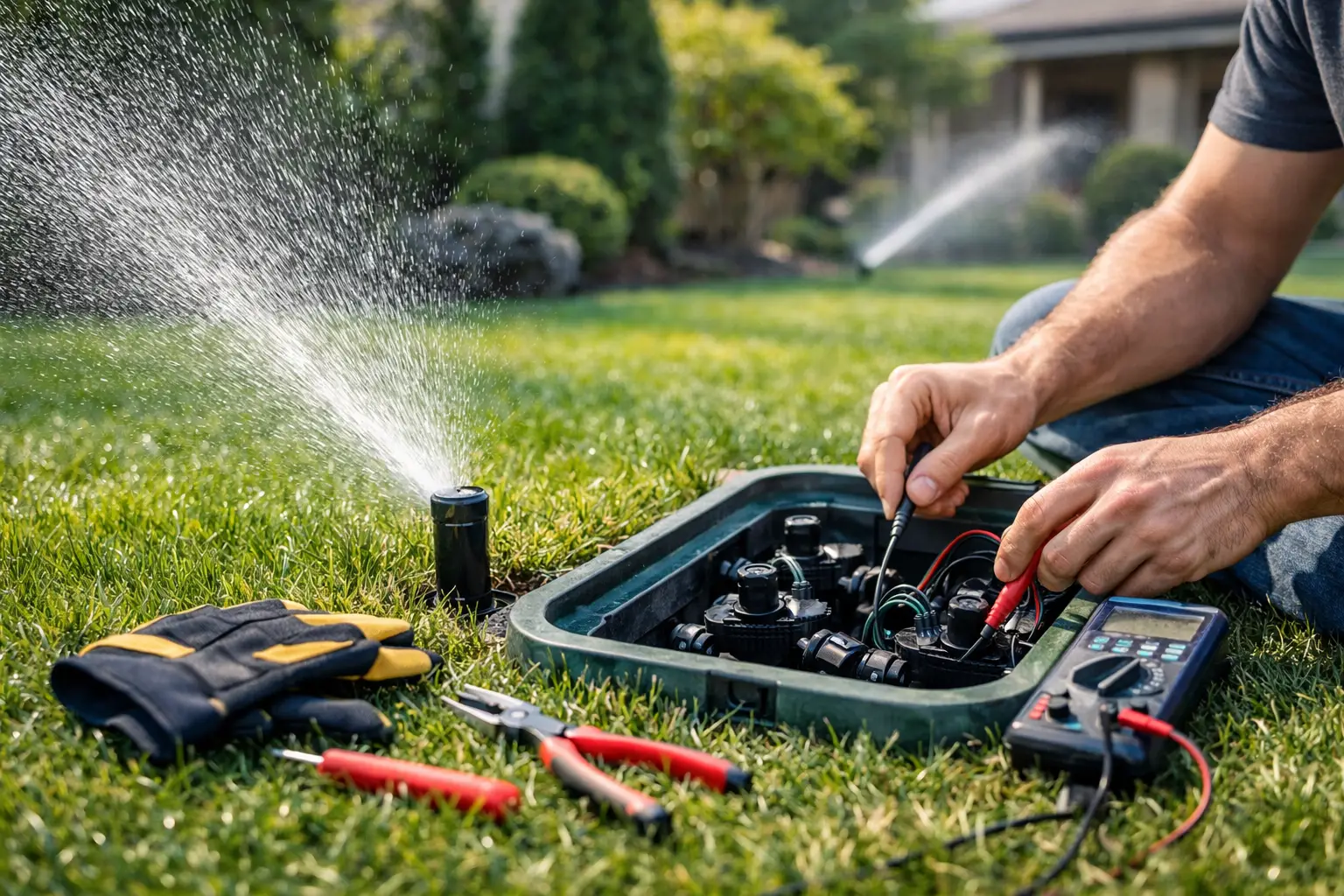
A lawn that looks dry in one section and saturated in another usually points to one thing - a zone problem, not a whole-system failure. This sprinkler zone troubleshooting guide is built for homeowners who want to understand what is happening before a small irrigation issue turns into turf stress, runoff, or a controller schedule that no longer matches what the yard needs.
When one zone stops working, stays on, runs weakly, or waters unevenly, the cause is often more specific than people expect. In many cases, the issue comes down to a valve that is not opening or closing correctly, a wiring fault, low pressure, a damaged head, or a controller setting that no longer reflects current conditions. The fastest path to a real fix is narrowing the symptom before replacing parts.
How to use this sprinkler zone troubleshooting guide
Start by identifying whether the problem affects only one zone or multiple zones. If every zone is underperforming, the source may be the mainline, backflow, controller power, or incoming pressure. If only one zone is acting up, focus on the valve, field wiring, and sprinkler heads connected to that station.
It also helps to observe the system while it runs. Watch for heads that do not pop up, areas that mist instead of spray, pooling water near a valve box, or zones that continue running after the controller advances. Those details matter because they point to different repair paths.
When a sprinkler zone will not turn on
A zone that never activates can stem from either an electrical problem or a mechanical valve issue. The controller may be sending the signal, but if the solenoid is damaged or the wire connection has failed, the valve will not open. On the other hand, the electrical side may be fine, but debris inside the valve can still keep water from moving through the zone.
Begin at the controller. Confirm the station has a programmed run time and is not disabled by seasonal adjustments, rain delay, or a damaged module. It sounds basic, but controller settings are often part of the problem after storms, power interruptions, or seasonal service.
If the schedule looks correct, the next step is the valve. A technician will typically test voltage and continuity to confirm whether the signal is reaching the solenoid. For a homeowner, the visible signs are more limited, but you can still check whether the zone works when started manually at the controller and whether nearby zones perform normally. If one zone remains inactive while others operate as expected, the fault is usually isolated to that valve or its wiring.
There is also a hydraulic possibility. A crushed lateral line, major leak, or severe clog can keep the zone from functioning correctly even if the valve opens. In that case, you may hear water moving without seeing normal spray patterns.
When a sprinkler zone will not turn off
This is one of the more urgent irrigation problems because it wastes water quickly and can damage turf, plantings, and soil structure. A zone that keeps running after the cycle ends usually indicates a stuck valve, debris in the diaphragm, or a solenoid that is not closing properly.
Sometimes the controller is still the source. A programming error, overlapping start times, or a station set to too many cycle starts can make it appear that the zone is stuck when it is actually being told to run repeatedly. That is why it makes sense to confirm the controller first before opening a valve box.
If the controller is not sending water to that station, the valve becomes the likely cause. Dirt or wear inside the valve body can prevent a full seal. In other cases, a small internal component fails and the zone continues to pass water even when the station should be off. This type of issue usually requires valve service rather than simple adjustment.
Uneven coverage inside one zone
A zone that turns on but waters inconsistently is often dealing with pressure imbalance, clogged nozzles, misaligned heads, or hidden leaks. This is where symptoms can overlap, so the pattern matters.
If the first few heads in a zone are strong and the later heads are weak, low pressure or a downstream leak is a common cause. If one or two heads are weak while the rest look normal, the issue may be limited to those specific sprinklers. Dirt in the nozzle, a broken riser, or a head that is no longer set to the correct arc can create dry spots without affecting the whole zone.
In Parker-area landscapes, seasonal changes also play a role. Spring startup can reveal damage from winter conditions, while midsummer demand puts more stress on marginal pressure and aging components. A system may appear acceptable early in the season and then show uneven performance once temperatures rise and watering patterns increase.
Common valve and wiring issues in a sprinkler zone troubleshooting guide
Zone valves do the real switching work in an irrigation system, and they are often the source of single-zone failures. Each valve relies on a functional solenoid, intact wiring, clean internal components, and proper water flow. If any one of those elements fails, that station may behave unpredictably.
Wiring problems are especially common in older systems or in areas where prior landscape work disturbed buried conductors. A cut common wire can disable multiple valves, while a break in one station wire may affect only one zone. Corroded splices inside a valve box can create intermittent behavior that is frustrating to diagnose because the zone may work some days and fail on others.
Valve boxes themselves can tell part of the story. If you open a box and find standing water, mud, or heavy root intrusion, that environment can contribute to both mechanical and electrical issues. The repair may be more than replacing a single part. It may require cleaning the assembly, rebuilding the valve, and restoring reliable wire connections.
Pressure problems that look like zone failures
Not every weak zone has a bad valve. Water pressure issues can mimic zone-specific problems, especially when systems are oversized, have developed leaks, or were changed over time without proper hydraulic balancing.
Low pressure usually shows up as heads that barely rise, excessive misting, short throw distance, or poor rotation on rotor zones. High pressure can be just as problematic. It creates fogging, uneven distribution, and unnecessary water loss, particularly during warmer and windier periods.
If pressure problems affect only one zone, look at the number and type of heads on that station. A zone with mixed nozzles, added spray heads, or mismatched precipitation rates may never perform evenly, even if nothing is technically broken. This is where troubleshooting turns into optimization. The system may need adjustment, not just repair.
What homeowners can safely check first
A careful visual inspection goes a long way. Run the affected zone and note whether every head pops up, whether water pressure looks consistent, and whether any area is collecting water faster than it should. Check the controller display for alerts, lost programming, or weather delay settings.
If you know where the valve box is, inspect it for obvious flooding or damage, but use caution around wiring and avoid disassembling valve components if you are not certain what you are seeing. Small mistakes inside a valve can create larger service issues later.
It is reasonable to clean a clogged nozzle or straighten a tilted head if the fix is obvious. It is less reasonable to guess at buried leaks, splice wiring without proper irrigation-rated connectors, or replace electrical parts without confirming the source of failure. Zone problems can share symptoms, and the wrong repair often delays the real one.
When professional irrigation service makes sense
A good sprinkler zone troubleshooting guide can help you identify patterns, but diagnosis becomes more precise when the system is tested under real operating conditions. Electrical checks, pressure evaluation, valve inspection, and zone-by-zone review often reveal combined issues rather than a single failure point.
That matters for homeowners who care about landscape health and water efficiency. A zone that runs weakly may still be using plenty of water, just not where it belongs. A stuck valve may look like a simple nuisance until it creates soggy roots, pavement runoff, or visible lawn decline.
Professional irrigation service is especially valuable when the same zone keeps failing, multiple repairs have been attempted already, or the problem shows up during seasonal startup and shutdown. In those cases, the goal is not just getting the zone to run again. It is restoring dependable performance for the rest of the season.
For homeowners who expect their irrigation system to work quietly in the background, zone issues are worth addressing early and correctly. The right repair protects the landscape, reduces waste, and keeps the system operating the way it was meant to - with consistency you do not have to think about every week.