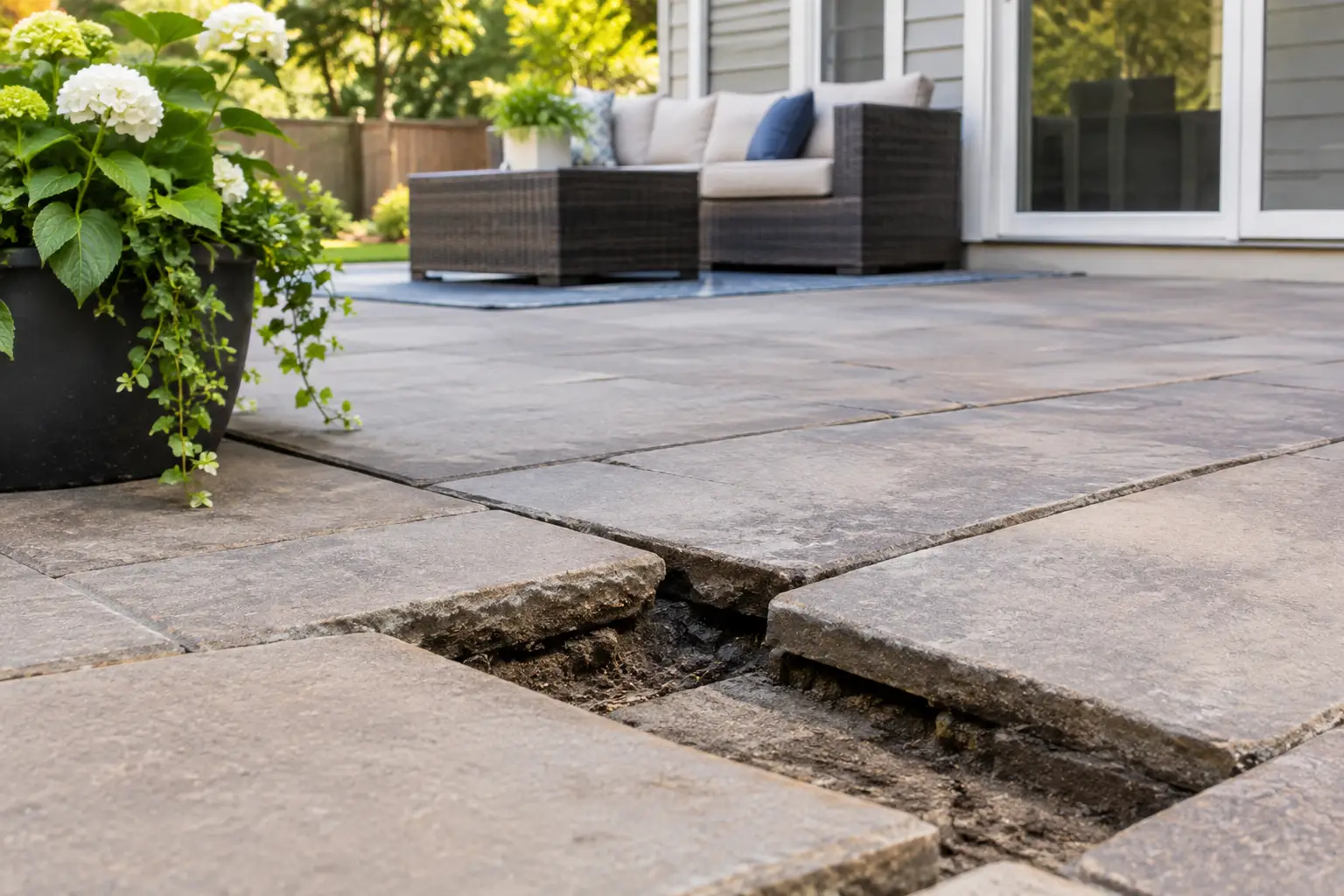
A patio rarely sinks all at once. Most homeowners first notice a low corner where water collects, a paver that rocks underfoot, or a concrete slab pulling away from the house. Understanding what causes patio sinking early can help protect the patio, nearby landscaping, and the foundation drainage around your home.
In Parker and throughout the Front Range, patios face a demanding mix of dry soil, sudden heavy rain, irrigation, and repeated freeze-thaw cycles. The visible dip is the symptom. The real issue is usually in the soil and base material beneath it.
What causes patio sinking?
Patios sink when the ground or base below them can no longer support the surface evenly. That loss of support may develop from poor installation, moving water, soil movement, or a combination of several conditions. Concrete patios can crack or tilt as they settle, while paver patios often develop uneven joints, low spots, and loose individual pavers.
A quality repair starts with identifying the cause rather than simply adding material to the top. A surface-level patch may improve the appearance briefly, but it will not stop a patio from settling again if water or unstable soil remains below.
1. Inadequate base preparation
A patio needs a stable, compacted base. If the soil was not excavated to the proper depth, if the base material was too thin, or if it was not compacted in layers, the patio may settle under its own weight and everyday use.
This is especially common where a patio was installed over loose fill soil or where base material was placed all at once and compacted only at the surface. The upper layer can look firm during installation while softer material remains underneath. Over time, that material compresses and creates uneven support.
Paver patios are particularly dependent on a properly built base. The bedding layer beneath the pavers is intended for final leveling, not for correcting major low areas or replacing structural base material. When too much loose sand is used to make up for an uneven base, pavers can shift and sink.
2. Poor drainage around the patio
Water is one of the most common contributors to patio settlement. Rainwater should move away from the house and off the patio in a controlled direction. When it ponds along an edge, drains toward a low spot, or spills off a roof directly onto the patio, it can saturate and weaken the soil below.
As water works into the base, it can carry away fine soil particles and leave small voids. The patio surface eventually drops into those voids. Standing water can also soften clay-heavy soils, making them more likely to shift under the weight of a slab or paver system.
A patio should generally slope away from the home. The exact solution depends on the patio layout, roof drainage, surrounding grades, and where water can safely discharge. In some cases, correcting a downspout extension or nearby landscape grade is enough. In others, the area may need a drainage improvement before the patio is rebuilt.
3. Irrigation leaks or overspray
Irrigation keeps a landscape healthy, but a leaking line, broken fitting, or misdirected sprinkler can slowly create a serious problem below a patio. Unlike a heavy storm, an irrigation issue may add water to the same area day after day. The damage can develop quietly until the patio has already moved.
Watch for consistently damp soil beside the patio, unusually green turf near one edge, water bubbling up when a zone runs, or a sprinkler head spraying directly onto pavers or concrete. Overspray can also wash joint sand from paver patios and send water down into the base.
An irrigation inspection should be part of the diagnosis when settlement occurs near planting beds, lawn areas, or sprinkler zones. Repairing the patio without correcting the water source can lead to the same issue returning.
4. Colorado clay soil movement
Many Front Range properties have expansive clay soils. These soils swell as they absorb moisture and shrink as they dry. That movement does not always affect every part of a patio equally, which is why one section can drop while another remains level.
Long dry periods can cause soil to contract and leave gaps beneath a patio. A later storm, snowmelt, or irrigation cycle may rewet the soil unevenly. The repeated expansion and contraction can stress both concrete and paver installations over time.
This does not mean every sinking patio is caused by clay. It does mean soil conditions should be considered before selecting a repair approach. A durable solution may involve rebuilding the base, improving water management, and making sure adjacent landscaping does not direct concentrated moisture toward the patio.
5. Freeze-thaw cycles and frost movement
Colorado winters add another layer of stress. When water enters the base or surrounding soil and freezes, it expands. This can lift sections of a patio slightly. When the ground thaws, the surface may not settle back into the same position, especially if the base has shifted or eroded.
Freeze-thaw movement is more likely where drainage is already poor. It can widen concrete cracks, loosen paver edges, and create new low spots near areas that hold water. A patio with proper slope, drainage, and compacted base material is far better prepared to handle seasonal temperature changes.
6. Erosion at patio edges
The perimeter of a patio is often where settlement begins. Water flowing from a roof, yard, or adjacent slope can wash soil away from the edge. Small gaps may appear beside the patio, then grow as runoff continues to move material out from underneath.
Paver patios need secure edge restraints to keep the system locked together. If restraints are loose, damaged, or missing, pavers can spread outward and lose support. Concrete patios can also settle at an edge where soil has eroded away, leaving a noticeable drop or separation from nearby landscaping.
A gap beside a patio should not be filled with loose topsoil and forgotten. The source of the erosion needs attention first. Otherwise, the replacement soil can wash away during the next significant rain event.
7. Decaying material or buried debris below the patio
Sometimes a patio was built over tree roots, construction debris, old landscape material, or poorly compacted fill. Organic material breaks down over time, leaving voids where solid support once existed. Buried wood is a common example.
This type of settlement can be localized and may not appear until years after installation. If a single area continues to sink while the rest of the patio looks stable, the repair team may need to excavate that section and inspect what is underneath. Simply raising the surface without removing unstable material is rarely a lasting fix.
Signs the problem needs attention
A minor uneven spot does not always mean a patio must be completely replaced. However, certain signs suggest that the issue is more than normal wear. Pay attention to new cracks in concrete, widening gaps at the house, recurring puddles, loose pavers, or a patio that is beginning to slope toward the foundation.
Trip hazards also deserve prompt attention. A shifted paver edge or raised concrete section can create a safety concern for family members and guests. Water moving toward the home is equally important because it can contribute to larger drainage issues beyond the patio itself.
How professionals determine the right repair
The best repair depends on the patio material and the condition below it. With pavers, sections can often be carefully removed, the failed base excavated, and the area rebuilt with properly compacted material before the pavers are reset. This preserves a cohesive appearance when the existing pavers are still in good condition.
Concrete is different. Small, stable cracks may be manageable, but major settlement, drainage problems, or widespread cracking can require more extensive work. The goal is not just to create a level surface. It is to establish dependable support and a drainage plan that keeps water moving away from the patio and home.
Before work begins, look beyond the patio itself. Roof runoff, irrigation coverage, landscape grading, edging, and nearby planting beds can all influence how water behaves around the surface. A repair that accounts for those connected systems is more likely to hold up through changing Colorado seasons.
Protecting a repaired or new patio
Once the underlying issue has been corrected, regular observation helps prevent future damage. Keep downspouts directing water away from the patio, adjust sprinklers so they do not soak hardscape surfaces, and address pooling water after storms. If joint sand is washing out of a paver patio, restore it before pavers begin to loosen.
Avoid piling soil or mulch high against the patio edge, particularly where it changes drainage or traps moisture. Seasonal checks are useful because winter snowmelt and summer storms can reveal water patterns that are not obvious on a dry day.
A sinking patio is a useful signal: the outdoor space is telling you something about the soil and water below it. Address that signal with a careful inspection and sound base, drainage, and irrigation work, and your patio can return to being a reliable place to enjoy your property.