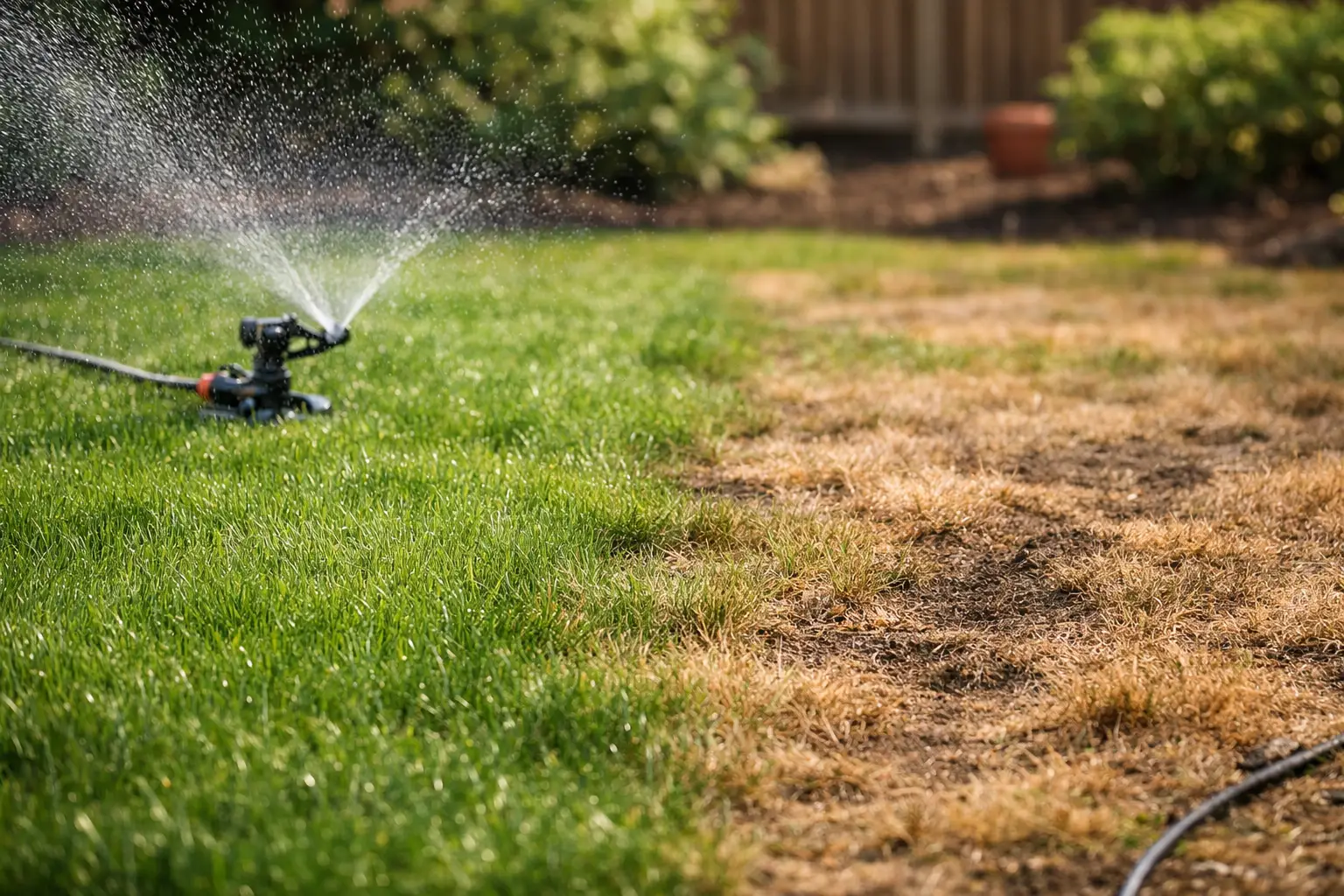
A lawn can look dry along the sidewalk, lush near the driveway, and stressed in the middle of the yard after the same irrigation cycle. So, what causes uneven lawn watering? Usually, the issue is not the timer alone. It is a combination of sprinkler coverage, water pressure, equipment condition, soil, slope, and changes around the landscape.
Uneven watering wastes water and creates more than cosmetic problems. Dry areas become thin and vulnerable to weeds, while consistently wet areas can develop shallow roots, fungus, or runoff. Finding the real cause helps protect your lawn, landscape investment, and water use through Colorado's changing seasons.
What Causes Uneven Lawn Watering in Residential Yards?
An irrigation system is designed as a series of zones, heads, valves, pipes, and controllers working together. When one piece is poorly matched, damaged, blocked, or adjusted incorrectly, water may not reach every part of the lawn as intended.
Many homeowners respond by extending the run time. That can help a genuinely dry zone, but it often makes the wet sections wetter while the underlying problem remains. Before changing the schedule, it is better to identify whether the system is distributing water evenly in the first place.
1. Poor sprinkler head spacing or mismatched nozzles
Sprinkler heads need overlap. In most lawn areas, each head should throw water far enough to reach the next head, often called head-to-head coverage. Without that overlap, the edges between sprinklers receive less water and develop dry strips or patches.
Mismatched nozzles cause a similar issue. A high-output nozzle beside a low-output nozzle may create one saturated area and one thirsty area, even if both heads run for the same length of time. Rotors, fixed spray heads, and multi-stream nozzles also apply water at different rates. Mixing them in the same zone without proper design can lead to uneven results.
This is especially common after a landscape renovation, fence installation, or lawn repair where a sprinkler head was moved, added, or replaced without adjusting the rest of the zone.
2. Low or inconsistent water pressure
Sprinklers need adequate pressure to spray in their intended pattern. When pressure is too low, rotor heads may not rotate fully, spray heads may produce large droplets, and water will fall short of distant areas. The result is often a green ring near each sprinkler and dry turf between them.
Pressure can change because of a partially closed valve, a supply issue, a leak, a damaged pressure regulator, or too many heads operating on one zone. A zone that once worked well may also lose performance as components age.
High pressure can be just as problematic. Fine mist blows off target in Parker's frequent wind, watering sidewalks, fences, and planting beds instead of the lawn. Proper pressure creates defined, even patterns that remain effective under normal outdoor conditions.
3. Clogged, damaged, or buried sprinkler heads
Sprinkler heads work in a tough environment. Mowers, foot traffic, pets, settling soil, and seasonal freezing conditions can all affect them. A tilted head throws water unevenly. A head buried by turf or mulch has its pattern blocked. A broken nozzle may spray a narrow stream rather than an even fan.
Clogs are also common. Dirt, grass clippings, mineral buildup, and small debris can restrict a nozzle or filter. You may notice one area of the lawn drying out while the sprinkler itself appears to be running normally from a distance.
Inspecting each zone while it runs is one of the most practical ways to spot these problems. Look for heads that do not pop up fully, fail to rotate, leak around the base, spray onto hardscape, or appear lower than the surrounding soil.
4. Obstructions that block the spray pattern
Landscapes change over time. Shrubs grow, ornamental grasses fill in, perennials become taller, and new outdoor features alter the path of the spray. A sprinkler that had clear coverage two years ago may now be blocked by a mature plant or low-hanging tree branch.
Even a small obstruction can create a noticeable dry zone. The sprinkler may be working exactly as designed, but the water is hitting foliage or a fence before it reaches the grass. Trimming plants can solve some cases. In others, the head height, nozzle type, or layout needs to be adjusted to fit the landscape as it exists today.
5. Slope and runoff
Water does not soak into every yard at the same speed. On a slope, irrigation can travel downhill before it has time to enter the root zone. The upper section dries out, while the bottom of the slope receives too much water.
Heavy clay soils, which are common along the Front Range, can make runoff more likely. They may absorb water slowly when dry or compacted. Longer sprinkler run times can worsen the problem by sending water across the surface rather than into the soil.
Cycle-and-soak scheduling is often a better approach for sloped or compacted areas. Instead of running a zone for one long period, the controller uses shorter cycles with soak time between them. This gives water time to infiltrate and reduces waste. The correct cycle length depends on the sprinkler type, slope, soil condition, and zone's precipitation rate.
6. Different soil conditions across the property
A lawn is rarely made of one uniform soil profile. Fill soil near a newer addition, compacted ground beside a driveway, sandy areas, and shaded soil beneath trees can all hold moisture differently. Two sections receiving the same amount of irrigation may still look very different.
Compaction is a frequent contributor to uneven lawn health. When soil is packed down, water has difficulty moving into it. It may puddle briefly, then leave grass roots dry below the surface. Core aeration, appropriate mowing practices, and soil improvement can help water reach deeper roots, but irrigation coverage should be checked first.
Shade matters as well. Turf under mature trees or on the north side of a home generally needs less water than lawn in full afternoon sun. A single zone that combines both conditions may need careful scheduling or a more targeted irrigation design.
7. Controller, valve, or zone scheduling issues
Sometimes uneven watering comes from a programming issue rather than a sprinkler issue. A controller may have seasonal adjustments that are set too high or too low. One zone may be assigned a much shorter run time than another. Rain sensors, soil sensors, or smart controller settings can also affect schedules when they are not calibrated correctly.
Valve problems can reduce the flow to one zone. If a valve does not open fully, sprinklers may run weakly and fail to provide proper coverage. A slow leak or valve that remains partially open after a cycle can create unexpected wet spots as well.
A good irrigation review checks both the physical system and the controller settings. Efficient watering is not simply about running every zone longer. It is about matching each zone to the conditions it serves.
8. Wind and watering at the wrong time
Colorado's dry air and wind can make irrigation less predictable, particularly with fine spray nozzles. If watering runs during windy afternoon conditions, water may drift far from its target. Areas downwind receive excess water while upwind sections remain dry.
Early morning is generally the best time to irrigate. Temperatures are lower, wind is often lighter, and water has time to soak in before the heat of the day. Avoid frequent late-evening watering when possible, since grass blades that stay wet overnight can be more susceptible to disease.
How to Find the Cause Before Adjusting the Schedule
Run each irrigation zone manually and watch it for its full cycle. Walk the property rather than checking from a window. Pay attention to spray distance, head rotation, puddling, runoff, blocked patterns, and water reaching pavement or structures.
For a clearer picture, place several straight-sided containers across the lawn in a zone and run the irrigation for a set amount of time. Compare the water depth in each container. Large differences point to a coverage or pressure issue, not simply a scheduling issue.
It also helps to check soil moisture below the surface. A green lawn can sometimes be shallow-rooted and overly wet near the top, while a brown patch may have compacted soil preventing water from reaching the root zone. A screwdriver or soil probe can reveal whether the ground is moist several inches down after watering.
When a Professional Irrigation Inspection Makes Sense
Basic adjustments such as clearing a blocked head or trimming around a sprinkler are manageable for many homeowners. Persistent dry patches, pressure changes, frequent leaks, runoff, or zones with mixed sprinkler types often require a more complete inspection.
A professional evaluation can identify hidden leaks, incorrect nozzle selection, coverage gaps, valve concerns, and controller settings that do not fit the property. The goal is not to apply more water. It is to apply the right amount, in the right place, at the right time.
A healthy lawn should not depend on guesswork or constant schedule changes. When irrigation is designed, maintained, and adjusted for your property's actual conditions, your landscape has a stronger foundation for staying healthy through Colorado's warm, dry stretches.