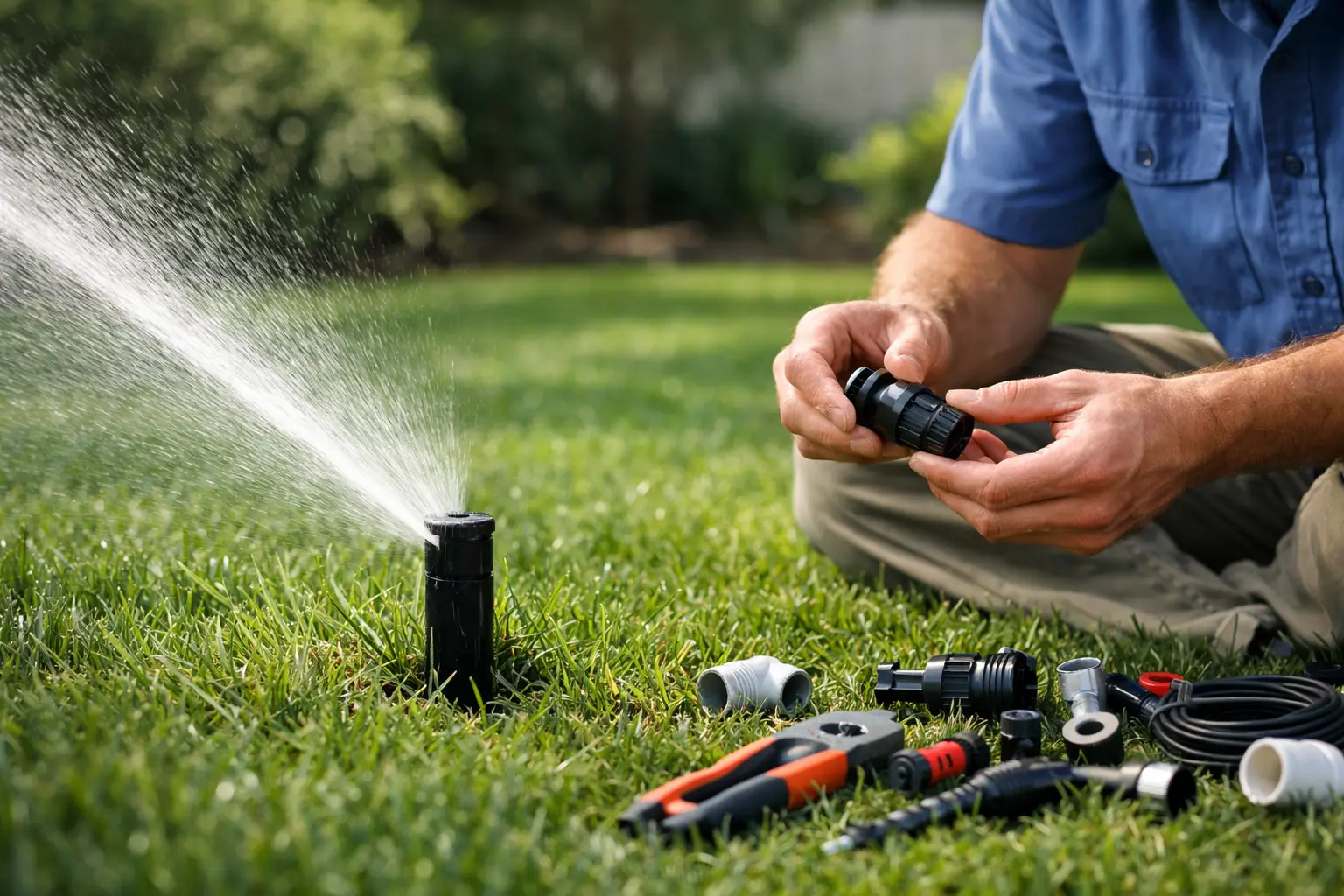
A green lawn can hide a failing irrigation system for a while. Then one section turns brown, another stays soggy, and your sprinkler schedule starts working against your landscape instead of supporting it. That is usually the point homeowners start asking, what is sprinkler repair, and what does it actually include?
Sprinkler repair is the process of diagnosing and correcting problems within an irrigation system so it waters the right areas, at the right time, in the right amount. It can involve replacing broken sprinkler heads, fixing leaks, adjusting spray patterns, repairing valves, correcting controller issues, restoring damaged wiring, and making sure the system operates efficiently as a whole. In a climate where seasonal changes and water efficiency both matter, repair is not just about getting water to come back on. It is about protecting landscape health and improving system performance.
What Is Sprinkler Repair?
At a basic level, sprinkler repair means restoring a malfunctioning irrigation system to proper working order. In practice, it is more detailed than that. A sprinkler system is made up of multiple connected parts - heads, nozzles, pipes, valves, controller, zones, sensors, and wiring. When one part fails, the symptoms often show up somewhere else.
A dry patch in the lawn does not always mean the nearest sprinkler head is broken. It could be a pressure issue, a clogged nozzle, a valve not opening fully, or a line leak reducing flow to that zone. A section that looks overwatered may be caused by a tilted head, poor drainage, a controller programming error, or a valve that is stuck open. Good sprinkler repair starts with accurate diagnosis, not guesswork.
That is one reason professional irrigation service matters. A repair visit is not just about swapping parts. It is about identifying the actual source of the problem and making corrections that support long-term performance.
What Sprinkler Repair Usually Includes
Most sprinkler repairs fall into a few common categories, but the right fix depends on the age of the system, the layout of the landscape, and the condition of the components.
Sprinkler head repair is one of the most common needs. Heads get damaged by mowers, foot traffic, settling soil, and seasonal wear. They can crack, stop rotating, spray unevenly, or sink below grade where they no longer clear the grass line. Repair may involve straightening, raising, cleaning, adjusting, or replacing the head so coverage is restored.
Leaks are another frequent issue. A leak might show up as standing water, bubbling around a head, unusually soft ground, or an unexplained drop in system pressure. Some leaks are visible. Others are hidden underground and only become obvious when one area starts underperforming. Repair can involve pipe replacement, fitting replacement, or valve correction depending on the source.
Valve repairs are more technical but just as important. Each irrigation zone depends on valves opening and closing properly. If a valve sticks, fails to open, or does not shut off completely, the result can be a zone that never runs correctly. In some cases the valve needs to be rebuilt. In others, electrical troubleshooting is needed to determine whether the issue is mechanical or related to wiring and controller communication.
Controller and timer issues also fall under sprinkler repair. If the programming is incorrect, the system may water too often, skip zones, or run at the wrong time of day. If the controller itself is failing, repairs may involve reprogramming, rewiring, sensor integration, or replacement of damaged components. With newer smart irrigation systems, repair may also include calibrating settings to improve water use without sacrificing landscape health.
Why Sprinkler Repair Is More Than a Convenience
A sprinkler problem often starts small. One clogged nozzle or one minor leak does not always seem urgent. The trouble is that irrigation systems are designed to work as coordinated systems, not isolated parts. Small failures can affect pressure, coverage, and scheduling across the property.
That matters for several reasons. First, uneven watering stresses turf, shrubs, and planting beds. Some areas dry out while others receive too much water, and both conditions can damage roots over time. Second, system problems waste water, which is especially relevant in regions where efficient irrigation is part of responsible property care. Third, unresolved issues tend to create larger repair needs later, particularly when leaking water undermines soil or repeated overwatering contributes to plant decline.
For homeowners who care about curb appeal and landscape investment, sprinkler repair is part of routine property protection. It supports healthier growth, cleaner coverage, and better control over seasonal irrigation performance.
Signs Your System May Need Repair
Some sprinkler issues are obvious. Others are easy to miss until landscape damage starts to show. If you notice water spraying onto sidewalks or driveways, zones that do not turn on, heads that do not pop up correctly, or areas of the yard that stay unusually wet or dry, the system likely needs attention.
You may also hear signs before you see them. Hissing around a valve box, sputtering heads, or unusual cycling can indicate pressure or flow issues. A sudden drop in performance after winter can point to freeze damage, while problems that appear during peak summer demand may reflect stress on aging components.
It also helps to watch for patterns. If the same area repeatedly struggles, the issue may not be seasonal at all. It may be a recurring coverage problem that needs a more precise adjustment.
What Professional Sprinkler Repair Looks Like
Professional sprinkler repair should be methodical. The technician starts by evaluating the symptom, then checking the system zone by zone to identify the actual source. That may include inspecting spray patterns, checking pressure behavior, testing valve operation, reviewing controller settings, and locating hidden leaks or wiring faults.
From there, the repair process focuses on restoring proper function and improving efficiency where needed. Sometimes the fix is straightforward. Other times a visible problem is just one part of a larger performance issue. For example, replacing a broken head without correcting misalignment or pressure imbalance may only solve part of the problem.
That is where specialized irrigation experience makes a difference. A dependable repair approach looks at how the system operates as a whole, not just whether one broken part can be swapped out.
For homeowners in Parker and nearby communities, this is especially relevant during spring activation and mid-season use. Systems that sit through winter often reveal damage only when they are pressurized again, and small issues can become more noticeable once the weather turns hot and watering demand increases.
Repair vs. Adjustment vs. Maintenance
These terms are often used together, but they are not the same.
Repair addresses something that is broken, damaged, or malfunctioning. Adjustment fine-tunes coverage, arc, direction, or run times so the system waters more accurately. Maintenance is the broader ongoing care that helps prevent breakdowns, including seasonal start-up, winterization, inspections, and performance checks.
In real-world service, the lines can overlap. A technician may repair a damaged head, adjust nearby spray patterns, and identify a maintenance issue that should be handled before it causes trouble later. That is normal. Irrigation systems perform best when repair work is paired with proper upkeep.
Why DIY Fixes Have Limits
Some homeowners can identify a visibly broken sprinkler head and replace it. But many irrigation issues are less simple than they appear. A head that keeps failing may actually be exposed to excess pressure. A dry area may be caused by a valve problem rather than a nozzle issue. An electrical fault can look like a hydraulic one until the system is tested correctly.
DIY repairs also tend to focus on the symptom that is easiest to see. That can leave the underlying cause unresolved. In some cases, that means repeated failures. In others, it means the system runs, but not efficiently.
For homeowners who want dependable performance and better water management, specialized service often provides the better result. The goal is not only to get the zone working again. It is to make sure the repair supports the entire irrigation system.
What Is Sprinkler Repair Really About?
At its best, sprinkler repair is about restoring control. It brings an irrigation system back into alignment with the needs of the landscape, the season, and the property owner’s expectations for reliable performance. It corrects waste, protects plant health, and helps the system do what it was designed to do without overwatering or underdelivering.
If your yard is showing uneven results, the right next step is not to keep adjusting the schedule and hope for a better outcome. It is to treat the irrigation system like the specialized infrastructure it is. A well-repaired system does more than run. It supports a healthier landscape with less guesswork.