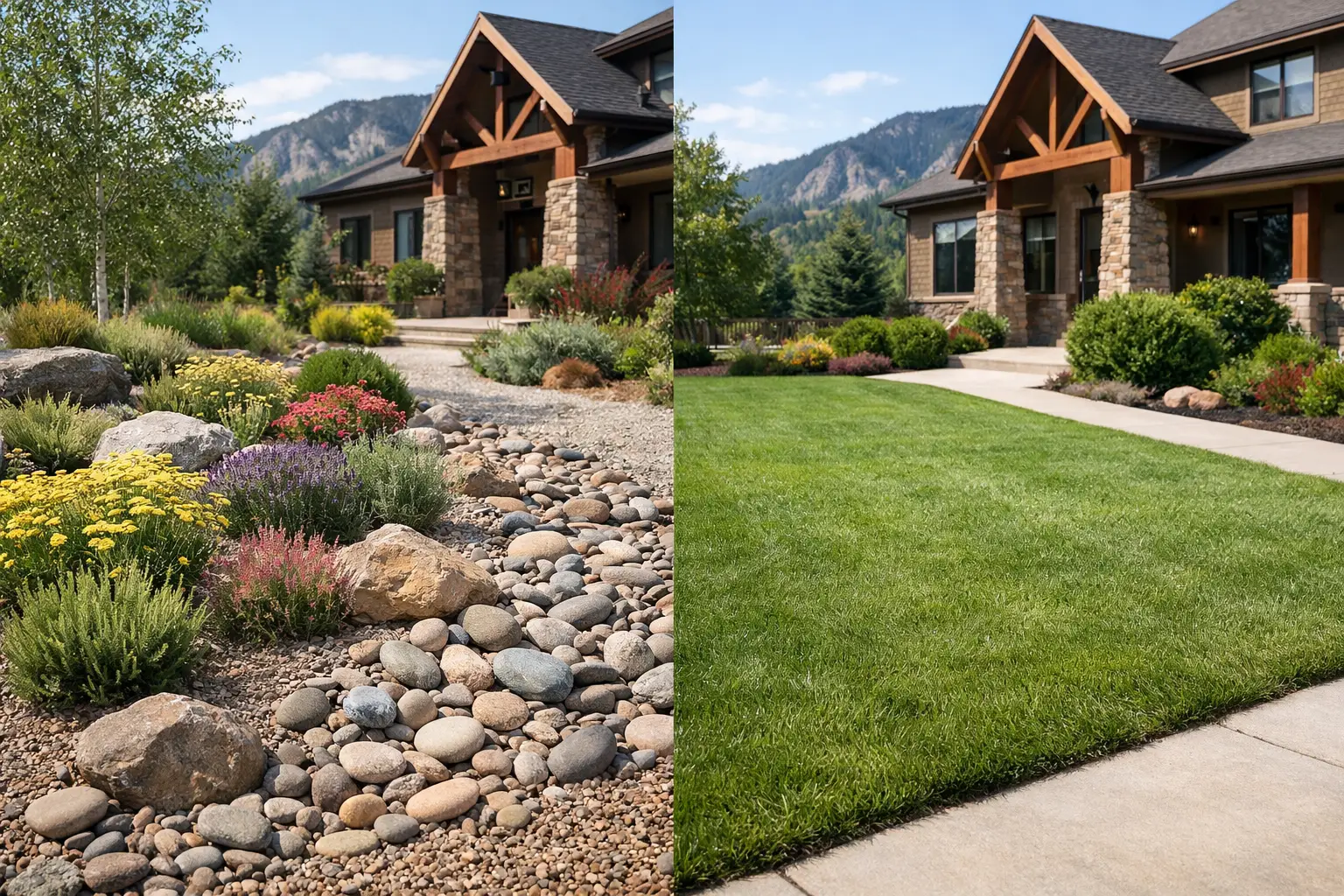
A healthy green lawn can make a Colorado home feel established and welcoming, but it also asks a lot from the property during dry, hot stretches of summer. When homeowners weigh xeriscape versus traditional lawn, the right answer is rarely all one or all the other. It comes down to how you use your outdoor space, how much maintenance you want to manage, and how well the landscape is designed for Colorado conditions.
A well-planned yard should look good in every season, use water responsibly, and support the way your household lives outdoors. That may mean preserving lawn where it has a purpose and replacing less useful areas with water-wise planting, mulch, hardscape, or native materials.
Xeriscape versus traditional lawn: the core difference
Traditional lawn is centered on turfgrass. It creates a clean, uniform look and provides a comfortable surface for play, pets, gatherings, and everyday enjoyment. In Parker and nearby Front Range communities, lawn areas usually need consistent irrigation, mowing, fertilization, seasonal cleanup, and occasional repairs to stay green and healthy.
Xeriscaping is a landscape approach built around water conservation. It does not mean a yard full of gravel, bare soil, or a few cactus plants. A quality xeriscape uses thoughtful plant selection, hydrozones, efficient irrigation, mulch, soil preparation, and well-defined hardscape areas. The goal is to create an attractive landscape that needs less supplemental water once established.
The real distinction is not simply grass versus rocks. It is whether each part of the property is designed around its function, sunlight, soil, slope, and water needs.
Water use matters, but design matters more
Turf generally has higher water needs than drought-tolerant perennials, ornamental grasses, shrubs, and native-adapted plants. A large lawn in full sun can require substantial irrigation through the growing season, especially when heat, wind, and dry soil conditions arrive together.
That does not mean every lawn is inefficient. A properly designed irrigation system, matched sprinkler nozzles, correct watering schedule, and healthy soil can reduce waste significantly. Many traditional lawns use more water than necessary because of broken heads, overspray onto concrete, compacted soil, incorrect controller settings, or watering at the wrong time of day.
Xeriscape can reduce water demand, but it still needs irrigation. New plants need regular watering while roots develop, and even established water-wise landscapes need support during extended drought. Drip irrigation is often a strong fit for planting beds because it delivers water near the root zone with less evaporation and runoff than overhead spray.
For many Colorado homeowners, the most practical choice is a hybrid landscape: lawn in high-use areas, water-wise planting in low-use areas, and irrigation zones tailored to each. This avoids spending water on turf that no one uses while keeping the open green space that makes a yard enjoyable.
How each option affects maintenance
Traditional lawns have predictable maintenance needs. They need regular mowing during active growth, edging, fertilization based on turf condition, aeration when soil is compacted, weed control, and irrigation monitoring. Winter conditions, pet traffic, shade, and summer heat can all create thin or damaged areas that need attention.
A xeriscape can reduce mowing and routine watering, but it is not maintenance-free. Beds still need seasonal weeding, pruning, mulch replenishment, plant monitoring, and irrigation inspections. Perennials must be cut back at the appropriate time, and ornamental grasses or shrubs may need periodic shaping. A neglected xeriscape can quickly look sparse or overgrown, just as a neglected lawn can look dry and patchy.
The maintenance difference is often about timing. Lawn care tends to be frequent and steady throughout the growing season. Xeriscape maintenance is usually more seasonal, with more attention needed in spring, early summer, and fall. Homeowners who enjoy gardening may appreciate the variety of a planted landscape, while those who prefer a simple open yard may favor turf in the most visible areas.
Curb appeal is not limited to green grass
A traditional lawn offers a familiar, polished appearance that works especially well at a home’s front entry, along sidewalks, and around outdoor living spaces. Consistent turf can visually connect landscaping elements and make a property feel well cared for.
A professionally planned xeriscape can offer just as much curb appeal, often with more color, texture, and year-round structure. Flowering perennials, evergreen shrubs, boulders, ornamental grasses, decorative mulch, and clean edging can create a layered look that feels intentional rather than minimal.
The quality of the installation makes the difference. Randomly removing turf and filling the area with rock rarely improves the landscape. Excessive rock can trap heat, limit soil health, and make future changes difficult. A better approach balances planted areas with mulch, uses rock as an accent or functional drainage material where appropriate, and leaves enough room for plants to mature.
Consider how your family uses the yard
Before choosing between xeriscape and lawn, look at the actual purpose of each area. A large backyard lawn may be worthwhile if children play there, dogs need room to run, or your family enjoys outdoor games. Turf also creates a cooler surface near patios and can make a small yard feel more open.
On the other hand, narrow side yards, steep slopes, awkward corners, hell strips, and unused front-lawn sections are often strong candidates for water-wise conversion. These areas can be difficult to mow, easy to overwater, and rarely used for recreation.
Ask four practical questions before making changes:
- Which areas receive the most foot traffic or pet activity?
- Which parts of the yard are difficult to irrigate or mow?
- Where does water collect, run off, or dry out too quickly?
- What outdoor features would make the property more enjoyable?
The answers may point toward a smaller, healthier lawn with improved planting beds, a drainage solution, pathway lighting, or a more functional patio connection.
Installation and establishment are important trade-offs
A traditional lawn can be established with sod or seed, but the preparation beneath it determines how well it performs. Grading, soil condition, irrigation coverage, and proper watering after installation all affect root development. New turf may look finished quickly, but it still needs careful attention during its establishment period.
Xeriscape installation often involves more upfront planning. Existing turf may need removal, irrigation zones may need to be converted or adjusted, and soil should be prepared for the selected plants. Plant spacing also requires patience. A new water-wise bed can look more open in its first season than a mature landscape, but it fills in over time when plants are chosen and placed correctly.
This is one reason plant selection should be specific to the site. A drought-tolerant plant placed in poor drainage or heavy shade may still struggle. Likewise, a plant that handles Colorado’s dry climate may not tolerate reflected heat from a south-facing wall. Good landscaping is not about using a generic plant list. It is about matching materials to the property.
Irrigation remains essential in both landscapes
Whether you keep a full lawn, install xeriscape, or choose a mix of both, irrigation should match the landscape rather than forcing every zone to receive the same amount of water. Turf typically performs best with properly spaced spray heads or rotary nozzles that provide even coverage. Shrubs and perennials often benefit from drip irrigation that waters deeply and efficiently.
Seasonal irrigation service also protects long-term landscape health. Spring startup can identify leaks, damaged heads, poor coverage, and controller problems before the heat arrives. Midseason adjustments help account for rainfall and temperature changes. Fall winterization protects the system from freeze damage, which matters throughout the Front Range.
A modern controller can help, but it does not replace inspections and informed adjustments. Water efficiency depends on functioning equipment, smart scheduling, and a landscape that is designed around realistic water needs.
Choosing the right balance for your property
A traditional lawn is often the better fit when open green space is central to how your family uses the yard. Xeriscape is often the stronger choice for areas that receive little activity, require excessive watering, or would benefit from more seasonal color and structure. Neither option is automatically better for every home.
The best results usually come from treating the landscape as a complete property system. Consider irrigation, grading, drainage, sun exposure, plant health, hardscape, and maintenance together rather than making a single cosmetic change. That approach creates a yard that is easier to care for and more dependable through Colorado’s changing weather.
For homeowners who want a landscape that keeps its purpose as well as its appearance, a thoughtful hybrid design is often the place to start. Irrivive Outdoor Property Solutions can help assess the parts of your yard that should stay green, the areas that could work harder with water-wise planting, and the irrigation improvements that support both.