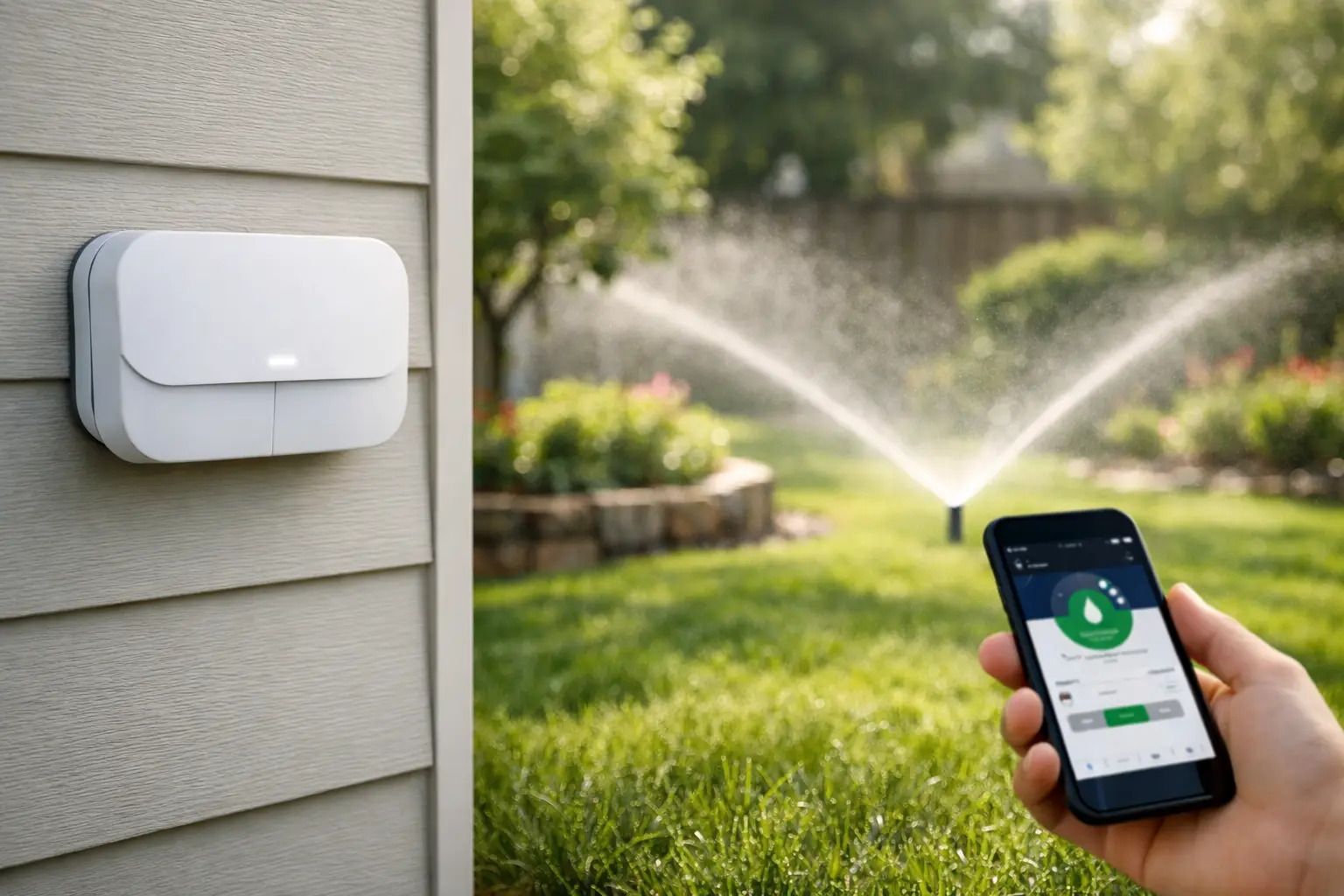
A lawn in Colorado can look perfectly fine one week and show stress the next. A sudden hot stretch, wind exposure, changing soil moisture, or a sprinkler issue can all shift watering needs fast. That is why many homeowners start looking at the best smart irrigation controllers - not for novelty, but for better control over water use and more consistent landscape health.
A smart controller can do a lot, but it is not a magic fix for a struggling irrigation system. If spray heads are clogged, zones have poor coverage, or valves are not working correctly, even a high-end controller will only automate existing problems. The right approach is to match good technology with a system that is properly maintained.
What makes the best smart irrigation controllers worth considering
The main advantage of a smart controller is adjustment. Traditional timers run on fixed schedules unless someone changes them manually. Smart controllers are designed to respond to weather, season, and watering demand with far less guesswork.
That matters in residential landscapes where plant material, sun exposure, slope, and soil conditions vary across the yard. One area may dry quickly while another retains moisture longer. A controller with flexible zone scheduling, weather-based updates, and app access can improve efficiency without forcing homeowners to constantly reprogram the system.
The best smart irrigation controllers also help reduce one of the most common problems we see in the field - overwatering caused by outdated schedules. In many yards, the issue is not a lack of run time. It is a schedule that kept running long after weather conditions changed.
The features that actually matter
Not every smart controller delivers the same level of control. Some are built for simple schedule access from a phone. Others are far more capable and better suited for homeowners who want stronger water management.
Weather adjustment is one of the most important features. A controller should be able to account for rainfall, temperature, and seasonal shifts rather than simply offering remote access to the same fixed timer logic. If weather intelligence is weak, the controller may be convenient but not especially smart.
Zone flexibility also matters. Landscapes rarely have uniform watering needs, so each zone should be easy to customize for run times, cycle-and-soak scheduling, and watering days. This is especially helpful on slopes, in clay-heavy soils, or in areas prone to runoff.
A reliable app is another major factor. Homeowners should be able to review schedules, pause watering, make seasonal adjustments, and receive alerts without frustration. If the app is inconsistent, the convenience drops quickly.
Finally, compatibility matters. Some controllers work well with standard residential systems, but the installation still needs to align with the number of zones, the wiring condition, sensor setup, and the overall health of the irrigation system.
7 best smart irrigation controllers to consider
Rachio 3
Rachio 3 is one of the most recognizable names in this category, and for many homeowners it remains a strong option. The app is easy to use, scheduling is flexible, and weather-based adjustments are one of its strongest selling points.
It is especially appealing for people who want a clean user experience and straightforward remote control. The trade-off is that easy setup does not eliminate the need for proper system tuning. If zones are poorly designed or coverage is uneven, the controller cannot compensate for those mechanical issues.
Hunter Hydrawise Pro-HC
For homeowners who want something closer to contractor-grade control, the Hunter Hydrawise Pro-HC stands out. It is widely respected in the irrigation industry for strong scheduling tools, detailed zone management, and dependable performance.
This controller is often a better fit for more complex residential systems or properties where precision matters. It may not feel as consumer-simple as some app-first brands, but it offers depth where that depth matters.
Rain Bird ESP-TM2 with WiFi module
Rain Bird has long been a trusted name in irrigation, and the ESP-TM2 paired with WiFi capability is a practical option for homeowners who want smart functionality from a familiar platform. It combines a traditional controller feel with added remote access and weather integration.
This can be a good middle ground for homeowners who prefer established irrigation hardware over more tech-branded products. The interface may feel more utilitarian, but reliability is a real advantage.
Orbit B-hyve XR
The Orbit B-hyve line is popular because it is accessible and generally easy to manage. For homeowners moving from a basic timer to a smart controller, it offers a relatively approachable entry point.
That said, ease of adoption is not the same as top-tier performance in every scenario. For straightforward residential systems, it can work well. For more demanding landscapes where detailed control and long-term reliability are the priority, some homeowners may prefer a more irrigation-focused platform.
Toro Tempus Air
Toro's Tempus Air controller is another option worth considering, particularly for users who want smart scheduling and mobile access from a recognized irrigation manufacturer. It offers weather responsiveness and useful control features without feeling overly complicated.
Its appeal depends in part on installer familiarity and system compatibility. In general, products from established irrigation brands tend to integrate well when paired with proper setup and support.
Rain Machine Pro
Rain Machine built its reputation around weather-driven irrigation logic and local control options. For homeowners who are especially interested in data-based scheduling, it can be an appealing choice.
Its strength is in how seriously it treats weather inputs and watering adjustments. The trade-off is that it may appeal more to detail-oriented users than to homeowners who simply want a set-it-and-check-it app experience.
Wyze Sprinkler Controller
Wyze has entered the category as a simpler smart-home oriented option. It offers app access, weather delay functions, and a more entry-level experience for homeowners who already use other Wyze products.
For basic systems, it may be enough. For long-term irrigation performance, though, homeowners should look carefully at support, flexibility, and how well the controller fits the demands of the landscape rather than the appeal of the brand alone.
How to choose the best smart irrigation controllers for your yard
The right controller depends less on popularity and more on fit. A smaller lawn with a simple zone layout may do well with a user-friendly controller that offers weather adjustment and basic app access. A larger property with mixed plantings, sun exposure changes, and drainage challenges usually benefits from stronger scheduling tools and more precise zone control.
It is also worth thinking about how involved you want to be. Some homeowners want frequent visibility into watering activity. Others want confidence that the controller is making sound adjustments in the background. Neither approach is wrong, but it helps narrow the field.
In Colorado landscapes, seasonal transition matters too. Spring startup, summer adjustment, and fall shutdown all affect irrigation performance. A good smart controller supports those transitions, but it still works best when the rest of the system is inspected and maintained as conditions change.
Smart controllers work best with a healthy irrigation system
This is the part many product roundups miss. The best smart irrigation controllers are only one part of efficient watering. If a rotor is not rotating correctly, a drip zone has pressure problems, or a valve is sticking, the controller is not solving the actual issue.
A smart controller can improve scheduling, reduce unnecessary watering, and give homeowners better visibility. It cannot repair leaks, correct coverage gaps, or fix wiring faults. That is why professional irrigation support still matters, especially for systems that have gone through several seasons of wear.
For homeowners in Parker, Castle Rock, Highlands Ranch, Lone Tree, and Southeast Aurora, the combination of modern controller technology and dependable irrigation service usually produces the best result. Better programming helps, but better system performance is what protects the landscape.
When an upgrade makes sense
If your current timer is hard to program, lacks seasonal adjustment, or runs the same schedule regardless of weather, a smart upgrade is worth serious consideration. The same is true if you travel often, manage multiple zones with different needs, or want better oversight without walking to the garage wall every time a change is needed.
An upgrade also makes sense when the controller itself is not the only concern. If your system already needs repairs, rewiring, valve work, or optimization, that is often the right time to evaluate whether a newer smart controller should be part of the solution.
At Irrivive Sprinklers, we see the best results when controller upgrades are treated as part of overall irrigation performance, not as a standalone gadget decision. That usually leads to better water efficiency, more reliable zone operation, and fewer mid-season surprises.
The best smart irrigation controller is the one that fits your landscape, works reliably with your system, and supports better decisions all season long. If you choose with that in mind, your controller becomes more than a convenience - it becomes a practical tool for protecting the yard you have invested in.