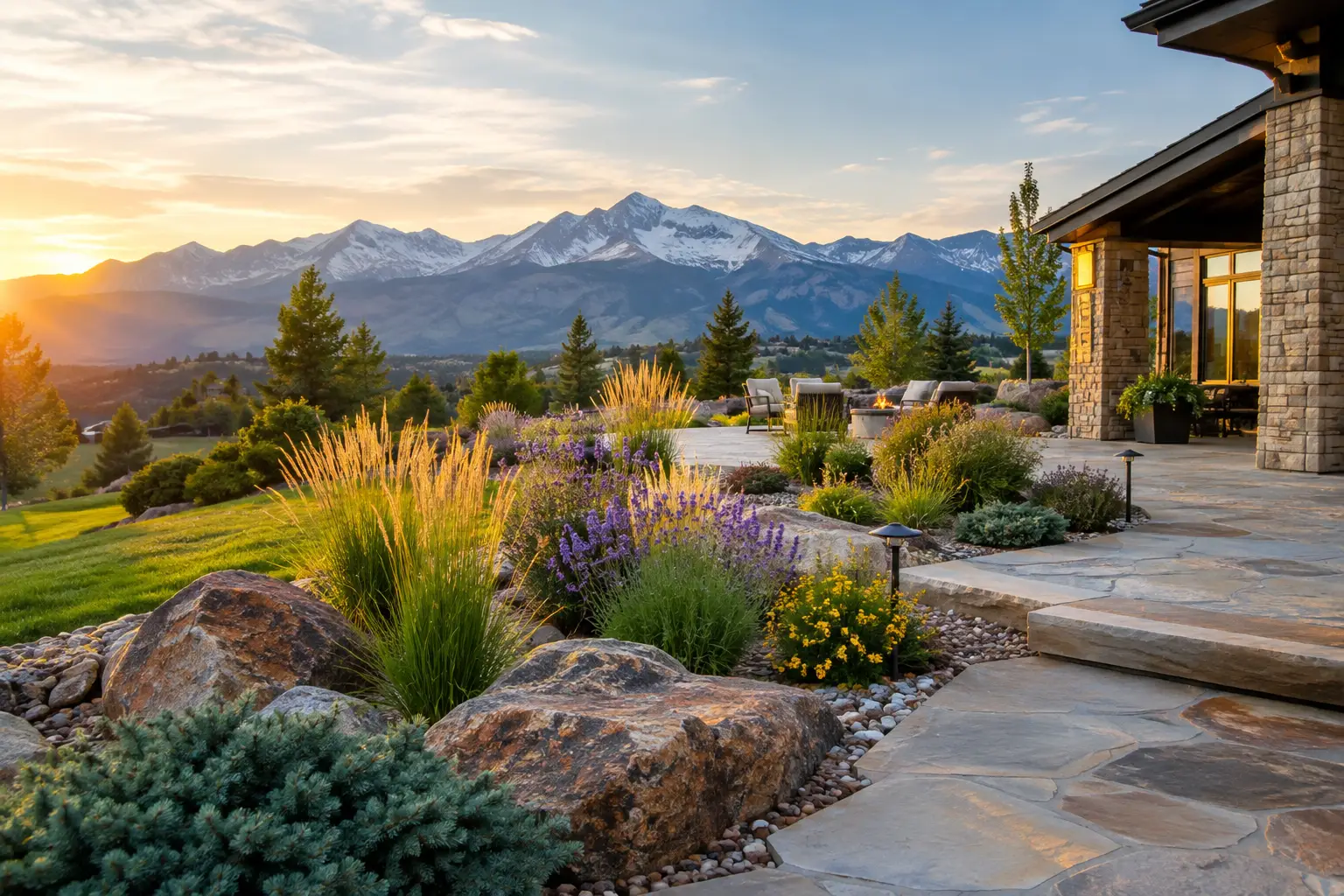
A Colorado yard can look excellent in June and still reveal major design problems after the first heavy spring storm, a dry August stretch, or a January freeze. That is why Colorado landscaping trends are moving away from landscapes chosen only for curb appeal and toward outdoor spaces built for water efficiency, drainage, usability, and long-term health.
For homeowners in Parker and nearby communities, the best landscape improvements are not always the most elaborate. They are the ones that fit the property, perform through changing weather, and make maintenance more manageable year after year.
Colorado Landscaping Trends Start With Water-Wise Design
Water-wise landscaping is no longer limited to gravel beds and a few drought-tolerant plants. Today’s approach combines attractive plant groupings, efficient irrigation, healthy soil, practical mulch, and turf placed where it serves a real purpose.
Traditional bluegrass lawns can still be part of a Colorado landscape, especially in active areas where families and pets spend time. The trend is to use lawn intentionally rather than making it the default across the entire yard. A well-designed lawn area paired with planting beds, ornamental grasses, shrubs, and perennials can reduce water demand while adding more color and texture.
Plant selection matters, but it is only one part of the equation. Plants that tolerate Colorado’s dry conditions still need proper establishment, appropriate sun exposure, and irrigation that reaches the root zone. A water-wise landscape will underperform if compacted soil, poor grading, or uneven sprinkler coverage is left unaddressed.
Hydrozone Planting Makes Irrigation More Efficient
One of the most practical design methods is grouping plants with similar watering needs together. This is often called hydrozoning. Higher-water plants and turf can be served by one irrigation zone, while drought-tolerant perennials and shrubs receive a different schedule.
This approach avoids a common problem: overwatering low-water plants just to keep nearby turf green. It also makes seasonal irrigation adjustments easier. When each zone has a clear purpose, the system can run more efficiently without sacrificing the look of the landscape.
Drip irrigation continues to gain ground in planting beds because it delivers water directly where plants need it. It can reduce overspray onto sidewalks and fences while supporting more consistent moisture around roots. It is not the right solution for every area, but it is especially useful for shrubs, perennials, and newly planted material.
Outdoor Living Areas Are Becoming More Purposeful
Homeowners are investing in yards they can use, not just view from the kitchen window. Patios, walkways, seating walls, fire features, and defined gathering areas remain popular because they extend the living space outdoors.
The strongest designs start with how the household actually uses the yard. A family that entertains may benefit from a larger patio and clear connections between the house, grill area, and seating. A homeowner who wants a quiet outdoor retreat may prefer a smaller, more private space with screening plantings and low-voltage lighting.
Hardscapes should feel connected to the home and landscape rather than dropped into the middle of the yard. Scale, material choice, grade changes, and drainage all affect the finished result. A patio that looks good but directs water toward the foundation is not a long-term improvement.
Low-Voltage Lighting Adds Safety and Depth
Outdoor lighting is increasingly treated as part of the overall landscape plan. The goal is not to flood the property with bright light. It is to create safe paths, define useful spaces, and add subtle depth after dark.
Path lights, step lights, and carefully placed uplights can improve visibility without creating glare. Lighting can also highlight mature trees, stonework, entry features, and architectural details that disappear after sunset. Quality installation matters because exposed wiring, poorly placed fixtures, and inconsistent beam patterns can make even a well-designed yard feel unfinished.
Drainage Is Becoming a Visible Priority
Drainage may not be the most exciting part of a landscape project, but Colorado homeowners are paying closer attention to it for good reason. Fast-moving rain, snowmelt, sloped lots, and heavy clay soils can move water where it does not belong.
Standing water in lawn areas, erosion along side yards, water near the foundation, and washed-out mulch are signs that the property needs a closer look. Sometimes the solution is as simple as correcting sprinkler overspray or adjusting a downspout extension. In other situations, swales, catch basins, drain lines, or regrading may be needed to control runoff.
Drainage planning works best when it happens before new landscaping or hardscape installation. It is far easier to direct water properly before a patio is installed, beds are planted, or fresh sod is laid. Good drainage protects the appearance of the landscape, but more importantly, it helps protect the property itself.
Layered Planting Replaces the One-Season Yard
Another of the most durable Colorado landscaping trends is designing for interest beyond summer. A landscape that depends entirely on blooming annuals may look colorful for a few months, then flat for the rest of the year.
Layered planting uses a mix of evergreen structure, deciduous shrubs, perennials, ornamental grasses, and trees to create visual interest across the seasons. Spring bulbs and flowering shrubs bring early color. Perennials and grasses carry the landscape through summer. Seed heads, bark, evergreens, and branching structure give the yard character in fall and winter.
This does not mean every yard needs dozens of plant varieties. In fact, a restrained plant palette often looks more polished and is easier to maintain. Repeating a few reliable plants in groups creates a cohesive design while allowing each area of the property to feel connected.
Mulch also plays a larger role than many homeowners realize. Properly installed mulch helps moderate soil temperature, retain moisture, reduce weeds, and give planting beds a finished appearance. It should be kept away from the base of trees and shrubs, where excessive moisture can create plant health concerns.
Front Yards Are Being Designed for Better Curb Appeal
Front-yard landscaping is shifting from broad, high-maintenance lawn areas to cleaner entries with stronger plant structure. Defined bed edges, healthy turf where appropriate, upgraded walkways, lighting, and balanced planting around the entry can significantly improve how a home presents from the street.
The best curb appeal improvements are proportional to the home. Oversized shrubs can hide windows and crowd walkways, while undersized planting beds can make a larger home feel bare. Thoughtful spacing gives plants room to mature and prevents the need for constant pruning to keep the landscape in bounds.
Seasonal maintenance is part of this trend as well. A well-designed front yard still needs spring cleanup, pruning, bed care, irrigation checks, and fall preparation. Consistent care protects the original investment and keeps small issues from becoming larger repairs.
Smart Irrigation Supports Healthier Landscapes
Smart controllers, weather-based scheduling, rain sensors, and efficient sprinkler components are becoming standard considerations for homeowners who want more control over water use. These tools can be useful, but they are not a replacement for a properly designed and maintained irrigation system.
A smart controller cannot correct a broken head, a clogged nozzle, poor coverage, or a zone that waters the sidewalk. Regular inspections remain essential, particularly in spring when systems are started, during summer when conditions change, and in fall before winterization.
Irrivive Outdoor Property Solutions sees irrigation as part of total landscape performance. When watering, drainage, planting, and hardscape decisions support one another, the property is easier to maintain and better prepared for Colorado’s changing conditions.
Choose Trends That Fit Your Property
Not every trend belongs in every yard. A low-water plant palette may be ideal for a sunny front exposure, while a shaded side yard may need a different approach. A large patio is valuable for frequent entertaining, but a smaller seating area may better preserve lawn space or drainage flow.
The most successful landscapes are planned around the property’s sun, soil, slope, existing trees, drainage patterns, and how the homeowner wants to live outdoors. Start with the systems beneath the surface, then build the visible improvements around them. That approach creates a landscape that looks intentional on day one and continues to work well through every Colorado season.