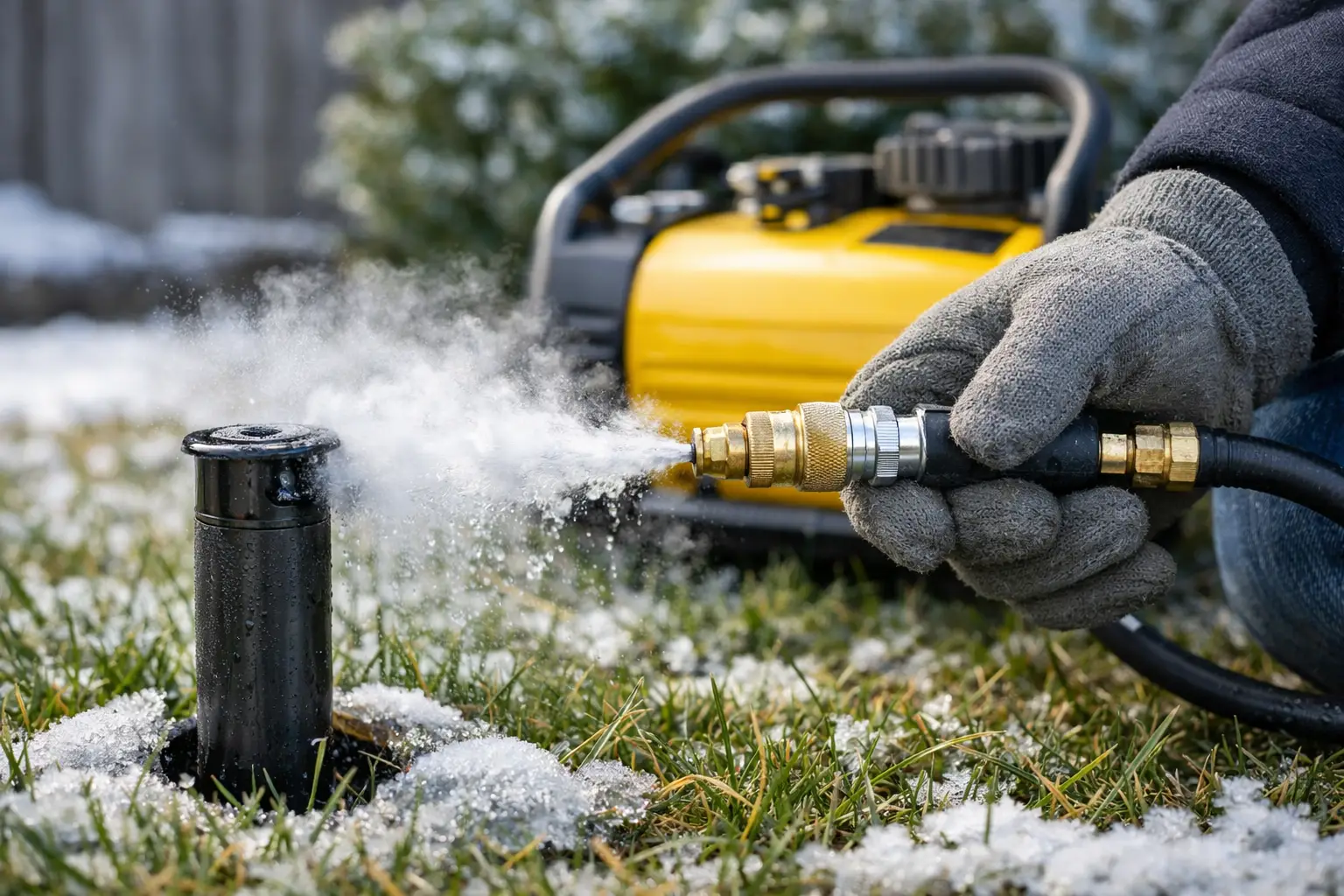
The first hard freeze usually arrives before your lawn is ready for it. If you are wondering how to prepare sprinklers for freeze, the short answer is this: shut the system down correctly, remove trapped water, and protect the components most likely to crack under pressure.
That sounds simple, but sprinkler winterization is one of those jobs where a small mistake can create a big repair list in spring. Water left in lateral lines, valves, manifolds, or backflow assemblies can freeze, expand, and split parts that looked perfectly fine the week before. In Colorado, where overnight temperature swings can be sharp and early cold snaps are common, timing and technique matter.
Why freeze protection matters for sprinkler systems
An irrigation system is built around movement and pressure. During the watering season, that is exactly what keeps your landscape healthy. Once temperatures drop below freezing, the same design becomes a liability if water remains trapped anywhere in the system.
Frozen water expands. In a sprinkler system, that expansion can crack PVC pipe, damage valve bodies, separate fittings, and ruin a backflow preventer. Some of that damage stays hidden until spring startup, when homeowners notice soggy areas, weak pressure, or zones that will not activate correctly.
The trade-off is that proper winterization is preventive work. It does not improve how the lawn looks today, but it protects the system you rely on when the season returns. For homeowners who care about landscape health and efficient water use, that protection is part of responsible system maintenance.
How to prepare sprinklers for freeze the right way
The exact steps depend on your irrigation layout, your type of shutoff, and whether your system includes an above-ground or basement-located backflow assembly. Still, the overall process follows a clear order.
Shut off the irrigation water supply
Start by locating the irrigation main shutoff. This is typically separate from the home's indoor water shutoff. Once it is closed, the sprinkler system should no longer receive water from the supply line.
This step matters because blowing out lines before the water source is fully isolated can send more water back into the system. That defeats the point of winterization and can leave sections partially full after the service is done.
Turn off the controller or set it to rain mode
Your sprinkler controller does not need to keep running once the system is winterized. Depending on the model, you can turn it off entirely or place it in a standby or rain mode that preserves programming.
That distinction matters. A full power-off may erase settings on some older timers, while newer smart controllers often retain schedules with no issue. The goal is simply to prevent the system from trying to run when the water has been shut down.
Drain or blow out the water in the lines
This is the critical phase. Sprinkler systems need to be cleared of residual water so freezing temperatures cannot damage internal components.
Some systems have manual drain valves or automatic drains, but in many residential systems, those features are not enough on their own. Low spots in the piping can still hold water. That is why compressed-air blowouts are the standard approach for many properties.
A proper blowout uses controlled air volume and pressure to clear each zone one at a time. Too little pressure leaves water behind. Too much pressure can damage heads, fittings, or pipe. This is where professional equipment and system knowledge make a real difference.
Protect the backflow assembly
Backflow devices are especially vulnerable because they often sit above ground or in exposed areas. Even when the rest of the system seems fine, a backflow preventer can crack during a freeze if it still contains water.
After shutoff, the backflow should be drained according to its configuration. Test cocks and ball valves are usually positioned to allow residual water to escape. If the assembly is above ground, insulation may help with exposure, but insulation is not a substitute for proper draining.
Leave valves in the correct position
Once the water is removed, valve handles and test cocks are typically left at partially open angles rather than fully closed. This helps reduce pressure on internal seals and allows any remaining moisture room to expand.
The exact position depends on the component. If a homeowner is unsure, guessing is not the best move. Incorrect valve positioning can create avoidable wear or leave water trapped where it should not be.
Common mistakes that lead to winter damage
Homeowners often assume that shutting off the water is enough. It is not. The system can still hold water in branch lines, valve boxes, swing joints, and backflow components.
Another common mistake is using a small portable compressor not designed to generate the right airflow for irrigation blowouts. Pressure gets most of the attention, but air volume is what actually helps move water through the lines. A mismatch between equipment and system size can leave pockets of water behind.
Trying to rush the process also causes problems. Each zone should be cleared carefully and not overblown. Running air too long through a dry zone can generate heat and friction, which may damage sprinkler heads or seals.
Then there is timing. Waiting until after several hard freezes is risky, especially in areas like Parker, Castle Rock, and Highlands Ranch where fall weather can change quickly. A mild afternoon does not mean the system is safe if overnight lows are already dropping hard.
Signs your sprinkler system still needs attention before winter
If you have not scheduled winterization yet, a few warning signs suggest your system should not be left as-is.
Puddling around heads after the last run can indicate poor drainage or low spots in the lines. Weeping valves may leave water in boxes long after the controller is off. A backflow assembly that still feels full or drips inconsistently can also point to incomplete shutdown.
Even older repairs matter here. If your system has patched pipe sections, aging valves, or heads that have been replaced over time, those areas may respond differently to freeze conditions than newer parts. A system does not have to be failing to be vulnerable.
When professional winterization is the better choice
For some homeowners, the real question is not how to prepare sprinklers for freeze, but when the process should be handled by a specialist. In most cases, professional service is the safer choice when the system has multiple zones, an exposed backflow preventer, complex valve grouping, or any history of leaks and pressure issues.
This is also true for homeowners who want confidence that the system will be ready for spring startup without hidden damage. Winterization is not just about pushing air through pipes. It is about understanding where water settles, how pressure should be managed, and which components need more careful handling.
A specialized irrigation provider approaches the system as a whole. That includes the controller, shutoff, valves, heads, lateral lines, and backflow assembly. It is a service decision based on protection and reliability, not just convenience.
What happens in spring if freeze prep was incomplete
The damage from poor winterization is often delayed. Everything may appear fine through winter, then spring startup reveals broken fittings underground, cracked manifolds, or a backflow device that leaks as soon as pressure returns.
Sometimes the signs are subtle at first. One zone may sputter. Another may have weak coverage. In other cases, the issue is obvious, such as a flooded valve box or water surfacing along a pipe trench. Either way, the underlying cause often traces back to trapped water that froze and expanded.
That is why seasonal service works best when fall shutdown is treated as part of the system's annual care cycle rather than an optional extra.
A practical timeline for Colorado homeowners
In this region, do not wait for winter to feel settled. The right window is usually before repeated overnight freezes become normal, not after the first damage risk has already passed.
If daytime watering demand has tapered off and forecasts are starting to show hard overnight lows, your sprinkler system should be on the winterization schedule. Properties with sun exposure, elevation changes, or exposed plumbing may face freeze risk sooner than expected. Local experience matters because seasonal transitions here are not always gradual.
For homeowners who want fewer surprises in spring, the best approach is simple: treat freeze preparation as essential maintenance, handle it before cold weather settles in, and make sure the work is done with the same care you expect from the rest of your irrigation system.