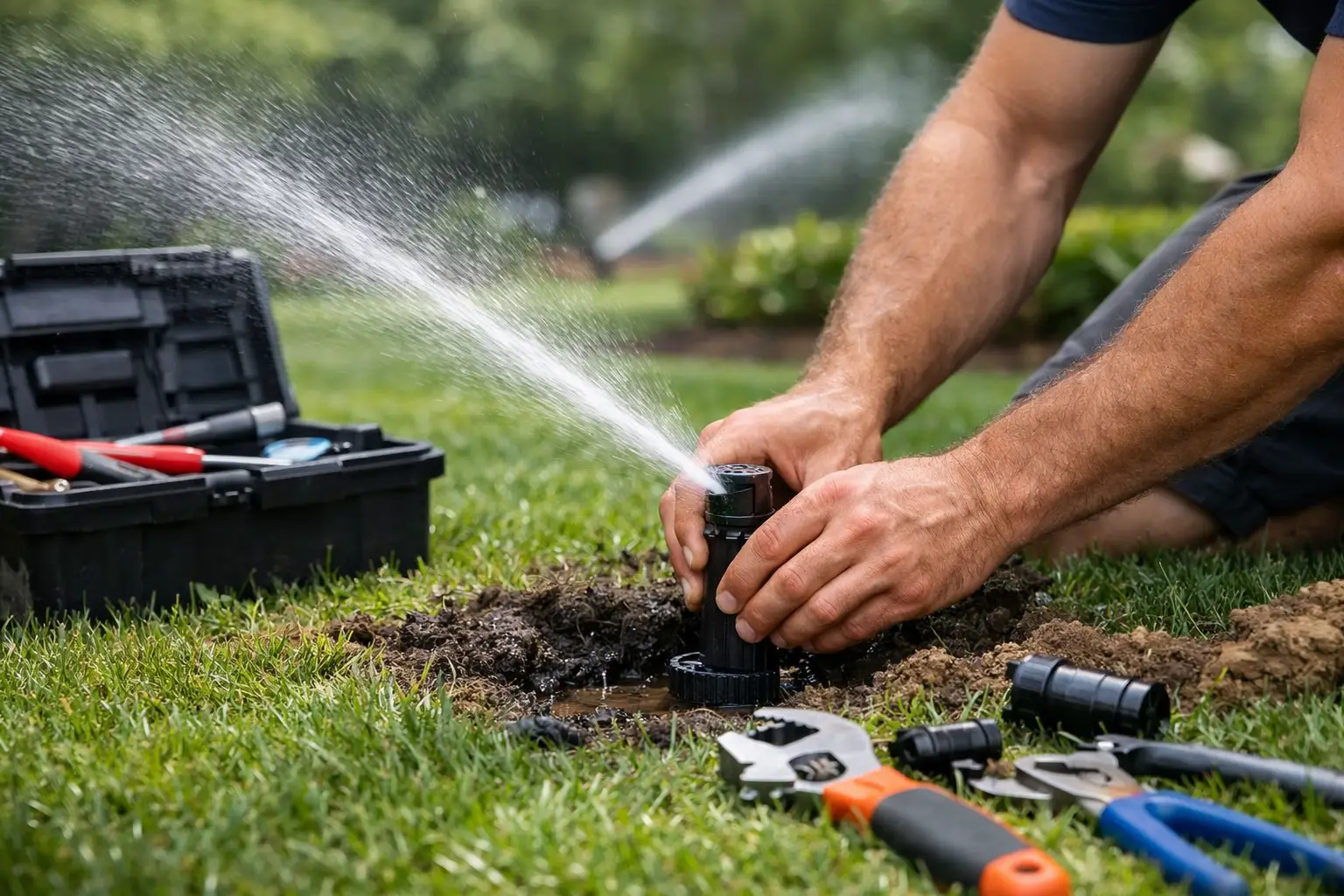
A lawn usually tells you something is wrong before your controller does. One section turns brown. A head spits water instead of spraying evenly. A valve keeps running after the cycle ends. If you are searching for how to repair sprinkler systems, the real goal is not just getting water back on. It is restoring even coverage, protecting your landscape, and avoiding the slow water waste that often goes unnoticed for weeks.
For homeowners who care about appearance, plant health, and efficient irrigation, the right repair approach matters. Some issues are straightforward. Others point to hidden pressure problems, wiring faults, or wear inside aging components. Knowing the difference helps you avoid temporary fixes that lead to repeat service calls and damaged turf.
How to repair sprinkler systems without guessing
The best sprinkler repairs start with observation, not digging. Run each zone one at a time and watch what happens from start to finish. Check for heads that do not pop up fully, areas with weak spray, pooling water around valves, or zones that fail to turn on at all. Many irrigation problems look similar from a distance, but the cause can be very different.
A dry patch does not always mean a clogged nozzle. It can also come from low pressure, a broken lateral line, a stuck valve, or a head tilted too low to clear the grass. Likewise, a wet area may be a cracked pipe, but it may also be runoff caused by poor nozzle performance or a head spraying the wrong direction. A careful zone-by-zone inspection saves time and leads to a cleaner repair.
Start with the most common sprinkler failures
Most residential systems fail at the points that take the most wear. Sprinkler heads are exposed to mowers, foot traffic, shifting soil, and freeze-thaw movement. Seals inside valves wear down over time. Wire connections weaken underground. In a seasonal climate, winterization and spring startup also influence how well the system holds up year after year.
Broken or clogged sprinkler heads
A damaged head is often the easiest issue to confirm. You may see water bubbling around the base, a missing nozzle, a head that will not rise, or a spray pattern that shoots in one narrow stream. In many cases, the repair involves digging carefully around the head, unscrewing it from the fitting, and checking whether the riser, seal, or nozzle is damaged.
If the head itself is cracked or worn, replacement is usually the better choice. If the nozzle is clogged, flushing the line and cleaning the nozzle may solve the issue. Matching the replacement head and nozzle to the zone matters. A mismatched nozzle can throw off precipitation rates and leave part of the lawn overwatered while another section stays dry.
Leaks in lateral lines
When a zone develops a soggy spot or loses pressure suddenly, a cracked lateral pipe is a likely cause. This often shows up as water surfacing between heads while the zone is running. The repair requires exposing the damaged section carefully so the pipe is not cracked further during digging.
Once the damaged area is visible, the compromised section should be cut out cleanly and replaced with compatible fittings and pipe. The line should be flushed before final assembly if debris entered during the repair. A rushed patch can hold briefly but fail again once pressure builds or the soil settles.
Valves that stick open or fail to activate
Valve problems are more technical because they involve both water flow and electrical control. If a zone stays on after the cycle ends, the valve may have debris in the diaphragm, internal wear, or a solenoid issue. If the zone does not turn on at all, the problem may be mechanical, electrical, or both.
Start by checking whether the valve can be operated manually. If it works manually but not from the controller, wiring or solenoid failure moves higher on the list. If it does not work manually either, internal valve components may need attention. Sometimes cleaning the diaphragm helps. In other cases, replacement is the more dependable repair.
Controller and wiring issues
Not every sprinkler problem is in the ground. If one zone will not respond, cycles are inconsistent, or the controller displays an error, the issue may be in the timer, common wire, zone wire, or field connection. Moisture intrusion, age, and corrosion are common causes.
Use a multimeter if you know how to test continuity and resistance. If not, this is usually where professional diagnosis becomes worth it. Chasing a wire break through the yard can take time, and replacing the wrong component does not solve the root problem. For homeowners who want reliability, electrical troubleshooting is often the point where specialized irrigation service is the smarter path.
Pressure problems change the whole system
Low pressure and high pressure both create repair issues. Low pressure can keep heads from popping up properly and reduce coverage across the zone. High pressure can create misting, overspray, and uneven distribution that wastes water. Before replacing several heads, make sure pressure is not the real reason performance dropped.
A pressure problem may come from a partially closed shutoff, a leak in the line, too many heads on one zone, or a failing valve. In some systems, pressure regulation at the head or valve is part of maintaining efficient coverage. This matters in Colorado landscapes where water efficiency is not just a preference. It directly affects lawn health through changing weather and seasonal demand.
Seasonal conditions matter more than many homeowners expect
In areas like Parker and nearby communities, irrigation systems deal with winter cold, spring startup, and summer demand swings. That means a repair is not always just a part replacement. It may also be a sign that the system needs adjustment after seasonal changes.
A head that worked fine last season may now sit too low after soil movement. A valve box may collect debris over winter. A fitting weakened by freeze damage may not show itself until spring startup pressurizes the line. Good repair work accounts for the broader condition of the system, not just the one visible failure.
When a DIY repair makes sense and when it does not
Some homeowners are comfortable replacing a broken spray head or cleaning a clogged nozzle. Those are reasonable tasks if you can identify the correct parts and avoid disturbing the pipe below. Small, visible problems with clear symptoms are usually the best DIY candidates.
The line gets much thinner when the issue involves underground leaks, valve manifolds, controller faults, or repeat problems in the same zone. If a repaired area keeps failing, if coverage remains uneven after a part swap, or if multiple zones act unpredictably, the problem is likely larger than one damaged component. At that point, a repair strategy should include diagnosis, not just replacement.
That is where specialized irrigation service stands apart from general handyman work. A trained technician looks at nozzle selection, spacing, pressure, valve operation, wiring, and controller programming as one system. That approach protects both the landscape and the long-term performance of the irrigation setup.
How to repair sprinkler systems for better efficiency
The strongest repair is the one that improves performance instead of simply restoring operation. If a head is replaced, it should be aligned correctly and set to the right height. If a nozzle is changed, it should match the precipitation rate of surrounding heads. If a valve is rebuilt, the zone should still be checked for proper pressure and runoff.
This is especially important for homeowners who want healthy turf without unnecessary water use. A sprinkler system can technically run and still perform poorly. Uneven spray, misting, poor arc adjustment, and hidden leaks all waste water while creating stress in the landscape. Repair work should bring the system back to proper function, not just partial function.
For service-focused companies like Irrivive Sprinklers, that distinction matters. Reliable irrigation support is not about quick patchwork. It is about correcting the issue in a way that supports consistent coverage, dependable seasonal performance, and smarter water management over time.
Preventing the next repair
Most major sprinkler issues begin as minor ones. A slightly tilted head becomes a broken fitting. A valve that closes slowly becomes a zone that stays on. A small wet spot becomes root damage or soil erosion. Routine inspections during the watering season catch these changes before they become larger repairs.
Walking the system periodically is one of the most practical habits a homeowner can build. Run each zone, watch the heads, and pay attention to anything that looks different from the last cycle. If something seems off, early service is usually easier on the system and better for the landscape.
A sprinkler system does not need constant attention, but it does need informed attention. When repairs are handled correctly, the result is not just a functioning zone. It is a landscape that gets the water it needs, where it needs it, with fewer surprises when the season is at its busiest.