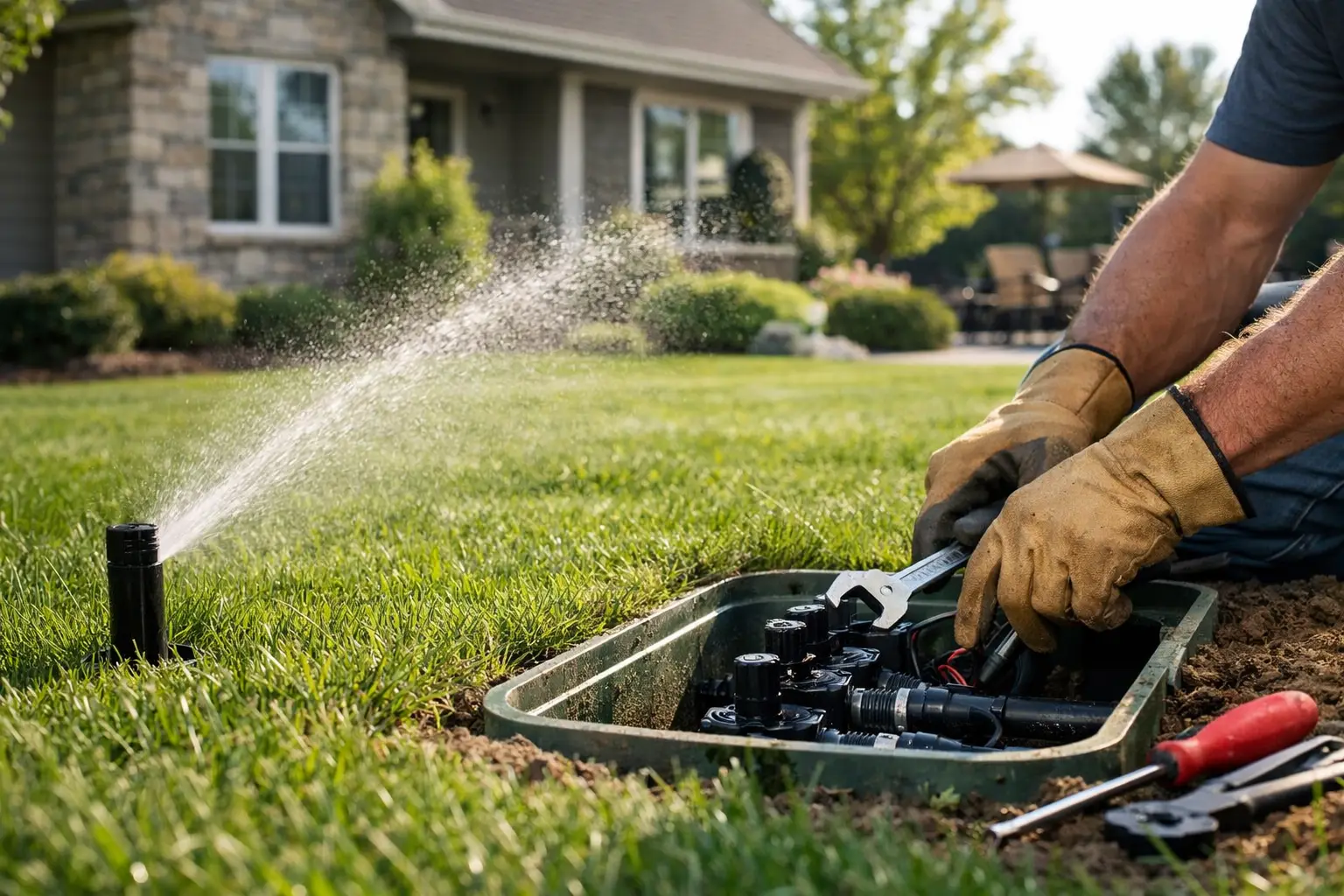
A lawn in Parker can look fine on Friday and stressed by Monday if the irrigation system is even slightly off. One clogged nozzle, one leaking valve, or one controller setting that no longer matches the weather can quietly waste water while leaving parts of the landscape dry. That is why irrigation system maintenance Parker homeowners rely on is less about reacting to visible damage and more about keeping the entire system tuned for local conditions.
In Colorado, irrigation does not get the luxury of a stable season. Spring start-up, summer demand, and winter shutdown all place different demands on a residential sprinkler system. Add changing temperatures, clay-heavy soils in some neighborhoods, sloped lawns, planting bed variations, and water-use concerns, and maintenance becomes a technical service rather than a simple box to check.
Why irrigation system maintenance in Parker matters
A sprinkler system can be running and still be underperforming. Heads may pop up but fail to cover the intended area. Zones may activate on schedule but apply too much water in one section and not enough in another. Pressure issues may not shut the system down, yet they can cause misting, runoff, and uneven distribution.
For homeowners who care about curb appeal and landscape health, that kind of hidden inefficiency adds up quickly. Turf stress, oversaturated beds, erosion near hardscapes, and inconsistent growth are all signs that the system needs attention. Maintenance helps catch those issues before they turn into dead lawn sections, damaged components, or water waste that continues unnoticed for weeks.
There is also a strong seasonal reason to stay proactive. In a place like Parker, freeze risk and summer heat both matter. A system that is not properly started in spring or properly winterized at the end of the season is more vulnerable to cracked lines, damaged backflow components, and controller problems that carry into the next year.
What professional irrigation maintenance actually includes
Good maintenance is not limited to turning the system on and watching it spray. A proper service visit looks at performance, efficiency, and component condition together.
That usually starts with a zone-by-zone inspection. Each station needs to be checked for head alignment, nozzle condition, spray pattern, pressure behavior, and coverage overlap. If one rotor is sticking or one spray head is tilted below grade, that one flaw can affect a larger section of the yard than many homeowners realize.
Controllers also deserve more attention than they usually get. Programming that made sense in May may not make sense in July, and settings from last season may be completely wrong after a landscape change. Runtime, start times, and zone frequency should reflect actual site conditions rather than a generic schedule.
Valves, wiring connections, sensors, and backflow assemblies may also need to be evaluated depending on the symptom or age of the system. Some problems are obvious, like a visible leak. Others are quieter, such as a valve not fully closing, a slow drip after a cycle ends, or a rain sensor that no longer interrupts watering as intended.
The most common signs your system needs service
Homeowners often assume they will notice a problem immediately, but many irrigation issues develop gradually. A greener strip near the sidewalk, a dry patch that keeps returning, or runoff near one corner of the yard can point to a system imbalance instead of a plant problem.
Uneven spray, low head pressure, sputtering zones, pooling water, and sudden increases in water use are all worth taking seriously. So are sprinkler heads that do not retract properly, zones that fail to activate, or areas that seem to need constant manual adjustment.
Sometimes the issue is not damage at all. It may be that the system was set up for a previous landscape layout and has not been updated to reflect new planting beds, turf changes, or more efficient watering needs. In those cases, maintenance becomes an opportunity to improve performance, not just repair failure.
Seasonal irrigation system maintenance Parker properties benefit from
Spring service sets the tone for the entire irrigation season. A controlled start-up helps identify winter-related damage before full watering begins. It also allows for controller review, pressure checks, head adjustments, and coverage corrections at a time when the landscape is just beginning to wake up.
As summer arrives, the focus shifts. Mid-season maintenance is often about efficiency and consistency. High temperatures expose weak spots fast. Dry edges, compacted soil areas, sun-heavy zones, and overspray onto pavement become more obvious when demand increases. This is also the time when small nozzle or alignment issues can lead to meaningful water waste.
Fall service matters just as much, even though it gets less attention. A professional shutdown helps protect the system from freeze damage and closes out the season correctly. Skipping or delaying winterization can create avoidable repairs that show up the following spring.
For many homes, the best results come from maintenance that follows the season instead of treating irrigation as a one-time service. The system changes with the weather, and service should do the same.
Water efficiency is a maintenance issue, not just a technology issue
Homeowners often think water savings only come from installing newer equipment. New technology can help, but maintenance plays a major role in efficiency even when the system already has solid components.
Misaligned heads, clogged nozzles, poor arc settings, and outdated controller schedules are some of the most common sources of waste. None of them require a full system replacement to correct. They require careful inspection, adjustment, and a clear understanding of how the property actually uses water.
Smart irrigation practices also depend on judgment. A shaded side yard should not be watered like a hot south-facing lawn. Sloped areas should not be treated the same as flat turf. Beds with shrubs or perennial plantings usually need different application patterns than grass. The right maintenance approach accounts for those differences rather than applying one schedule to the whole property.
That is where specialized irrigation service stands apart from general home maintenance. Efficiency is not only about making water flow. It is about applying the right amount, in the right place, at the right time.
Why local experience makes a difference
Parker-area irrigation conditions are shaped by more than weather alone. Soil behavior, elevation exposure, and seasonal temperature swings all affect how systems perform. A maintenance approach that works in a milder or more humid region may not translate well here.
Local experience helps with the practical details. It improves the ability to spot freeze-related wear, account for hot and windy conditions, and adjust for common residential landscape layouts found across Parker and nearby communities. It also supports better seasonal timing. Waiting too long for spring activation or fall winterization can narrow the window for preventive service.
For homeowners who want dependable results, that local understanding matters because irrigation problems rarely stay isolated. A small issue in one zone can affect plant health, water use, and overall landscape appearance if it is left alone.
What to expect from a specialized irrigation partner
A professional irrigation provider should approach maintenance with a service mindset, not a quick pass through the yard. That means inspecting the full system, explaining what is happening clearly, and making adjustments that support both performance and water management.
It also means recognizing trade-offs. Some properties need immediate repair because a failure is active. Others may need optimization because the system works but wastes water or delivers uneven coverage. In some cases, maintenance reveals aging components that still function but no longer perform at the level the landscape needs. The right recommendation depends on the system condition, the property layout, and the homeowner's goals.
A specialized provider brings consistency to that process. Instead of guessing at symptoms, the work is based on irrigation behavior, seasonal timing, and long-term reliability. For homeowners who value convenience and want their landscape cared for properly, that kind of focused service is the difference between repeated issues and a system that stays under control.
Irrivive Sprinklers is built around that kind of support - dependable irrigation care that helps residential systems operate efficiently through every part of the season.
A well-maintained irrigation system should not call attention to itself. It should quietly support healthy turf, protect planting beds, and use water with purpose. When service is handled at the right time and with the right level of expertise, your landscape has a much better chance of looking the way it should all season long.