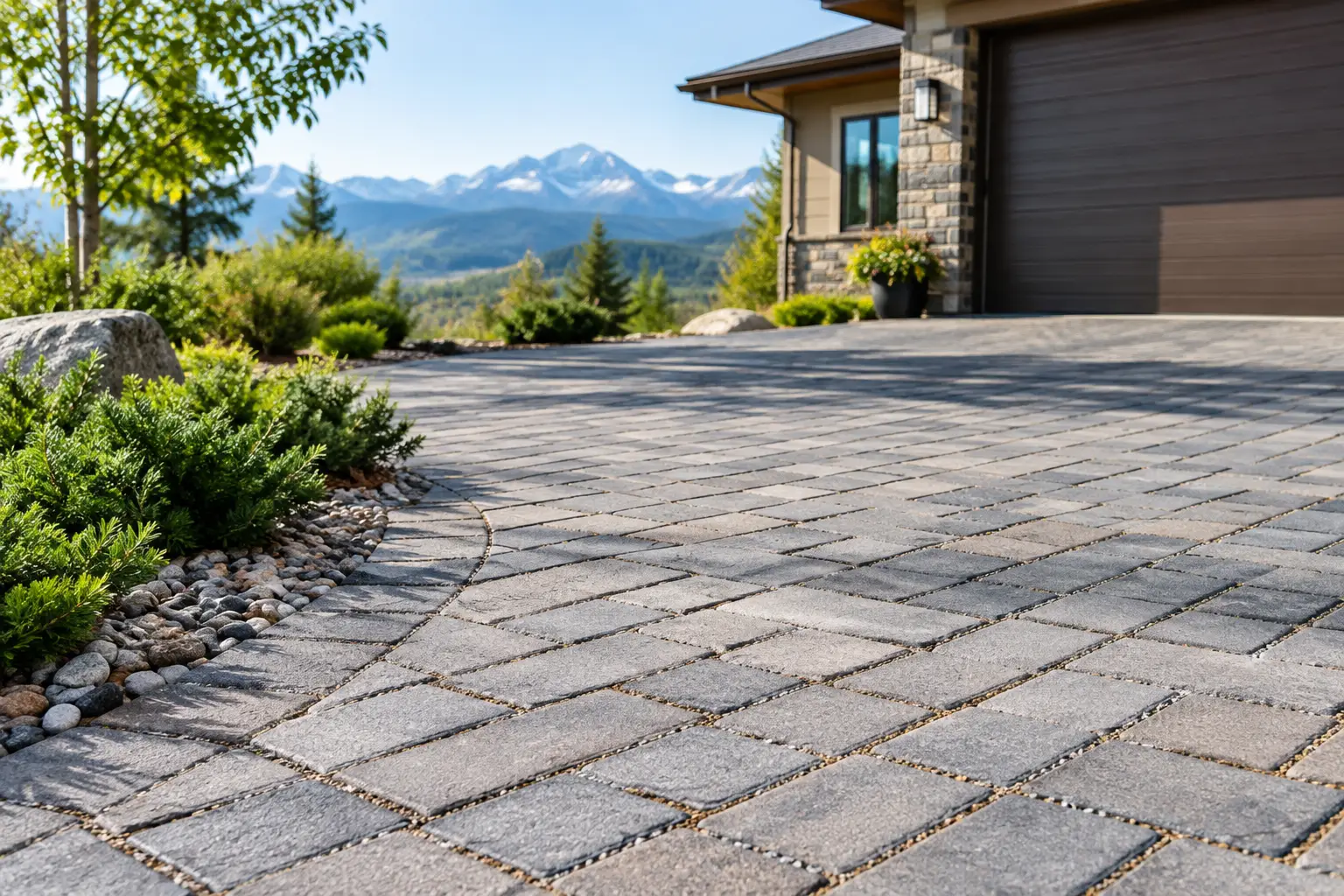
A driveway or patio can send a surprising amount of water toward a home during a fast Colorado storm. When that water sheets across solid concrete or asphalt, it can collect near foundations, wash mulch into beds, and strain drainage areas. Permeable pavers offer a practical alternative: a durable hardscape surface designed to let water pass through the joints and into a properly prepared base below.
For homeowners in Parker, Castle Rock, Highlands Ranch, and nearby communities, that function can be especially valuable. Colorado landscapes often deal with compacted clay soils, intense summer rain, dry spells, and repeated freeze-thaw cycles. A permeable paver system can help manage runoff at the surface, but only when the design fits the property, the soil conditions, and the way the space will be used.
How Permeable Pavers Work
Permeable pavers look similar to traditional concrete pavers, but the joints between them are intentionally wider. Those joints are filled with clean, angular aggregate rather than mortar or standard joint sand. Rain and snowmelt move through the aggregate, into layers of carefully graded stone below, and then either infiltrate the native soil or move through a planned drainage outlet.
The pavers themselves carry the load. The open-joint design manages the water. That distinction matters because a successful installation is much more than placing pavers with small gaps between them.
A typical permeable paver assembly includes four working layers:
- Durable pavers with consistent spacer bars or open joints
- Clean joint aggregate that allows water into the system
- A bedding layer that keeps the pavers level and supported
- A deeper crushed-stone reservoir that stores and directs runoff
The depth and composition of the base depend on the application. A front walkway, a patio, and a vehicle driveway have different load requirements. Soil drainage, slope, nearby structures, and the expected volume of runoff also affect the final design.
Why Permeable Pavers Make Sense in Colorado
Hardscape improvements should solve a property problem, not simply add another finished surface. Permeable pavers are often a strong fit where runoff is creating erosion, standing water, muddy access paths, or pressure around landscape beds.
Better On-Site Runoff Management
Rather than directing all water toward a drain, swale, or street, permeable pavers hold water temporarily within the aggregate base. This slows the flow and reduces surface ponding during ordinary rain events. On sites where native soil can accept water at a reasonable rate, some of that runoff can filter down naturally.
That does not mean every project should rely entirely on infiltration. Much of the Front Range has dense or clay-heavy soil that drains slowly. In those conditions, a professional design may include an underdrain or controlled overflow path. The goal is to manage water deliberately, not allow it to sit beneath the pavers with nowhere to go.
A More Flexible Surface for Freeze-Thaw Conditions
Colorado temperature swings can be hard on large, rigid slabs. Water enters small cracks, freezes, expands, and can worsen surface damage over time. Individual pavers are not immune to winter conditions, but their jointed system offers more flexibility than a single poured surface.
If a localized area ever needs repair, individual pavers can often be lifted, the base corrected, and the surface reset. That is a meaningful long-term advantage over replacing a cracked section of concrete, provided the original base was built correctly.
Strong Curb Appeal Without Sacrificing Function
A drainage solution does not have to look industrial. Permeable pavers are available in a range of shapes, colors, and laying patterns that work well with Colorado homes, from clean contemporary entries to more natural patios and garden paths.
The best designs consider the full outdoor setting. A permeable front walk can connect naturally to planting beds and outdoor lighting. A patio can be shaped to move traffic away from lawn areas that stay soft after storms. The finished space should look intentional while working harder behind the surface.
Where Permeable Pavers Work Best
Permeable pavers can be used for patios, walkways, garden paths, pool surrounds, driveway extensions, and full residential driveways. They are particularly useful where a solid surface would otherwise add runoff to an already wet or poorly graded area.
A patio near the home deserves careful planning. The finished surface still needs positive grading away from the foundation, and the base should never become a substitute for proper foundation drainage. Water can pass through the pavers, but it must still be safely managed below grade.
Driveways require a more substantial base and close attention to edge restraints. Vehicle traffic puts repeated pressure on the system, especially where cars turn, brake, or enter from the street. A driveway built with inadequate excavation or weak edges may shift over time, even if the pavers themselves are high quality.
Permeable pavers are not always the right answer. If the site has an extremely steep slope, persistent groundwater concerns, unstable soils, or drainage issues tied directly to the foundation, other drainage and grading improvements may need to come first. A site evaluation is the right place to identify those conditions.
Installation Details That Determine Performance
The visible paver is only one part of the project. Long-term performance depends on excavation depth, base preparation, compaction, drainage planning, and accurate final grading.
First, the area is excavated to create room for the full paver system. The subgrade is shaped and assessed before stone is placed. Depending on soil conditions, a separation fabric may be used to help keep fine soil particles from migrating into the aggregate base.
Next comes the crushed-stone reservoir. This is installed in lifts and compacted carefully so it provides structural support while retaining the void space needed for water storage. The bedding layer is then leveled, pavers are placed, and edge restraints are secured to keep the pattern from spreading outward.
Finally, clean joint aggregate is swept into the spaces between pavers and compacted into place. The surface should be firm, even, and properly pitched. Water should not collect on top of the pavers after a typical storm. Some temporary dampness can occur during heavy rain, but persistent puddling is a sign that the joints, base, or drainage path need attention.
Maintenance Keeps the System Draining
Permeable pavers are low maintenance, not no maintenance. Their joints can gradually collect dust, decomposed leaves, mulch, and other fine material. If those openings clog, water cannot enter the base as intended.
Regular sweeping is the simplest preventive step, especially around trees, planting beds, and garage approaches. Keep mulch, soil, and lawn clippings from washing across the paver surface. After winter, inspect the area for deicing residue, displaced joint stone, or sediment left behind by snowmelt.
Deicing products deserve care. Avoid products that can damage concrete pavers, harm surrounding plants, or leave excessive residue in the joints. Mechanical snow removal should also be done thoughtfully. Set plow blades or snowblower skids high enough to avoid catching paver edges and pulling out joint aggregate.
Over time, some joints may need fresh aggregate. If water begins to pond, do not assume the entire system has failed. Often, professional cleaning and joint restoration can improve drainage. If the problem continues, the base and outlet path should be evaluated rather than simply adding more stone at the surface.
Choosing the Right Approach for Your Property
A well-built permeable paver project begins with the property, not a catalog selection. The installer should consider where water starts, where it currently travels, how fast the soil drains, and what lies nearby. Irrigation zones, downspouts, planting beds, retaining walls, and utility locations all affect the right solution.
It also helps to think about how the area will be used across the year. A beautiful patio that collects roof runoff or a driveway that lacks adequate support will not deliver the long-term value homeowners expect. Thoughtful planning protects both the hardscape investment and the landscape around it.
When permeable pavers are designed with sound drainage principles and installed with care, they can turn a runoff concern into a durable, attractive part of the property. The right surface should make rainy days easier, protect the spaces around it, and continue to look at home in the landscape season after season.