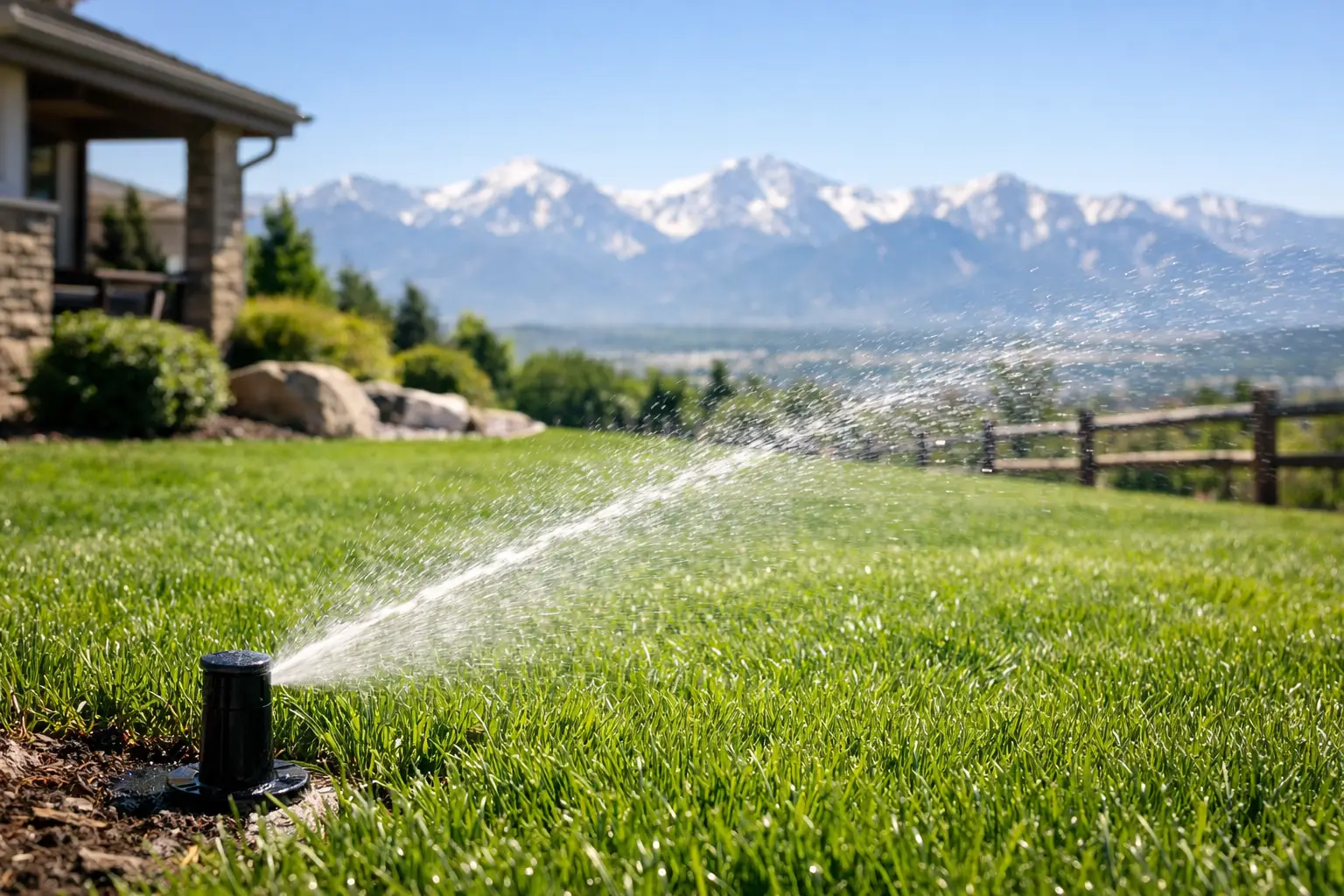
A green lawn in July is not proof that every zone should run longer. In Colorado, effective sprinkler scheduling for summer means matching water to your soil, plant material, sun exposure, and current weather. A schedule that worked in spring can quickly become wasteful once hot afternoons, dry wind, and compacted soil enter the picture.
For homeowners in Parker, Castle Rock, Highlands Ranch, and surrounding communities, the goal is not to water every day. It is to apply enough water at the right time for healthy roots, while avoiding runoff, disease pressure, and unnecessary strain on the irrigation system.
Start With How Your Yard Actually Uses Water
Summer watering needs vary from one part of a property to another. Full-sun turf near a driveway may dry much faster than a shaded side yard. Newly planted shrubs need different attention than established trees, and a lawn on a slope cannot absorb water as quickly as a level lawn with healthy soil.
That is why one universal sprinkler program rarely performs well. A controller may allow every zone to run for the same number of minutes, but the landscape does not experience the same conditions everywhere. The most efficient approach is to group similar areas together and adjust each zone based on what it is watering.
Soil is a major factor. Clay-heavy soil, common along the Front Range, can hold water well but absorb it slowly. If a spray zone runs too long at once, water pools on the surface and heads toward the sidewalk or street instead of reaching the root zone. Sandy soil absorbs water faster but may require shorter, more frequent applications because it drains quickly.
Look for evidence before changing the controller. Water that runs down the curb, soft ground that remains saturated for days, brown patches that do not improve after watering, and plants wilting only in certain zones are all signals that the schedule or system needs attention.
A Practical Baseline for Summer Watering
For most established Colorado lawns, watering deeply a few times per week is generally more effective than light daily watering. Deep watering encourages roots to grow farther into the soil, helping turf handle heat and short dry periods with less stress. Frequent shallow watering keeps roots close to the surface, where they are more vulnerable to heat.
A reasonable starting point for an established lawn is two or three watering days per week, then adjust according to weather, soil type, and sprinkler output. During a stretch of extreme heat and wind, some sunny areas may need additional water. After a soaking rain or cooler period, the system may need less or none at all.
Run time matters more than the number of days alone. Rotor heads, fixed spray heads, drip zones, and multi-stream nozzles all deliver water at different rates. Ten minutes on one zone may barely wet the surface, while ten minutes on another can create runoff. A dependable schedule starts with knowing how much water each zone actually applies.
A simple catch-can test can help. Place several straight-sided containers across a zone, run it for a set amount of time, and compare the water depth in each container. Uneven results often point to clogged nozzles, poor head spacing, tilted sprinkler heads, pressure problems, or blocked spray patterns. Correcting those issues is usually more effective than simply adding minutes to the schedule.
Water in the Early Morning
Early morning is the best general window for lawn irrigation. Watering before the heat builds gives moisture time to move into the soil and allows grass blades to dry after sunrise. This reduces evaporation compared with midday watering and avoids leaving foliage wet through the night.
Evening watering is sometimes necessary when schedules or watering restrictions limit options, but it should not be the default. Extended moisture on grass and plant leaves can contribute to fungal issues, especially in shaded areas with limited airflow.
Use Cycle and Soak on Slopes and Clay Soil
A long uninterrupted run time is not always a deep watering. On a sloped lawn or compacted clay soil, water may begin running off before it has a chance to penetrate. Cycle and soak scheduling solves this problem by splitting one long watering session into shorter cycles with a pause between them.
For example, rather than running a spray zone for 20 minutes straight, the controller could run two 10-minute cycles with a 30- to 60-minute break. The first cycle moistens the surface. The pause allows water to move down into the soil, and the second cycle adds moisture without overwhelming the ground.
This approach is especially useful around foundations, sidewalks, and hardscape areas where runoff can create both water waste and unwanted drainage concerns. It also gives you a more controlled way to water a stressed lawn without flooding it.
Adjust for Heat, Rain, and Wind
A fixed summer schedule should not stay untouched from June through September. Colorado weather changes quickly, and a controller needs occasional attention. A week of 95-degree temperatures with dry wind can increase water demand significantly. A cool stretch with repeated rainfall can reduce it just as quickly.
After meaningful rainfall, check the soil before automatically restarting the system. Rain that barely dampens the turf canopy is not the same as a slow, soaking rain that reaches the roots. Use a screwdriver or soil probe in a few areas of the yard. If it pushes easily several inches into the soil, there may be enough moisture already.
Wind is another overlooked factor. High winds can carry spray away from the intended area, leaving dry spots while soaking fences, pavement, and windows. If a zone regularly runs during windy periods, move it to a calmer morning window or inspect the heads for poor alignment. Irrigation should water the landscape, not the driveway.
Smart controllers and rain sensors can make seasonal adjustments easier, but they still need correct programming and occasional review. Technology can respond to weather data, but it cannot identify a broken head, a valve that will not close, or a zone that has changed after a landscape renovation.
Do Not Treat Every Planting Area Like Turf
Lawns, trees, shrubs, perennials, and flower beds have different root depths and watering needs. Turf is usually watered with spray or rotor zones. Trees and planting beds often benefit more from drip irrigation, which applies water slowly near the root zone with less evaporation.
Established trees generally need slower, deeper watering over a broader area than the trunk alone. Applying water right against the trunk is not enough because the most active roots extend outward. New trees and recently installed shrubs need more frequent monitoring until their root systems establish, particularly during their first summer.
Mulch also changes the equation. A properly mulched bed holds moisture longer and helps protect roots from heat, so it may need less frequent irrigation than exposed soil. Check under the mulch before increasing run times. If the soil below is already damp, more water may do more harm than good.
Inspect the System While It Runs
The controller is only one part of sprinkler scheduling for summer. A well-programmed system cannot compensate for mechanical problems. Once or twice each month, run each zone manually and watch it for several minutes.
Check that heads rise fully, rotate as intended, and retract after watering. Look for overspray, misting, clogged nozzles, leaking valves, low-pressure zones, and sprinkler heads buried by grass or mulch. Pay attention to the edges of turf areas, where a slight misalignment often sends water onto concrete instead of lawn.
If one section stays dry despite longer run times, the issue may be coverage rather than the schedule. If a zone is wet near the heads but dry between them, spacing or pressure may be the problem. Making targeted repairs protects the landscape and helps every gallon do useful work.
Know When the Schedule Needs Professional Attention
Some issues call for more than a controller adjustment. Persistent wet areas, recurring runoff, zones that fail to turn on, unexplained high water use, and uneven turf stress may indicate a valve, wiring, pressure, drainage, or design problem. These are worth addressing early, before heat stress damages turf or water reaches areas where it does not belong.
Irrivive Outdoor Property Solutions helps homeowners assess irrigation performance as part of the larger property. The right solution may involve sprinkler repair, controller adjustments, drainage improvements, or changes to planting and landscape zones. Quality irrigation work considers how the entire outdoor space performs, not just whether the sprinklers turn on.
A healthy summer landscape does not come from setting the controller once and hoping for the best. Take a few minutes after major weather changes to check soil moisture, watch a zone run, and adjust with purpose. Your lawn and plantings will be more resilient, and your irrigation system will work the way it was meant to.