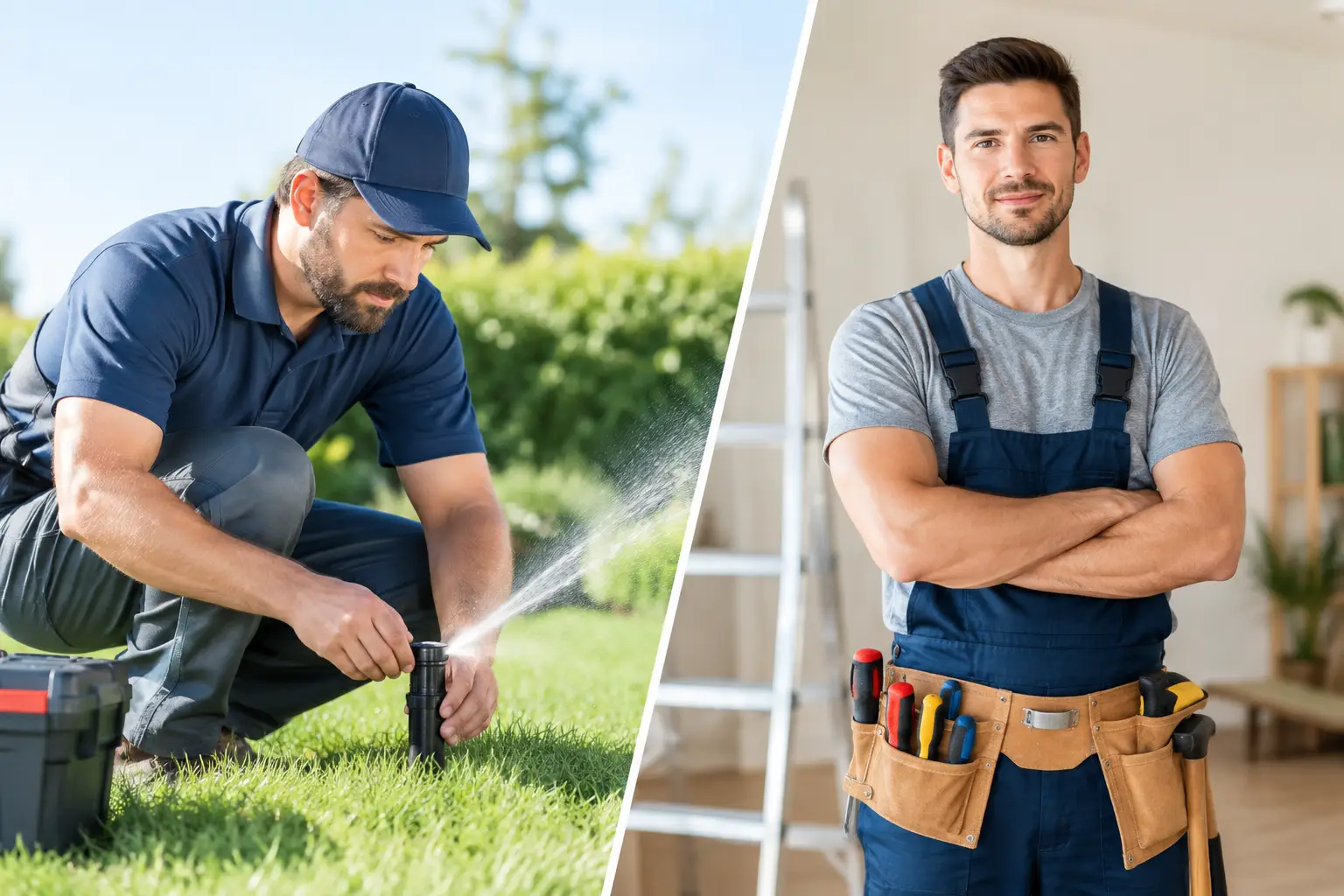
A broken sprinkler head may look like a small household repair, but the choice between a sprinkler specialist vs handyman can affect far more than one wet spot in the lawn. A poorly matched nozzle, an overlooked pressure problem, or a buried leak can waste water, weaken turf, and create issues that return with the next hot, dry stretch.
For simple outdoor tasks, a skilled handyman can be a practical choice. For irrigation concerns that involve system performance, water efficiency, plant health, or recurring failures, a sprinkler specialist is usually the better fit. The right call depends on the scope of the work and how much is at stake beneath the surface.
What a Handyman Can Handle
A capable handyman often handles general property repairs and light outdoor work. That may include replacing a visibly broken sprinkler head, fixing a damaged riser, repairing a small section of exposed pipe, or helping with a minor landscape-related task.
This can make sense when the problem is obvious, isolated, and does not require diagnosing the rest of the irrigation system. For example, if a mower clipped one sprinkler head and the head is clearly cracked, replacing that single component may be straightforward.
The limitation is that irrigation systems are interconnected. A head that is not popping up correctly could be damaged, but it could also be a symptom of low pressure, a valve issue, a leak, improper zoning, or a poorly selected nozzle. A general repair may address what is visible without identifying why the problem occurred.
What a Sprinkler Specialist Brings to the Job
A sprinkler specialist focuses on the design, operation, repair, and seasonal care of irrigation systems. That expertise matters because an irrigation system is not just a collection of pipes and heads. It is a network of zones, valves, controllers, wiring, water pressure, drainage conditions, and landscape needs.
A specialist approaches a repair by looking at the full system. They can determine whether a dry area is caused by inadequate coverage, a clogged nozzle, poor spacing, valve trouble, soil conditions, or a hidden line leak. They can also identify when too much water in one area is a scheduling issue rather than a broken component.
For Colorado homeowners, that broader perspective is especially valuable. Our dry climate, intense sun, clay-heavy soils, elevation, and sharp seasonal temperature swings put real demands on irrigation equipment and landscapes. A system should be adjusted for how water actually moves through the property, not simply set to run longer.
Diagnosis Is Often the Difference
Irrigation problems rarely announce themselves clearly. Brown grass can mean a failed head, but it can also point to compacted soil, poor coverage, shallow roots, a damaged line, or an incorrect controller schedule. A wet patch may be an active leak, runoff from an overwatered zone, or water collecting because of grading and drainage conditions.
A sprinkler specialist is trained to separate the symptom from the cause. That helps avoid repeated repairs and protects the landscape from uneven watering over time.
Sprinkler Specialist vs Handyman: When Each Makes Sense
The decision is not about whether one professional is always better than the other. It is about matching the work to the level of irrigation knowledge required.
A handyman may be appropriate for a simple, clearly identified repair with easy access. Replacing a broken above-ground fixture, securing a loose box cover, or addressing minor damage after landscape work may fall within that scope.
A sprinkler specialist is the stronger choice when a repair involves diagnostics, buried components, electrical controls, water distribution, or system-wide performance. Call an irrigation professional if you notice inconsistent coverage, recurring leaks, zones that will not turn on or off, water pooling near the foundation, low pressure across multiple heads, or a controller that is not operating as expected.
Seasonal startup and winterization also deserve specialist attention. Proper spring activation involves checking for leaks, testing zones, confirming controller settings, and adjusting coverage. Winterization requires removing water from vulnerable lines to reduce the risk of freeze damage. Missing a weak connection or incomplete blowout can lead to a frustrating surprise when the system is started again.
The Hidden Cost of a Quick Fix
A quick repair is only helpful if it solves the actual problem. Installing the wrong sprinkler head, for instance, can change the precipitation rate in a zone. That means one area may receive more water than another even though every head appears to be working.
Mixing nozzle types or setting mismatched spray patterns can cause dry turf beside oversaturated planting beds. Over time, that can contribute to stressed plants, muddy areas, runoff, and unnecessary water use. The system may run more often as homeowners try to compensate for a coverage problem that was never corrected.
There is also the question of component quality and installation detail. Heads need to sit at the correct grade. Risers need proper support. Connections need to be secure. Wires, valves, and pipes need to be protected from damage during landscaping, edging, and seasonal changes. Skilled irrigation work is often less noticeable because it is built to keep working quietly in the background.
When a Specialist Protects More Than the Lawn
Irrigation affects the entire outdoor property. Water applied too close to the house can contribute to foundation-adjacent moisture concerns. Excess runoff can wash mulch, soil, and seed into unwanted areas. Persistent overspray can stain hardscape surfaces or create slippery walkways.
A sprinkler specialist can coordinate irrigation performance with landscaping, drainage, lighting, and hardscape improvements. That matters when changes are made to a yard. Adding a patio, expanding a garden bed, installing new trees, or changing lawn areas can alter how water should be delivered and where it should go.
This is where a full-service outdoor property partner can be particularly helpful. Instead of treating irrigation as a separate issue, Irrivive Outdoor Property Solutions considers how the system supports the health, appearance, and long-term function of the complete landscape.
Questions to Ask Before Hiring for Irrigation Work
Before choosing a provider, ask about their experience with irrigation diagnostics, controller programming, valve repairs, leak detection, and seasonal service. The answer should be clear and specific, not vague.
It is also reasonable to ask whether they check the full zone after a repair. Replacing one head without verifying coverage, pressure, and alignment can leave the original issue unresolved. A professional should explain what they found, what they repaired, and whether any related concerns should be monitored.
Look for a provider who respects the property as a whole. The best irrigation work is not simply about getting water to spray. It is about delivering water where it belongs, at the right rate, while supporting healthy turf, plants, drainage, and curb appeal.
A Better Standard for Irrigation Repairs
If the repair is small and clearly isolated, a handyman may be all you need. If the problem is recurring, hidden, or connected to how the system performs, a sprinkler specialist offers the diagnostic skill and long-term perspective that irrigation work demands.
Your landscape should not have to compensate for a repair that only looks complete. Choosing the right professional helps keep water working for your property, not against it.