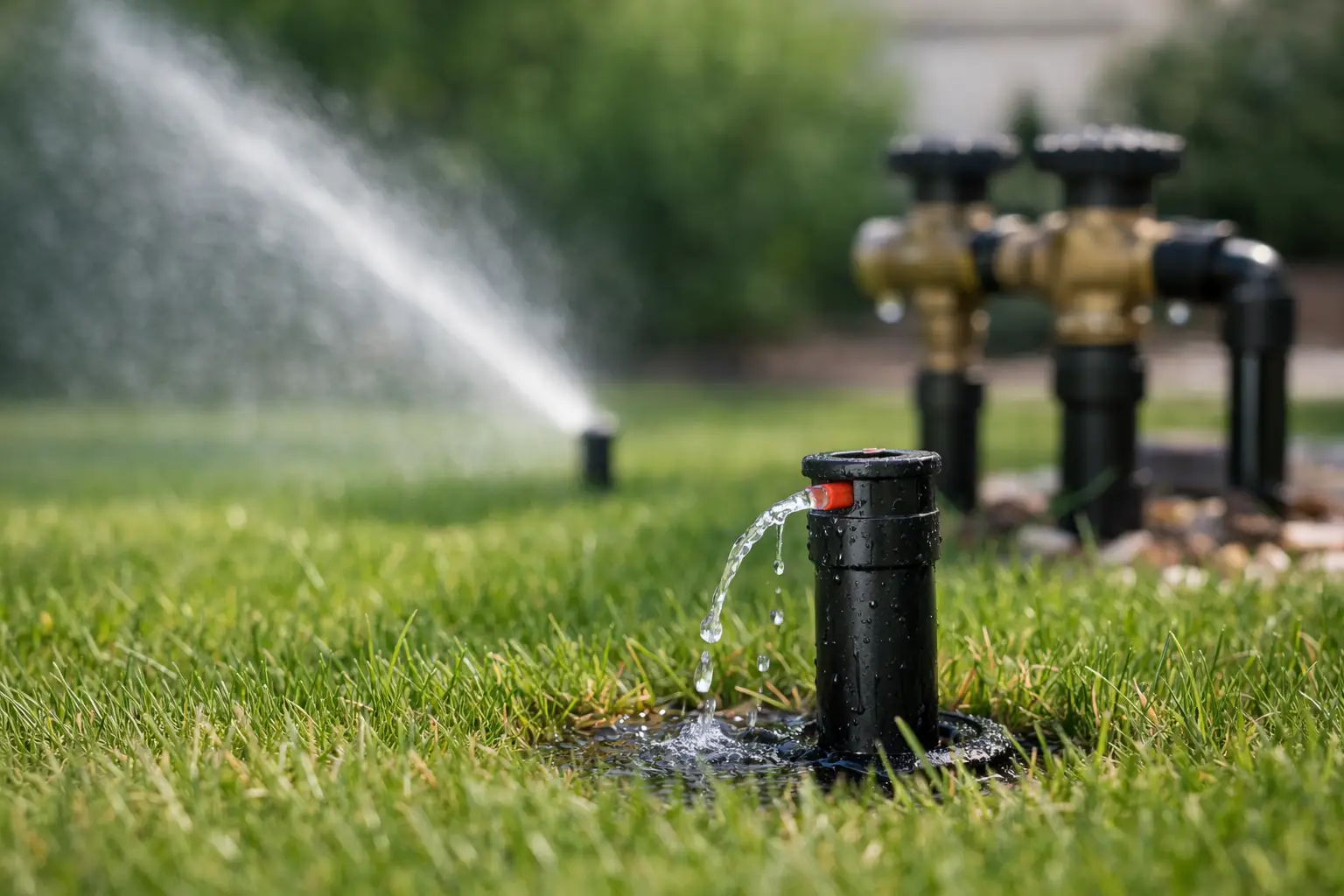
A zone that used to spray cleanly across the lawn now barely reaches the first few feet. Heads stop rotating, coverage turns uneven, and dry spots start showing up fast. If you are wondering what causes sprinkler pressure loss, the short answer is that the problem can come from the water supply, the control components, or damage somewhere in the irrigation system.
Low pressure is one of the most common sprinkler problems because it has several possible causes that can look similar at first. A leak in a lateral line, a valve that is not opening fully, a clogged nozzle, or even too many heads on one zone can all lead to weak spray patterns. The right fix depends on where the pressure drops and whether it affects one zone, several zones, or the whole system.
What causes sprinkler pressure loss in a home irrigation system?
Sprinkler systems rely on a fairly simple idea. Water needs to move through the backflow device, valves, pipes, fittings, and heads with enough pressure and flow to let each zone perform as designed. When something restricts that movement or lets water escape before it reaches the heads, pressure drops.
Sometimes the cause is obvious, like a broken head bubbling water around the base. Other times it is more subtle. A partially closed shutoff valve, debris inside a valve diaphragm, or mineral buildup in nozzles can reduce performance without creating a dramatic leak. That is why pressure loss should be approached as a system issue, not just a head issue.
Pressure loss that affects every zone
When every zone seems weak, the issue is often closer to the water source than the lawn.
A partially closed main shutoff or backflow isolation valve is a common culprit. Even being slightly off full-open can limit flow enough to affect the entire system. This sometimes happens after seasonal service, utility work, or plumbing repairs where a valve was adjusted and not fully returned to position.
Backflow assemblies can also contribute to pressure loss. If internal components are worn, obstructed, or not operating correctly, they can create too much restriction before water even reaches the manifold. In areas with changing seasonal conditions, components that have been stressed by age or cold weather may still pass water while failing to deliver proper pressure.
Municipal supply changes can play a role too. Peak outdoor watering periods, neighborhood demand, or upstream utility conditions may reduce available pressure temporarily. That does not mean the irrigation system is healthy, but it does mean the system may be more sensitive to supply fluctuations than it should be.
If the pressure problem appears suddenly across all zones, it is also worth considering whether a pressure regulator has failed or whether there is a hidden mainline leak before the valves. A buried leak on the pressure side of the system can waste a significant amount of water while starving every zone downstream.
Pressure loss on just one zone
If one zone is weak but the others operate normally, the cause is usually isolated to that valve, that pipe run, or the heads assigned to it.
A valve that is not opening fully is one of the most frequent reasons. Solenoid problems, diaphragm wear, internal debris, or a flow-control setting that has been adjusted too low can all keep the valve from delivering full volume. The zone may still turn on, which makes the issue easy to misread as a head problem, but the valve itself may be the real restriction.
Leaks in lateral lines are another major source of pressure loss. A cracked pipe underground, a damaged fitting, or a cut from landscaping work allows water to escape before it reaches the heads at the end of the zone. In those cases, the nearest heads may appear somewhat normal while the farthest ones struggle or fail to pop up completely.
Zone design can also be part of the problem. If too many sprinkler heads are installed on one zone, or if heads with mismatched precipitation rates and nozzle sizes are combined, the zone can be overdrawn. That means the demand exceeds what the system can reliably supply. The result is weak performance even when nothing is technically broken.
Clogged heads, nozzles, and filters
Not every pressure complaint starts with the pipes. Sometimes water is reaching the head, but it cannot exit the way it should.
Nozzles can clog with dirt, sand, small stones, or mineral deposits. Filters inside spray bodies and drip zones can collect debris over time as well. When that happens, the head may spray unevenly, mist excessively, or fail to distribute water at the expected distance. Homeowners often describe this as low pressure, and from a practical standpoint it is, even though the restriction is at the point of discharge.
This issue tends to be more noticeable in zones with fine nozzles or drip components because smaller openings are less forgiving. It can also show up after repairs if a line was disturbed and debris moved downstream.
The trade-off here is simple. Cleaning or replacing a clogged nozzle may restore performance quickly, but if debris keeps returning, there is usually an upstream issue worth addressing. Repeated clogging can point to deteriorating components, dirty water entering the system, or line contamination after a break.
Hidden leaks and broken components
Some pressure loss problems are visible. Others stay underground until the lawn starts telling the story.
A broken sprinkler head, cracked riser, or damaged fitting near the surface can dump water quickly and create soggy spots, pooling, or erosion. These failures usually reduce pressure on that zone right away. If the damage is underground, the symptoms may be subtler. You might notice greener patches, unusually soft soil, bubbling during operation, or a gradual decline in head performance over time.
Tree roots, soil movement, freeze damage, and accidental impact from vehicles or yard equipment can all damage buried irrigation lines. In Colorado landscapes, seasonal changes matter. A system that was not properly winterized or that experienced shifting ground conditions can develop cracks or separated fittings that only become obvious once spring start-up puts the system back under pressure.
Not every leak causes dramatic water loss on the surface. Small leaks can still rob a zone of the pressure it needs for even coverage, especially on longer pipe runs.
Why pressure loss gets worse over time
Sprinkler pressure problems rarely stay neutral. A head that is barely underperforming in May can become a dead spot by July.
That is partly because irrigation systems are interconnected. When one head leaks, one valve sticks, or one nozzle clogs, distribution becomes uneven. Dry areas may prompt longer run times, which can increase stress on weak components and waste water in healthier sections of the yard. What starts as a performance issue can turn into turf stress, runoff, and unnecessary wear on the whole system.
There is also the diagnostic challenge. Weak pressure encourages guesswork. Homeowners may replace heads because they look like the problem, when the actual cause is a valve restriction or underground leak. Replacing the visible part without correcting the real failure often delays proper repair and allows the system to keep declining.
What causes sprinkler pressure loss after winter?
When pressure loss appears at spring start-up, winter-related issues move higher on the list.
Freeze damage can crack fittings, manifolds, valves, and sections of pipe. Even if the break is small, it can reduce zone performance noticeably. Backflow components may also be affected by cold exposure if they were not fully protected during the off-season.
Another common post-winter issue is a valve or shutoff that was not returned to its correct operating position. During winterization and reactivation, several components may be opened, closed, or adjusted. If one of them remains partially restricted, the system can act like it has a major pressure problem when the cause is simply an incomplete start-up setting.
This is one reason seasonal service matters. Start-up is not just turning water back on. It is the point where hidden damage, misadjustments, and carryover issues from the previous season tend to show themselves.
When professional diagnosis makes sense
Some sprinkler pressure issues are straightforward. A sunken head leaking around the seal or a blocked nozzle can be easy to identify. But once pressure loss involves valves, hidden leaks, backflow components, or inconsistent performance between zones, a full inspection is usually the faster path to a real answer.
A professional irrigation technician will usually look at pressure patterns across the system, isolate whether the problem is on the supply side or zone side, and check for signs of flow loss that are not obvious from the surface. That matters because the correct repair depends on the source. The symptoms can overlap, but the solutions do not.
For homeowners in Parker and nearby communities, that local experience matters even more during seasonal transitions. Climate, soil movement, and winter exposure can all shape how and where irrigation systems fail.
If your lawn is getting uneven coverage, the best next step is not to keep adjusting run times. It is to find the source of the pressure loss and correct it before a small irrigation issue turns into a larger landscape problem.