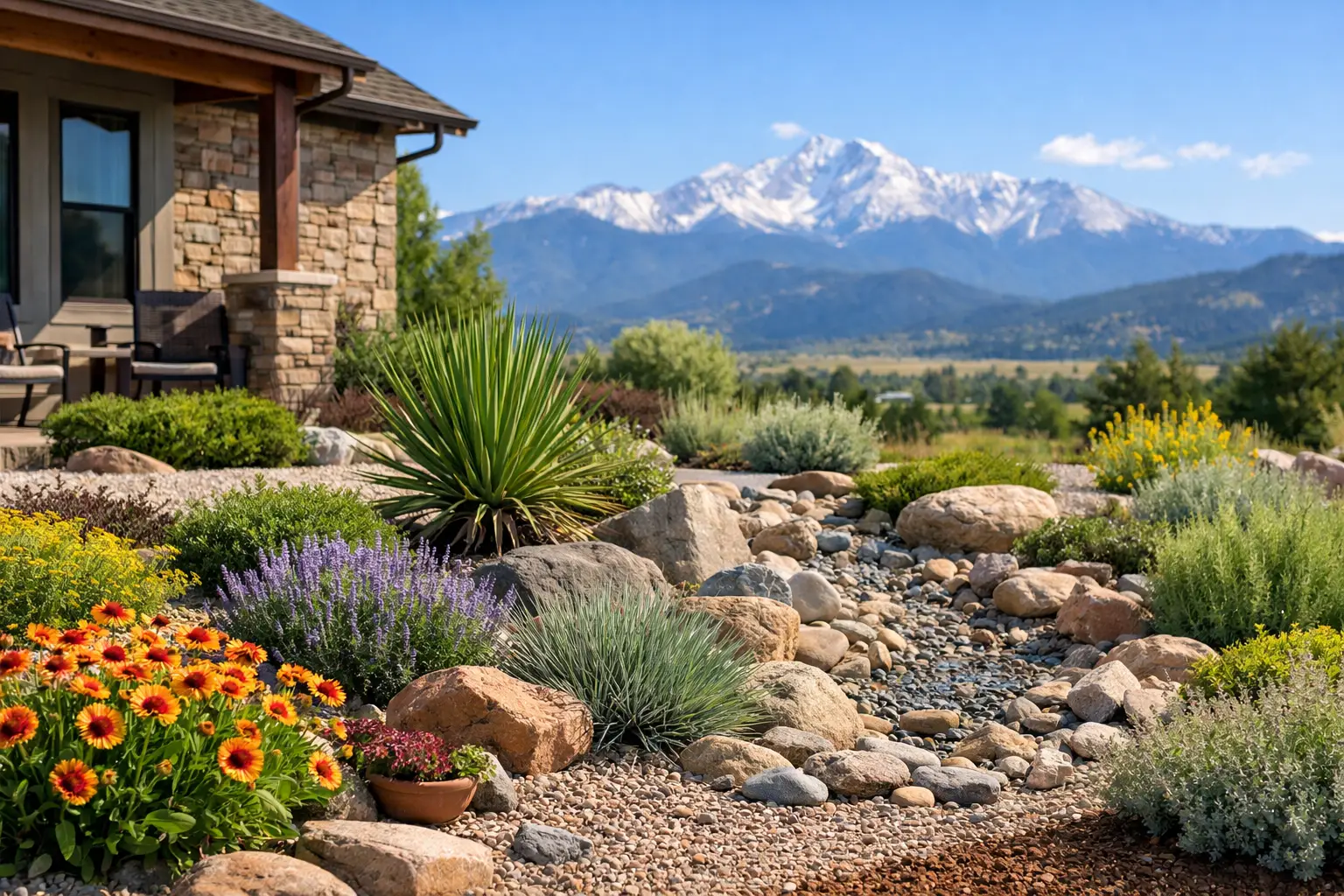
A Colorado landscape can look polished and welcoming without demanding constant watering. Xeriscape landscaping is not a yard filled with gravel and a few cacti. Done well, it is a thoughtful approach to design, plant selection, irrigation, and maintenance that helps homeowners create attractive outdoor spaces suited to our dry climate, changing seasons, and intense sun.
For homeowners in Parker and nearby Front Range communities, the goal is usually not to eliminate every green area. It is to use water where it provides the most value, reduce waste, and build a landscape that continues to look cared for through summer heat, winter cold, and everything in between.
What Xeriscape Landscaping Actually Means
Xeriscape landscaping is a water-wise landscape approach built around seven practical principles: planning and design, soil improvement, efficient irrigation, appropriate plant selection, practical turf areas, mulch, and ongoing maintenance. The idea is simple: match the landscape to the site instead of forcing water-hungry plants to survive where they do not belong.
That does not mean every xeriscape yard looks the same. A well-planned design may include colorful perennials, ornamental grasses, flowering shrubs, evergreen structure, stone edging, pathways, and a smaller lawn for children, pets, or outdoor living. The best results feel intentional, not sparse.
A common misconception is that a xeriscape requires no water. Every new plant needs consistent watering while roots establish, and even mature landscapes benefit from deep, occasional irrigation during extended dry periods. Water-wise landscaping reduces unnecessary water use. It does not remove the need for smart irrigation care.
Why It Works Well in Colorado
Colorado's climate rewards landscapes that are prepared for limited rainfall, drying winds, hot afternoon sun, and sudden temperature swings. Traditional lawn-heavy designs can require significant attention to stay green, especially where soil is compacted or irrigation coverage is uneven. A xeriscape design reduces that pressure by placing plants in conditions that support their natural needs.
It can also improve the look and function of a property. Replacing struggling turf on a steep slope, beside a driveway, or in a narrow side yard often creates a cleaner, more durable result. These are areas where grass may receive too much reflected heat, too little consistent coverage, or repeated foot traffic that leaves it thin and patchy.
The long-term benefit is not just lower water demand. A well-designed landscape can reduce runoff, limit erosion, create clearer borders around hardscapes, and make seasonal upkeep more manageable. Those benefits depend on proper installation. Poor drainage, mismatched plants, or neglected irrigation can undermine even the best design concept.
Start With the Site, Not the Plant List
Successful xeriscape landscaping begins with an honest assessment of the property. Before choosing plants or decorative stone, consider where water moves, how much sun each area receives, and how the space is actually used.
South- and west-facing areas typically experience stronger afternoon heat. A protected north-facing bed may hold moisture longer and support a different mix of plants. Low spots can collect runoff, while elevated areas may dry out quickly in wind. Soil conditions matter too. Colorado clay soil can be slow to absorb water, which means short, frequent irrigation cycles may create runoff rather than reaching plant roots.
A landscape plan should also account for practical priorities. A front yard may need curb appeal and easy access for maintenance. A backyard may need space for entertaining, play, pets, or a garden. There is no single right amount of lawn. The right amount is the area you will use, can irrigate efficiently, and can maintain well.
Group Plants by Water Needs
One of the most effective design choices is hydrozoning, or grouping plants with similar water needs together. Higher-water plants can be placed closer to the home or in focal areas where they provide the most impact. More drought-tolerant plants can fill sunny borders, slopes, parkways, and larger planting areas.
This approach makes irrigation more accurate. When a thirsty perennial shares a zone with an established drought-tolerant shrub, one of those plants is likely receiving too much or too little water. Separate zones give the landscape a better chance to thrive without wasting water.
Choose Plants for More Than Drought Tolerance
Drought tolerance matters, but it should not be the only factor. Plants should also be selected for mature size, sun exposure, soil conditions, seasonal interest, and how they fit with nearby hardscapes or structures.
Colorado-friendly choices often include native and adapted perennials, ornamental grasses, hardy shrubs, and long-lived ground covers. A balanced planting plan layers heights, textures, and bloom times so the landscape has visual interest from spring through fall. Evergreens can provide structure during winter, when many gardens are dormant.
Avoid crowding plants at installation. A new bed can look open at first, but plants need space to mature without competing for water, nutrients, and airflow. Overplanting creates more pruning, more disease pressure, and a crowded appearance later.
Irrigation Still Makes the Difference
Efficient irrigation is central to a successful xeriscape. Drip irrigation is often a strong choice for planting beds because it delivers water slowly near the root zone. It can reduce evaporation and keep foliage drier than overhead watering. However, drip systems need regular inspection. Clogged emitters, damaged tubing, shifting mulch, and poor zone design can leave plants under-watered without obvious warning signs.
Turf areas generally require sprinkler coverage, but each zone should be adjusted for its exposure and soil conditions. Watering deeply and less often encourages stronger root development. On clay soil or sloped ground, cycle-and-soak scheduling is often more effective than one long run time. This method applies water in shorter cycles with breaks between them, allowing moisture to soak in rather than run across the surface.
Seasonal adjustments are essential. A controller that runs the same schedule in May, July, and September is unlikely to be efficient. Irrigation systems should also be inspected for leaks, broken heads, overspray onto hardscapes, and uneven coverage. Water-wise plantings cannot compensate for an irrigation system that is wasting water or missing part of a zone.
Mulch, Rock, and Drainage Need a Plan
Mulch is one of the simplest tools in xeriscape landscaping. A quality organic mulch helps moderate soil temperature, retain moisture, suppress weeds, and improve soil as it breaks down. It also gives planting beds a finished appearance. Keep mulch a few inches away from plant crowns and tree trunks to prevent moisture-related problems.
Decorative rock can be useful in the right places, especially along drainage paths, around hardscape edges, or in low-maintenance accent areas. But rock is not automatically the best choice for every bed. It absorbs and reflects heat, can make planting areas hotter, and allows windblown debris and weeds to collect over time. Large rock-covered spaces may also be difficult to change if your needs or design preferences evolve.
Drainage should be considered before new material goes down. If water already pools near the foundation, runs toward a walkway, or washes soil from a slope, covering the area with rock will not fix the underlying issue. Grading, swales, drainage routes, and appropriate plant placement should work together to direct water away from the home and protect the landscape.
Maintenance Keeps a Water-Wise Yard Looking Intentional
A xeriscape is lower maintenance than a high-water landscape, not maintenance-free. Plants still need pruning, deadheading, weeding, seasonal cleanup, and health checks. Mulch needs occasional replenishment, and irrigation requires routine adjustment as plants grow and weather shifts.
The first two growing seasons are especially important. New plants need dependable watering while their roots establish. This is where homeowners sometimes become disappointed with a water-wise landscape: they expect mature drought tolerance immediately. Establishment takes time, and inconsistent early care can lead to weak growth or plant loss.
Once established, a well-maintained xeriscape should become easier to manage. The landscape will look more natural, use water more responsibly, and hold its shape better when plants, irrigation, drainage, and hardscape details were planned as one system.
A landscape should fit the way you live, not create another weekend obligation. If you are considering a water-wise update, begin with the areas that struggle most and build from there. Thoughtful design and quality installation can turn those difficult spots into some of the most attractive parts of your property.